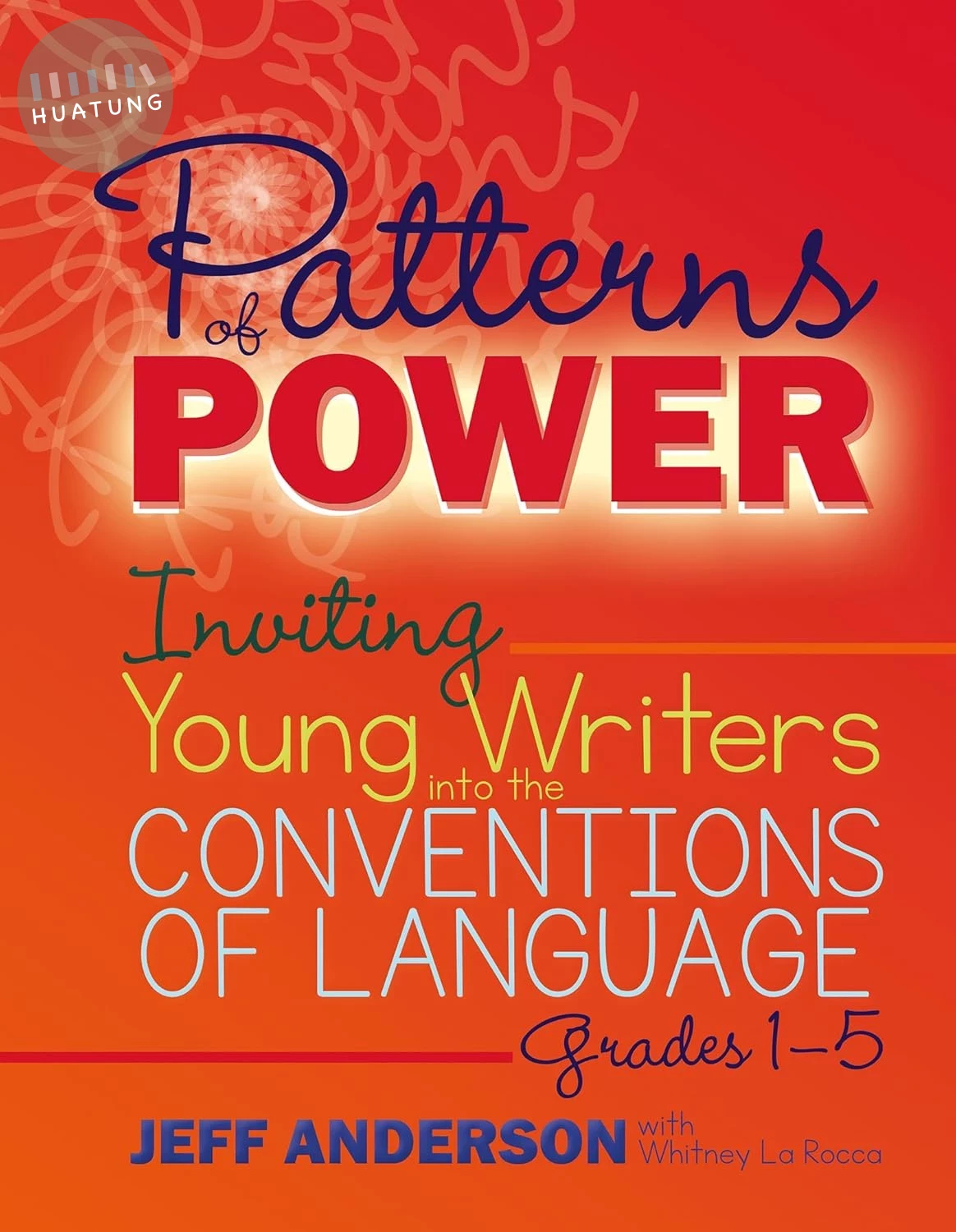
Introduction; Part 1: Getting Started with the Patterns of Power Process; 1: Into Planning: What Do You Need to Do Before Teaching the Invitations?; 2: Into the Classroom: How Do You Teach Conventions with the Invitations Process?; 3: Into Application: How Do You Ensure Writers Apply What They Know?; Part 2: Into the Patterns of Power Lesson Sets; The Power of Sentences; 4: What Do Capital Letters Do?; 5: What Do Nouns Do?; 6: What Do Verbs Do?; 7: What Do Sentences Do?; 8: What Do End Marks Do?; The Power of Pairs; 9: What Do Apostrophes Do?; 10: What Do Pronouns Do?; 11: How Do Verbs and Nouns Agree?; 12: Which Punctuation Comes in Pairs?; The Power of Details; 13: What Do Adjectives Do?; 14: What Do Comparatives and Superlatives Do?; 15: What Do Adverbs Do?; 16: What Do Prepositions Do?; The Power of Combining; 17: What Do Conjunctions Do?; 18: Why Do Writers Use Compound Sentences?; 19: Why Do Writers Use the Serial Comma?; 20: Why Do Writers Use Complex Sentences?; Conclusion Look Up!
還沒有人留下心得,快來搶頭香!
為您推薦

類似書籍推薦給您
25

類似書籍推薦給您

類似書籍推薦給您
類似書籍推薦給您
Design Patterns ─ Elements of Reusable Object-Oriented Software 系列名:Addison-Wesley Professional Computing Series ISBN13:9780201633610 出版社:ADDISON-WESLEY PUBLISHING 作者:Gamma 裝訂:精裝 規格:24.1cm*19.1cm*3.8cm (高/寬/厚) 出版日:1995/01/01 商品描述 * Capturing a wealth of experience about the design of object-oriented software, four top-notch designers present a catalog of simple and succinct solutions to commonly occurring design problems. Previously undocumented, these 23 patterns allow designers to create more flexible, elegant, and ultimately reusable designs without having to rediscover the design solutions themselves. * The authors begin by describing what patterns are and how they can help you design object-oriented software. They then go on to systematically name, explain, evaluate, and catalog recurring designs in object-oriented systems. With Design Patterns as your guide, you will learn how these important patterns fit into the software development process, and how you can leverage them to solve your own design problems most efficiently.
 資訊
資訊
 工程
工程
 數學與統計學
 機率與統計
機率與統計
 自然科學
自然科學
 健康科學
健康科學
 地球與環境
地球與環境
 建築、設計與藝術
 人文與社會科學
 教育
教育
 語言學習與考試
 法律
法律
 會計與財務
會計與財務
 大眾傳播
大眾傳播
 觀光與休閒餐旅
 考試用書
考試用書
 研究方法
研究方法
 商業與管理
商業與管理
 經濟學
經濟學
 心理學
心理學
 生活
生活
 生活風格商品
 參考書/測驗卷/輔材