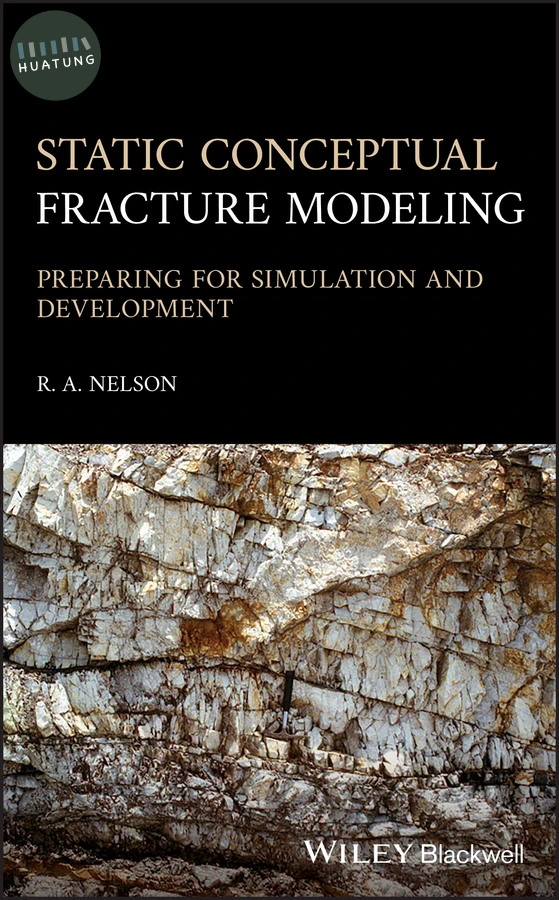

Static Conceptual Fracture Modeling
$4280元 定價: $4755 9折 可訂購
簡介
Modelling of flow in naturally fractured reservoirs is quickly becoming mandatory in all phases of oil and gas exploration and production. Creation of a Static Conceptual Fracture Model (SCFM) is needed as input to create flow simulations for today and for prediction of flow into the future. Unfortunately, the computer modelers tasked with constructing the gridded fracture model are often not well versed in natural fracture characterization and are often forced to make quick decisions as to the input required by the software used to create these models.
Static Conceptual Fracture Modelling: Preparing for Simulation and Development describes all the fracture and reservoir parameters needed to create the fracture database for effective modelling and how to generate the data and parameter distributions. The material covered in this volume highlights not only natural fracture system quantification and formatting, but also describes best practices for managing technical teams charged with creating the SCFM. This book will become a must on the shelf for all reservoir modelers.
目錄
Foreword xi
Symbols and Abbreviations xiii
Acknowledgments xv
1 Purpose and Scope 1
2 What is a Static Conceptual Fracture Model and Why Do We Build It? 3
3 Fracture Model Creation Workflow 9
4 Gathering Natural Fracture Orientation and Intensity Data Directly 13
4.1 Outcrop Based Data 13
4.2 Core Based Data 16
5 Gathering Natural Fracture Orientation and Intensity Data Indirectly 35
5.1 Bore Hole Image Log Based Data 35
5.2 Remote Sensing-based Data 40
5.3 3D Seismic Fracture Data Collection 43
6 Analyzing the Natural Fracture Data Once Gathered 51
6.1 Correcting for the Difference Between Measurement Orientation and Fracture Set Intensity 51
6.2 Calibration 51
6.3 Determining Natural Fracture Origin from Fracture Distributions and Morphology 59
6.4 Mapping Natural-fracture Orientation and Intensity 67
7 Gathering and Analyzing Structural Data 71
7.1 Structural Surface Maps and Sections 71
7.2 Analysis of Structural Surfaces 71
8 Gathering Constraints on Fracture Aperture 81
8.1 Unstressed 82
8.2 Partially Stressed 85
8.3 Fully Stressed 85
8.4 How the Various Aperture Measures Go Together 89
9 Creation of Natural Fracture Scaling Laws 91
10 Gathering and Analyzing Mechanical Property Distribution Data 95
10.1 Rock Modulus and How It Effects Deformation and Fracturing 96
10.2 Rigidity Modulus Distributions 100
11 Locating Fracture Corridors 105
12 Rock Anisotropy and its Importance in Determining Dominant-Fracture Orientation and Relative Intensity 111
13 Determine the In-situ Stress Directions and Magnitudes and their Variation 115
13.1 SHmax Directions and Mapping 116
13.2 SHmax Directions with Depth 119
14 Production Calibration 123
15 Determining the Fractured Reservoir Classification and, Therefore, Which Simulation Style is Most Appropriate 129
16 Use of Reservoir Analogs 135
17 The Importance of 3D Visualization in Data Integration and Static Fracture Model Creation 139
18 Thoughts on History Matching of Simulation Results 143
19 Preparing the Fracture Data for Input to the Gridded Model 145
20 Discussion of Error and Uncertainty in the Modeling Process 149
21 Published Examples of the Process 151
22 Final Comments 155
Appendix A Detailed Static Fracture Modeling Workflow 157
Appendix B How we Use Various Seismic Attributes to Predict Natural Fracture Intensity in the Subsurface, After Nelson (2006) 169
Appendix C How I Learned to Interpret Natural Fractures in Core 173
References 175
Index 183