簡介
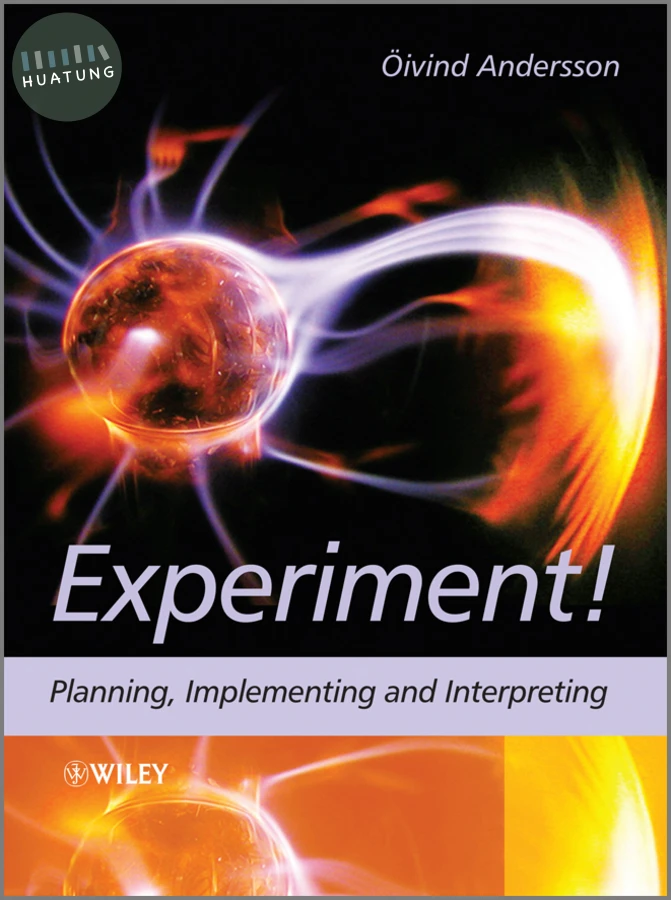
Experiments are the most effective way to learn about the world. By cleverly interfering with something to see how it reacts we are able to find out how it works. In contrast to passive observation, experimenting provides us with data relevant to our research and thus less time and effort is spent separating relevant from irrelevant information.
The art of experimentation is often learnt by doing, so an intuitive understanding of the experimental method usually evolves gradually through years of trial and error. This book speeds up the journey for the reader to becoming a proficient experimenter.
Organized in two parts, this unique text begins by providing a general introduction to the scientific approach to experimentation. It then describes the processes and tools required, including the relevant statistical and experimental methods. Towards the end of the book a methodology is presented, which leads the reader through the three phases of an experiment: ‘Planning’, ‘Data Collection’, and ‘Analysis and Synthesis’.
Experiment!
Provides an excellent introduction to the methodology and implementation of experimentation in the natural, engineering and medical sciences
Puts practical tools into scientific context
Features a number of selected actual experiments to explore what are the key characteristics of good experiments
Includes examples and exercises in every chapter
This book focuses on general research skills, such as adopting a scientific mindset, learning how to plan meaningful experiments and understanding the fundamentals of collecting and interpreting data. It is directed to anyone engaged in experiments, especially Ph.D. and masters students just starting to create and develop their own experiments.
目錄
Preface xi
Part One Understanding the World
1 You, the Discoverer 3
11 Venturing into the Unknown 4
12 Embarking on a PhD 5
13 The Art of Discovery 5
14 About this Book 7
15 How to Use this Book 8
Further Reading 10
References 10
2 What is Science? 11
21 Characteristics of the Scientific Approach 11
22 The Inductive Method 14
23 The Hypothetico-Deductive Method 16
24 Consequences of Falsification 19
25 The Role of Confirmation 21
26 Perception is Personal 23
27 The Scientific Community 29
28 Summary 30
Further Reading 31
References 31
3 Science’s Childhood 33
31 Infancy 33
32 Ionian Dawn 34
33 Divine Mathematics 38
34 Adolescence – Revolution! 41
35 The Children of the Revolution 47
36 Summary 50
Further Reading 50
References 51
4 Science Inclined to Experiment 53
41 Galileo’s Important Experiment 54
42 Experiment or Hoax? 56
43 Reconstructing the Experiment 58
44 Getting the Swing of Things 60
45 The Message from the Plane 62
46 Summary 63
References 64
5 Scientists, Engineers and Other Poets 65
51 Research and Development 65
52 Characteristics of Research 68
53 Building Theories 70
54 The Relationship between Theory and Reality 75
55 Creativity 77
56 Summary 79
Further Reading 80
References 80
Part Two Interfering with the World
6 Experiment! 83
61 What is an Experiment? 83
62 Questions, Answers and Experiments 85
63 A Gallery of Experiments 88
64 Reflections on the Exhibition 108
65 Summary 110
Further Reading 110
References 112
7 Basic Statistics 113
71 The Role of Statistics in Data Analysis 113
72 Populations and Samples 115
73 Descriptive Statistics 116
74 Probability Distribution 122
75 The Central Limit Effect 126
76 Normal Probability Plots 129
77 Confidence Intervals 132
78 The t-Distribution 134
79 Summary 136
Further Reading 137
References 138
8 Statistics for Experiments 139
81 A Teatime Experiment 139
82 The Importance of Randomization 141
83 One-Sided and Two-Sided Tests 142
84 The t-Test for One Sample 143
85 The Power of a Test 148
86 Comparing Two Samples 150
87 Analysis of Variance (ANOVA) 155
88 A Measurement System Analysis 159
89 Other Useful Hypothesis Tests 163
810 Interpreting p-Values 164
811 Correlation 165
812 Regression Modeling 167
813 Summary 171
Further Reading 172
References 173
9 Experimental Design 175
91 Statistics and the Scientific Method 175
92 Designs with One Categorical Factor 176
93 Several Categorical Factors: the Full Factorial Design 178
94 Are Interactions Important? 186
95 Factor Screening: Fractional Factorial Designs 187
96 Determining the Confounding Pattern 188
97 Design Resolution 190
98 Working with Screening Designs 191
99 Continuous Factors: Regression and Response Surface Methods 195
910 Summary 207
Further Reading 208
References 209
10 Phase I: Planning 211
101 The Three Phases of Research 211
102 Experiment 1: Visual Orientation in a Beetle 213
103 Experiment 2: Lift-Off Length in a Diesel Engine 216
104 Finding Out What is Not Known 218
105 Determining the Scope 221
106 Tools for Generating Hypotheses 222
107 Thought Experiments 227
108 Planning Checklist 229
109 Summary 231
References 233
11 Phase II: Data Collection 235
111 Generating Understanding from Data 235
112 Measurement Uncertainty 236
113 Developing a Measurement System 238
114 Measurement System Analysis 244
115 The Data Collection Plan 248
116 Summary 251
Further Reading 252
References 252
12 Phase III: Analysis and Synthesis 253
121 Turning Data into Information 253
122 Graphical Analysis 256
123 Mathematical Analysis 259
124 Writing a Scientific Paper 260
125 Writing a PhD Thesis 264
126 Farewell 266
127 Summary 266
Further Reading 266
References 267
Appendix 269
Standard Normal Probabilities 269
Probability Points for the t-Distribution 270
Index 271