簡介
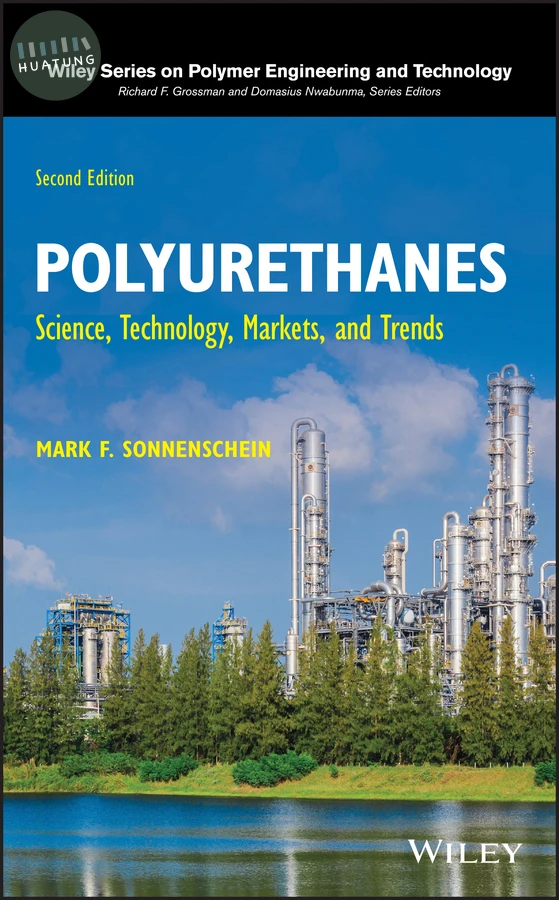
This book, cohesively written by an expert author with supreme breadth and depth of perspective on polyurethanes, provides a comprehensive overview of all aspects of the science and technology on one of the most commonly produced plastics.
Covers the applications, manufacture, and markets for polyurethanes, and discusses analytical methods, reaction mechanisms, morphology, and synthetic routes
Provides an up-to-date view of the current markets and trend analysis based on patent activity and updates chapters to include new research
Includes two new chapters on PU recycling and PU hybrids, covering the opportunities and challenges in both
目錄
Preface
Acknowledgments
Chapter 1 Introduction
Chapter 2 Polyurethane Building Blocks
2.1 Polyols
2.11 Polyether polyols
2.111 Building blocks
2.112 Polymerization of alkoxides to polyethers
2.12 Polyester polyols
2.121 Polyester polyol building blocks
2.122 Preparation of polyester polyols
2.123 Aliphatic polyester polyols
2.124 Aromatic Polyester Polyols
2. 13 Other Polyols
2.131 Polycarbonate Polyols
2.1311. Preparation of polycarbonate polyols
2. 132 Polyacrylate polyols
2.1321 Preparation of acrylic polyols
2.14. Filled polyols
2.141 Copolymer polyols
2.142 PHD Polyols
2.143 PIPA polyols
2.15 Seed-oil derived polyols
2.151 Preparation of seed oil derived polyols
2.1511 Epoxidation and ring opening
2.1512 Ozonolysis
2.1513 Hydroformylation and reduction
2.1514 Metathesis
2.16 Prepolymers
2.2 Isocyanates
2.21 TDI
2.211 Conventional Production of TDI
2.212 Non-phosgene routes to TDI
2.2121 Thermolysis of Carbamic acid, N,N'-(4-methyl-1,3-phenylene)bis-, C,C'-dimethyl ester made from the reaction of toluene diamine with methyl carbonate
2.2122 Thermolysis of Carbamic acid, N,N'-(4-methyl-1,3-phenylene)bis-, C,C'-dimethyl ester made from the reductive carbonylation of dinitrotoluene.
2.2123 Isocyanates by thermal decomposition of acyl azides – The Curtius rearrangement
2.22 Diphenylmethane diisocyanates (MDI)
2.221 Production of MDI
2.23 Aliphatic Isocyanates
2.231. Production of Aliphatic isocyanates
2.2311 hexamethylene diisocyanate (HDI)
2.2312 Isophorone diisocyanate(IPDI)
2.2313 4,4’- diisocyanatodicyclohexylmethane (H12MDI)
2.232 Use of aliphatic isocyanates
2.3 Chain extenders
Chapter 3 Introduction to Polyurethane Chemistry
3.1 Introduction
3.2 Mechanism and Catalysis of Urethane Formation
3.3 Reactions of Isocyanates with Active Hydrogen Compounds
3.31 Urea Formation
3.32 Allophanate Formation
3.33 Formation of Biurets
3.34 Formation of Uretdione (isocyanate dimer)
3.35 Formation of Carbodiimide
3.36 Formation of uretonimine
3.37 Formation of amides
Chapter 4 Theoretical Concepts and Techniques in Polyurethane Science
4.1 Formation of Polyurethane Structure
4.2 Properties of Polyurethanes
4.21 Models and Calculations for Polymer Modulus
4.22 Models for Elastomer Stress Strain Properties
4.221 Factors that affect Polyurethane Stress-Strain Behavior
4.222 Calculating Foam Properties
4.23 The Polyurethane Glass Transition Temperature
Chapter 5 Analytical Characterization of Polyurethanes
5.1 Analysis of reagents for making polyurethanes
5.11 Analysis of Polyols
5.111 Hydroxyl number
5.112 CPR
5.12 Analysis of Isocyanates
5.121 Analysis of pMDI composition
5.2 Instrumental Analysis of Polyurethanes
5.21 Microscopy
5.211 Optical microscopy
5.212 Scanning electron microscopy
5.213 Transmission electron microscopy (TEM)
5.214 Atomic Force Microscopy (AFM)
5.22 Infra-red Spectrometry
5.23 X-ray Analyses
5.231 Wide Angle X-ray Scattering (WAXS)
5.232 Small Angle X-ray scattering (SAXS)
5.3 Mechanical Analysis
5.31 Tensile, tear and elongation testing
5.32 Dynamic mechanical analysis
5.4 Nuclear Magnetic Spectroscopy (NMR)
5.5 Foam Screening: FoamatR
Chapter 6 Polyurethane Flexible Foams: Chemistry and Fabrication
6.1 Making Polyurethane Foams
6.11 Slabstock Foams
6.12 Molded Foams
6.2 Foam Processes
6.21 Surfactancy and Catalysis
6.211 Catalysis
6.212 Surfactancy
6.3 Flexible Foam Formulation and Structure Property Relationships
6.31 Screening tests
6.32 Foam Formulation and Structure Property Relationships
Chapter 7 Polyurethane Flexible Foams: Markets, Applications, Markets and Trends
7.1 Applications
7.11 Furniture
7.12 Mattresses and Bedding
7.13 Transportation
7.14 The Molded Foam Market
7.2 Trends in Molded Foam Technology and Markets
Chapter 8 Polyurethane Rigid Foams: Markets, Applications, Markets and Trends
8.1 Regional Market Dynamics
8.2 Applications
8.21 Construction Foams
8.211 Polyisocyanurate Foams
8.212 Spray, Poured and Froth Foams
8.2121 Spray foam
8.2122. Froth Foams
8.2123 Pour-in-place foams
8. 22 Rigid Construction Foam Market Segments
8.23 Appliance Foams
8.3 Blowing Agents and Insulation Fundamentals
8.31 Blowing Agents
8.32 Blowing Agent Phase-out Schedule
8.4 Insulation Fundamentals
8.5 Trends in Rigid Foams Technology
Chapter 9 Polyurethane Elastomers: Markets, Applications, Markets and Trends
9.1 Regional Market Dynamics
9.2 Applications
9.21 Footwear
9.211 Trends in Footwear Applications
9.22 Non-footwear Elastomer Applications and Methods of Manufacture
9.221 Cast Elastomers
9.222 Thermoplastic polyurethanes
9.223 RIM Elastomers
9.224 Polyurethane Elastomer Fibers
9.3 Trends in Polyurethane Elastomers
Chapter 10 Polyurethane Adhesives and Coatings: Manufacture, Applications, Markets and Trends
10.1 Adhesives and Coatings Industries: Similarities and Differences
10.2 Adhesives
10.2.1 Adhesive Formulations
10.2.1.1 1-Part Adhesives
10.2.1.2 Hot-melt adhesives
10.2.1.2.1 Non-reactive hot-melt adhesive
10.2.1.2.2 Reactive hot-melt adhesive
10.2.1.3 Water borne polyurethane adhesives
10.3 Trends in Polyurethane Adhesives
10.3 Coatings
10.3.1 Polyurethane coating formulations
10.3.1.1 2–part solvent borne coating
10.3.1.2 Water-borne coatings
10.3.1.3 Water-borne hybrids
10.3.1.4 UV cured water-borne dispersions for coatings
10.3.1.5 Polyurethane Powder Coatings
10.3.2 Trends in Polyurethane Coatings
Chapter 11 Special Topics: Medical Uses of Polyurethane
11.1 Markets and Participants
11.2 Technology
11.2.1 Catheters
11.2.2 Wound dressings
11.2.3 Bioabsorbable polyurethanes.
11.2.4 Hydrogels
11.2.5 Gloves and Condoms
11.3 Future Trends
Chapter 12 Special Topic: Non-isocyanate Routes to Polyurethanes
12.1 Governmental Regulation of Isocyanates
12.2 Non-isocyanate routes to polyurethanes
12.2.1 Reactions of polycyclic carbonates with polyamines
12.2.2 Direct transformations of amines to urethanes
12.2.3 Reactions of polycarbamates
12.2.4 Conversion of hydroxamic acids to polyurethane
12.2.5 Conversion of hydroxylamines to polyurethanes
Chapter 13 Polyurethane hybrid polymers
13.1 Introduction
13.2 Polyurethane-acrylate hybrids
13.3 Polyurethane-epoxy hybrids
13.4 Polyurethane-silicone hybrids
13.4.1 Silicone modified prepolymers
13.4.2 Urethane/silicone hybrids produced using diblock compatabilizers
13.4.3 Hybrids employing covalent and hydrogen bonded crosslinks
13.4.4 Polyurethane hybridization with polyhedral oligomeric silsesquixanes (POSS)
13.5 Polyurethane- polyolefin hybrids
13.6 Hybridization via transurethanification
Chapter 14. Recycling of polyurethanes
14.1 Introduction
14.2 Glycolysis/Hydrolysis/Aminolysis/Acidolysis
14.3 Pyrolysis
14.4 Recycle for fuel value
14.5 Regrinding and incorporation
Index