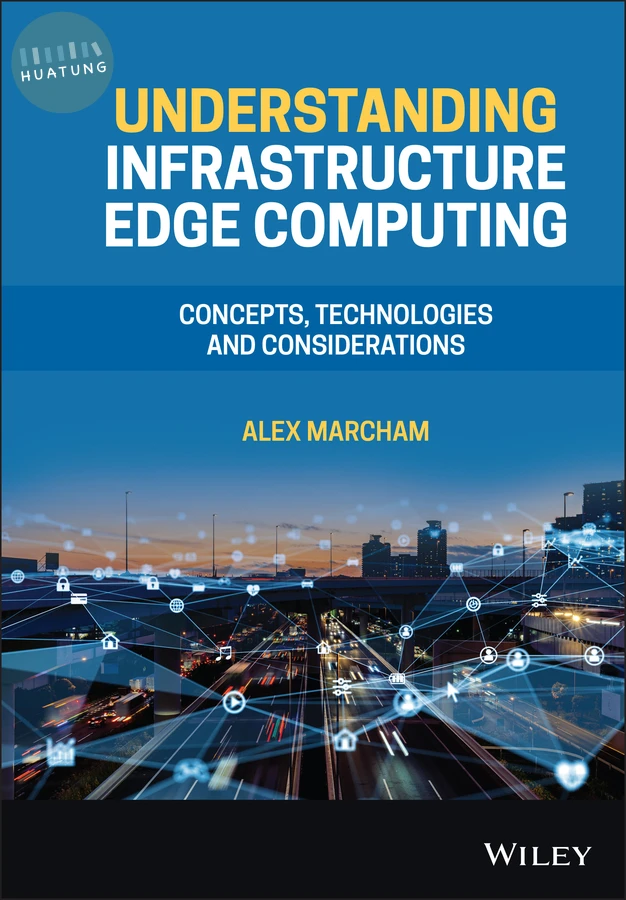
Understanding Infrastructure Edge Computing
$4463元 定價: $4959 9折 可訂購
簡介
UNDERSTANDING INFRASTRUCTURE EDGE COMPUTING A comprehensive review of the key emerging technologies that will directly impact areas of computer technology over the next five yearsInfrastructure edge computing is the model of data center and network infrastructure deployment which distributes a large number of physically small data centers around an area to deliver better performance and to enable new economical applications. It is vital for those operating at business or technical levels to be positioned to capitalize on the changes that will occur as a result of infrastructure edge computing.This book provides a thorough understanding of the growth of internet infrastructure from its inception to the emergence of infrastructure edge computing. Author Alex Marcham, an acknowledged leader in the field who coined the term ‘infrastructure edge computing,’ presents an accessible, accurate, and expansive view of the next generation of internet infrastructure. The book features illustrative examples of 5G mobile cellular networks, city-scale AI systems, self-driving cars, drones, industrial robots, and more—technologies that increase efficiency, save time and money, and improve safety. Covering state-of-the-art topics, this timely and authoritative book:Presents a clear and accurate survey of the key emerging technologies that will impact data centers, 5G networks, artificial intelligence and cyber-physical systems, and other areas of computer technology
Explores how and why Internet infrastructure has evolved to where it stands today and where it needs to be in the near future
Covers a wide range of topics including distributed application workload operation, infrastructure and application security, and related technologies such as multi-access edge computing (MEC) and fog computing
Provides numerous use cases and examples of real-world applications which depend upon underlying edge infrastructure
Written for Information Technology practitioners, computer technology practitioners, and students, Understanding Infrastructure Edge Computing is essential reading for those looking to benefit from the coming changes in computer technology.
目錄
Preface xv
About the Author xvii
Acknowledgements xix
1 Introduction 1
2 What Is Edge Computing? 3
2.1 Overview 3
2.2 Defining the Terminology 3
2.3 Where Is the Edge? 4
2.3.1 A Tale of Many Edges 5
2.3.2 Infrastructure Edge 6
2.3.3 Device Edge 6
2.4 A Brief History 8
2.4.1 Third Act of the Internet 8
2.4.2 Network Regionalisation 10
2.4.3 CDNs and Early Examples 10
2.5 Why Edge Computing? 12
2.5.1 Latency 12
2.5.2 Data Gravity 13
2.5.3 Data Velocity 13
2.5.4 Transport Cost 14
2.5.5 Locality 14
2.6 Basic Edge Computing Operation 15
2.7 Summary 18
References 18
3 Introduction to Network Technology 21
3.1 Overview 21
3.2 Structure of the Internet 21
3.2.1 1970s 22
3.2.2 1990s 22
3.2.3 2010s 23
3.2.4 2020s 23
3.2.5 Change over Time 23
3.3 The OSI Model 24
3.3.1 Layer 1 25
3.3.2 Layer 2 25
3.3.3 Layer 3 26
3.3.4 Layer 4 26
3.3.5 Layers 5, 6, and 7 27
3.4 Ethernet 28
3.5 IPv4 and IPv6 29
3.6 Routing and Switching 29
3.6.1 Routing 30
3.6.2 Routing Protocols 31
3.6.3 Routing Process 34
3.7 LAN, MAN, and WAN 41
3.8 Interconnection and Exchange 42
3.9 Fronthaul, Backhaul, and Midhaul 44
3.10 Last Mile or Access Networks 45
3.11 Network Transport and Transit 46
3.12 Serve Transit Fail (STF) Metric 48
3.13 Summary 51
References 52
4 Introduction to Data Centre Technology 53
4.1 Overview 53
4.2 Physical Size and Design 53
4.3 Cooling and Power Efficiency 54
4.4 Airflow Design 56
4.5 Power Distribution 57
4.6 Redundancy and Resiliency 58
4.7 Environmental Control 61
4.8 Data Centre Network Design 61
4.9 Information Technology (IT) Equipment Capacity 65
4.10 Data Centre Operation 66
4.10.1 Notification 67
4.10.2 Security 67
4.10.3 Equipment Deployment 67
4.10.4 Service Offerings 68
4.10.5 Managed Colocation 68
4.11 Data Centre Deployment 69
4.11.1 Deployment Costing 69
4.11.2 Brownfield and Greenfield Sites 69
4.11.3 Other Factors 70
4.12 Summary 70
References 70
5 Infrastructure Edge Computing Networks 71
5.1 Overview 71
5.2 Network Connectivity and Coverage Area 71
5.3 Network Topology 72
5.3.1 Full Mesh 74
5.3.2 Partial Mesh 74
5.3.3 Hub and Spoke 75
5.3.4 Ring 76
5.3.5 Tree 76
5.3.6 Optimal Topology 76
5.3.7 Inter-area Connectivity 77
5.4 Transmission Medium 78
5.4.1 Fibre 78
5.4.2 Copper 78
5.4.3 Wireless 79
5.5 Scaling and Tiered Network Architecture 80
5.6 Other Considerations 81
5.7 Summary 82
6 Infrastructure Edge Data Centres 83
6.1 Overview 83
6.2 Physical Size and Design 83
6.2.1 Defining an Infrastructure Edge Data Centre 84
6.2.2 Size Categories 84
6.3 Heating and Cooling 102
6.4 Airflow Design 105
6.4.1 Traditional Designs 107
6.4.2 Non-traditional Designs 109
6.5 Power Distribution 113
6.6 Redundancy and Resiliency 114
6.6.1 Electrical Power Delivery and Generation 116
6.6.2 Network Connectivity 118
6.6.3 Cooling Systems 120
6.6.4 Market Design 122
6.6.5 Redundancy Certification 124
6.6.6 Software Service Resiliency 125
6.6.7 Physical Redundancy 126
6.6.8 System Resiliency Example 127
6.7 Environmental Control 128
6.8 Data Centre Network Design 131
6.9 Information Technology (IT) Equipment Capacity 134
6.9.1 Operational Headroom 135
6.10 Data Centre Operation 135
6.10.1 Site Automation 136
6.10.2 Single or Multi-tenant 142
6.10.3 Neutral Host 144
6.10.4 Network Operations Centre (NOC) 145
6.11 Brownfield and Greenfield Sites 147
6.12 Summary 151
7 Interconnection and Edge Exchange 153
7.1 Overview 153
7.2 Access or Last Mile Network Interconnection 153
7.3 Backhaul and Midhaul Network Interconnection 158
7.4 Internet Exchange 160
7.5 Edge Exchange 164
7.6 Interconnection Network Technology 167
7.6.1 5G Networks 168
7.6.2 4G Networks 169
7.6.3 Cable Networks 170
7.6.4 Fibre Networks 172
7.6.5 Other Networks 173
7.6.6 Meet Me Room (MMR) 173
7.6.7 Cross Connection 174
7.6.8 Virtual Cross Connection 176
7.6.9 Interconnection as a Resource 179
7.7 Peering 180
7.8 Cloud On-ramps 181
7.9 Beneficial Impact 183
7.9.1 Latency 183
7.9.2 Data Transport Cost 184
7.9.3 Platform Benefit 185
7.10 Alternatives to Interconnection 186
7.11 Business Arrangements 187
7.12 Summary 188
8 Infrastructure Edge Computing Deployment 189
8.1 Overview 189
8.2 Physical Facilities 189
8.3 Site Locations 191
8.3.1 kW per kM2 192
8.3.2 Customer Facility Selection 193
8.3.3 Site Characteristics 194
8.4 Coverage Areas 195
8.5 Points of Interest 197
8.6 Codes and Regulations 198
8.7 Summary 200
9 Computing Systems at the Infrastructure Edge 203
9.1 Overview 203
9.2 What Is Suitable? 203
9.3 Equipment Hardening 204
9.4 Rack Densification 205
9.4.1 Heterogenous Servers 207
9.4.2 Processor Densification 208
9.4.3 Supporting Equipment 210
9.5 Parallel Accelerators 211
9.5.1 Field Programmable Gate Arrays (FPGAs) 213
9.5.2 Tensor Processing Units (TPUs) 213
9.5.3 Graphics Processing Units (GPUs) 214
9.5.4 Smart Network Interface Cards (NICs) 215
9.5.5 Cryptographic Accelerators 216
9.5.6 Other Accelerators 217
9.5.7 FPGA, TPU, or GPU? 217
9.6 Ideal Infrastructure 218
9.6.1 Network Compute Utilisation 218
9.7 Adapting Legacy Infrastructure 221
9.8 Summary 221
References 222
10 Multi-tier Device, Data Centre, and Network Resources 223
10.1 Overview 223
10.2 Multi-tier Resources 223
10.3 Multi-tier Applications 226
10.4 Core to Edge Applications 228
10.5 Edge to Core Applications 230
10.6 Infrastructure Edge and Device Edge Interoperation 231
10.7 Summary 234
11 Distributed Application Workload Operation 235
11.1 Overview 235
11.2 Microservices 235
11.3 Redundancy and Resiliency 236
11.4 Multi-site Operation 237
11.5 Workload Orchestration 238
11.5.1 Processing Requirements 240
11.5.2 Data Storage Requirements 240
11.5.3 Network Performance Requirements 241
11.5.4 Application Workload Cost Profile 241
11.5.5 Redundancy and Resiliency Requirements 242
11.5.6 Resource Marketplaces 243
11.5.7 Workload Requirement Declaration 243
11.6 Infrastructure Visibility 244
11.7 Summary 245
12 Infrastructure and Application Security 247
12.1 Overview 247
12.2 Threat Modelling 247
12.3 Physical Security 249
12.4 Logical Security 250
12.5 Common Security Issues 251
12.5.1 Staff 251
12.5.2 Visitors 252
12.5.3 Network Attacks 252
12.6 Application Security 253
12.7 Security Policy 254
12.8 Summary 255
13 Related Technologies 257
13.1 Overview 257
13.2 Multi-access Edge Computing (MEC) 257
13.3 Internet of Things (IoT) and Industrial Internet of Things (IIoT) 258
13.4 Fog and Mist Computing 259
13.5 Summary 260
Reference 260
14 Use Case Example: 5G 261
14.1 Overview 261
14.2 What Is 5G? 261
14.2.1 5G New Radio (NR) 262
14.2.2 5G Core Network (CN) 263
14.3 5G at the Infrastructure Edge 264
14.3.1 Benefits 264
14.3.2 Architecture 264
14.3.3 Considerations 265
14.4 Summary 266
15 Use Case Example: Distributed AI 267
15.1 Overview 267
15.2 What Is AI? 268
15.2.1 Machine Learning (ML) 268
15.2.2 Deep Learning (DL) 269
15.3 AI at the Infrastructure Edge 270
15.3.1 Benefits 270
15.3.2 Architecture 271
15.3.3 Considerations 272
15.4 Summary 273
16 Use Case Example: Cyber-physical Systems 275
16.1 Overview 275
16.2 What Are Cyber-physical Systems? 275
16.2.1 Autonomous Vehicles 276
16.2.2 Drones 278
16.2.3 Robotics 280
16.2.4 Other Use Cases 280
16.3 Cyber-physical Systems at the Infrastructure Edge 280
16.3.1 Benefits 280
16.3.2 Architecture 281
16.3.3 Considerations 282
16.4 Summary 282
Reference 283
17 Use Case Example: Public or Private Cloud 285
17.1 Overview 285
17.2 What Is Cloud Computing? 286
17.2.1 Public Clouds 286
17.2.2 Private Clouds 287
17.2.3 Hybrid Clouds 287
17.2.4 Edge Cloud 288
17.3 Cloud Computing at the Infrastructure Edge 288
17.3.1 Benefits 288
17.3.2 Architecture 289
17.3.3 Considerations 290
17.4 Summary 290
18 Other Infrastructure Edge Computing Use Cases 291
18.1 Overview 291
18.2 Near Premises Services 291
18.3 Video Surveillance 293
18.4 SD-WAN 294
18.5 Security Services 295
18.6 Video Conferencing 296
18.7 Content Delivery 297
18.8 Other Use Cases 298
18.9 Summary 299
19 End to End: An Infrastructure Edge Project Example 301
19.1 Overview 301
19.2 Defining Requirements 301
19.2.1 Deciding on a Use Case 302
19.2.2 Determining Deployment Locations 304
19.2.3 Identifying Required Equipment 306
19.2.4 Choosing an Infrastructure Edge Computing Network Operator 307
19.2.5 Regional or National Data Centres 307
19.3 Success Criteria 307
19.4 Comparing Costs 308
19.5 Alternative Options 309
19.6 Initial Deployment 310
19.7 Ongoing Operation 311
19.7.1 SLA Breaches 312
19.8 Project Conclusion 312
19.9 Summary 314
20 The Future of Infrastructure Edge Computing 315
20.1 Overview 315
20.2 Today and Tomorrow 315
20.3 The Next Five Years 316
20.4 The Next 10 Years 316
20.5 Summary 316
21 Conclusion 317
Appendix A: Acronyms and Abbreviations 319
Index 323