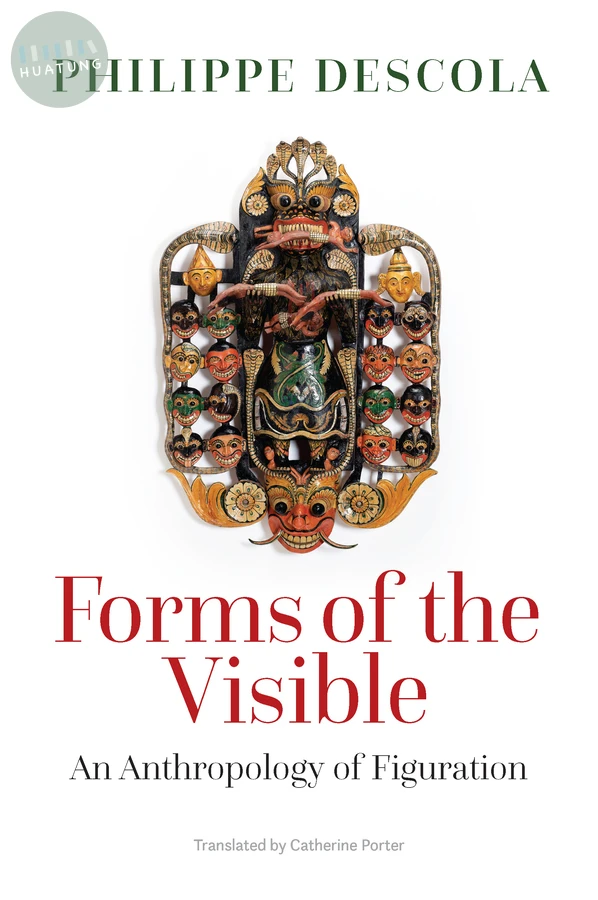

Forms of the Visible
$1296元 定價: $1440 9折 可訂購
簡介
Imagery and figuration are not just figments of an artist’s imagination. Perception and imagination are always shaped by what habit has taught us to discern. The visual path we spontaneously trace through the world depends on where we are situated in the four regions of the ontological archipelago: animism, naturalism, totemism or analogism. Each of these four regions corresponds to a way of conceiving the objects that make up the world, of perceiving the continuities and discontinuities in the folds of the world and of drawing the dividing lines between humans and nonhumans.
From Alaskan Yup’ik masks and Aboriginal bark paintings to miniature landscapes from the Song dynasty and Dutch Golden Age interior scenes: each image reveals, through what it shows or fails to show, a certain figurative regime, identifiable by the formal means it uses and by the device through which it can unleash its power to act. The figurative regime enables us to grasp – sometimes better than words can – the contrasting ways of living that characterize the human condition and its relation to the nonhuman. By comparing a great diversity of visual images and artworks, Descola masterfully lays the theoretical foundations for an anthropology of figuration.
One of the world’s leading anthropologists, Philippe Descola has developed a comparative anthropology of relations between humans and nonhumans that has revolutionized both the human sciences and our ways of thinking about the great ecological issues of our time. His new book will be of great value to students and scholars of anthropology, visual art and art history and to anyone interested in art, culture and the relations between the human and nonhuman worlds.
目錄
Preface
1. The Folds of the World
Layers of invisibility
The embodied sign
Ontologies of images
Geometries of figuration
Forms of ostension and powers to act
PART ONE: PRESENCES
2. Embodied Spirits
Animal persons
Think animals
Who's there?
Distinguishing resemblances
Ontological camouflage
3. Multiplying Viewpoints
4. Relational Identities
PART TWO. INDICES
5. Types of Beings and Courses of Life
Figuring the ordering
Figuring the organizer
Figuring the traces of the organizing
6. A Heraldry of Qualities
7. The Power of Traces
Variation 1. Repertoire-Image and Person-Image
PART THREE. CORRESPONDENCES
8. Exercises in Composition Hybrids and chimeras
Pictured bonds
The great world and the small one
9. Conjunctive Spaces
10. Role Playing
PART FOUR: SIMULACRA
11. Facing the World
The conquest of the visible
Painting the soul
Instituting nature
Toward immanence
Impossible objectivity
12. Objectivizing the Subjective
13. Detecting Resemblance
Variation 2. Playing on All Fronts
Conclusion. Image-Making
Ontologies
Forms
Agencies Incarnations
Postscript. Scaffoldings
The quarrel over resemblance
Animating images
Imaged languages
Acknowledgements
Notes
Bibliography
Index
List of Illustrations
List of Tables