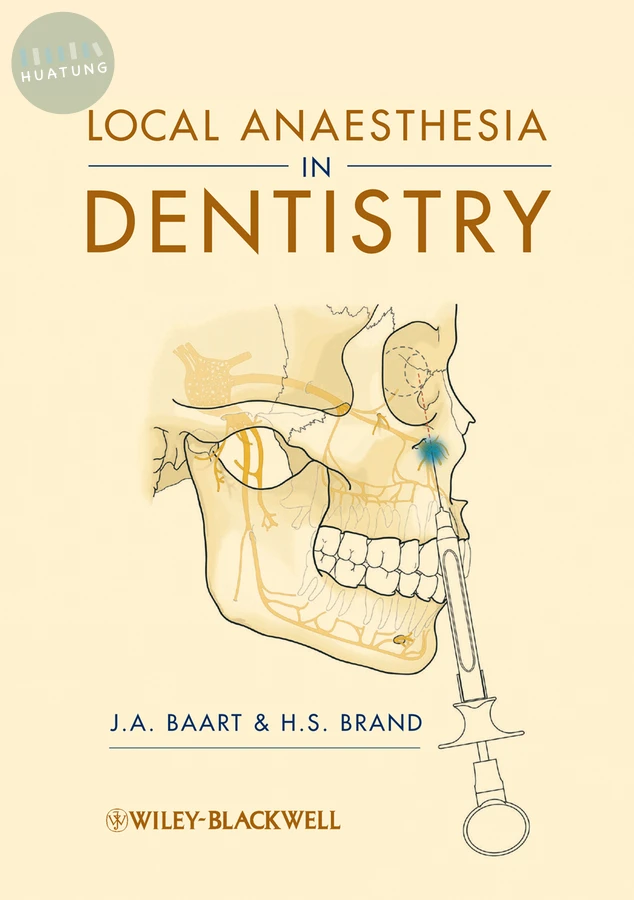

Local Anaesthesia in Dentistry
$1833元 定價: $2037 9折 可訂購
簡介
Local Anaesthesia in Dentistry is a practical guide for both students and general practitioners to this essential area of clinical practice.
Highly illustrated in full colour throughout, the book provides clear and practical guidance to the administration of local anaesthesia. The book introduces the reader to the concept of nerve conduction and pain as well as providing an explanation of the anatomy of the trigeminal nerve. Further chapters cover such key areas of practice as regional anaesthesia, local anaesthesia in children, pharmacology, local and systemic complications, general practical aspects, the prevention of side effects and legal aspects.
目錄
Foreword xi
Editors and authors xiii
Editors xiii
Authors xiii
Dedication xiv
Introduction: a short history of local anaesthesia xv
Further reading xvii
1 Pain and impulse conduction 1
1.1 Pain receptors 1
1.2 Nerve impulse transmission 3
1.2.1 The structure of the peripheral nerve 3
1.2.2 Impulse formation 4
1.2.3 Impulse conduction and transfer 10
1.2.4 Modulation of the impulse 11
1.3 Perception of pain 13
1.4 Nociception in the orofacial area 14
2 Anatomy of the trigeminal nerve 15
2.1 Introduction 15
2.2 The central part of the trigeminal nerve 16
2.2.1 Origin 16
2.2.2 Trigeminal nuclei 17
2.3 The peripheral part of the trigeminal nerve 18
2.3.1 Ophthalmic nerve 18
2.3.2 Maxillary nerve 19
2.3.3 Mandibular nerve 21
2.4 Deep areas 24
2.4.1 Pterygopalatine fossa 25
2.4.2 Infratemporal fossa and pterygomandibular space 26
3 Pharmacology of local anaesthetics 31
3.1 Classification 31
3.2 Pharmacodynamics 33
3.3 Pharmacokinetics 34
3.3.1 Physical–chemical characteristics 34
3.3.2 Diffusion 34
3.3.3 Mode of action of local anaesthetics 36
3.3.4 Protein binding 37
3.3.5 Onset time and duration of action 37
3.3.6 Local elimination 38
3.3.7 Systemic elimination 39
3.4 Additives to local anaesthetics 40
3.4.1 Vasoconstrictors 40
3.4.2 Preservatives 40
3.5 Additives to topical anaesthetics 41
4 General practical aspects 43
4.1 Use of local anaesthetics 43
4.2 Indications and contraindications 43
4.3 Instruments 45
4.3.1 Cartridges 45
4.3.2 Needles 47
4.3.3 The syringe 49
4.4 Topical anaesthesia 52
4.5 Position of the patient and dentist 53
4.6 Verification of effectiveness 55
5 Local anaesthesia in the upper jaw 57
5.1 Introduction 57
5.2 Incisors and canines 58
5.2.1 Anatomical aspects 58
5.2.2 Indication 58
5.2.3 Technique 60
5.3 Premolars 62
5.3.1 Anatomical aspects 62
5.3.2 Indication 63
5.3.3 Technique 63
5.4 Molars 64
5.4.1 Anatomical aspects 64
5.4.2 Indication 66
5.4.3 Technique 66
5.5 The impacted third molar of the upper jaw 69
5.5.1 Anatomical aspects 69
5.5.2 Indication 69
5.5.3 Technique 69
6 Local anaesthesia in the lower jaw 71
6.1 Introduction 71
6.2 Incisors and canines 73
6.2.1 Anatomical aspects 73
6.2.2 Indication 73
6.2.3 Technique 75
6.3 Premolars 76
6.3.1 Anatomical aspects 76
6.3.2 Indication 76
6.3.3 Technical aspects 77
6.4 The direct and indirect technique 78
6.5 Molars 84
6.5.1 Anatomical aspects 84
6.5.2 Indication 85
6.5.3 Technique 85
6.6 Third molars in the lower jaw 85
6.6.1 Anatomical aspects 85
6.6.2 Indication 86
6.6.3 Technique 86
7 Additional anaesthetic techniques 87
7.1 Maxillary nerve block 87
7.1.1 High tuberosity anaesthesia 87
7.1.2 Greater palatine foramen block 88
7.2 Infraorbital nerve block 90
7.3 Nasopalatine nerve block 90
7.4 Mental nerve block 92
7.5 Gow-Gates technique 94
8 Local anaesthesia for children 97
8.1 Introduction 97
8.2 Experience of pain and fear in children 98
8.2.1 Security and support 99
8.2.2 Preparation for anaesthesia 102
8.2.3 Child-friendly procedure 102
8.2.4 Warning 104
8.3 Techniques 106
8.3.1 Topical anaesthesia 106
8.3.2 Infiltration anaesthesia 108
8.3.3 Mandibular block anaesthesia 110
8.3.4 Intraligamental anaesthesia 112
8.3.5 Microprocessor-controlled anaesthesia 113
8.3.6 Amount of anaesthetic fluid for children 114
8.4 Observation of the child 115
8.5 Complications of mandibular block anaesthesia 115
9 Local complications 117
9.1 Needle breakage 117
9.2 Pain during administration 118
9.3 Insufficient anaesthesia 119
9.4 Excessive spread of anaesthesia 119
9.5 Iatrogenic damage and self-inflicted damage of anaesthetised tissues 121
9.6 Persistent sensitivity disorders 121
9.7 Skin paleness (‘blanching’) 122
9.8 Tissue necrosis 122
9.9 Haematoma formation and trismus 123
9.10 Infection 124
10 Systemic complications 127
10.1 Introduction 127
10.2 Vasovagal collapse 127
10.3 Hyperventilation syndrome 128
10.4 Toxicity 128
10.4.1 Effects on the central nervous system 128
10.4.2 Cardiovascular effects 130
10.4.3 Treatment of toxic reactions 131
10.5 Systemic effects of vasoconstrictors 131
10.6 Allergic reactions 132
10.6.1 Immediate hypersensitivity reactions 132
10.6.2 Delayed hypersensitivity reactions 133
10.6.3 Treatment of allergic reactions 133
10.6.4 Strategy for suspected allergy 134
10.7 Prevention of side effects 135
11 Patients at risk 137
11.1 Introduction 137
11.2 Cardiovascular disease 137
11.3 Hypertension 142
11.4 Cerebrovascular accident 143
11.5 Increased bleeding tendency 143
11.6 Liver diseases 144
11.7 Diabetes mellitus 144
11.8 Hyperthyroidism 144
11.9 Hypoproteinaemia 145
11.10 Pregnancy 145
11.11 Use of medication 146
12 Legal aspects of local anaesthesia 149
12.1 Judges and courts 149
12.2 Competency to give local anaesthesia 151
12.2.1 General and local anaesthesia given by the dentist 151
12.2.2 Local anaesthesia given by paramedics 152
12.3 Liability 153
12.3.1 A damaged nerve following anaesthesia: informed consent 153
12.3.2 No anaesthesia given, faulty injection or insufficient anaesthesia 155
12.3.3 Application of anaesthesia and general medical complications: record-keeping 157
12.3.4 Insufficient caution during injection 159
12.4 Avoiding legal problems in the use of local anaesthesia 160
Further reading 160
Index 163