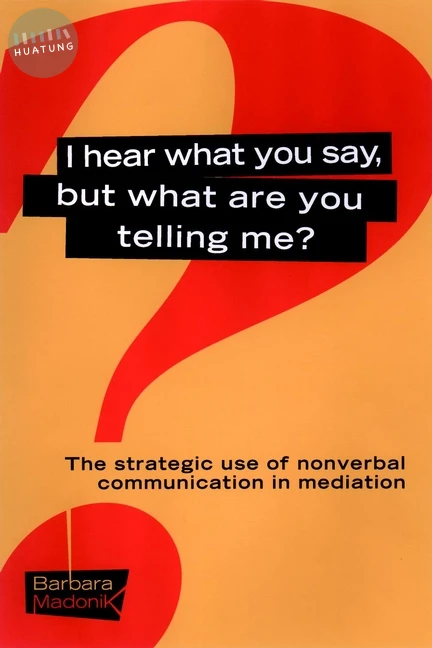
I Hear What You Say, But What Are You Telling Me?
$1456元 定價: $1618 9折 可訂購
簡介
I Hear What You Say, But What Are You Telling Me? is a fascinating, original, and invaluable tool kit filled with practical information and techniques for mediators who want to use nonverbal communication to their strategic advantage. Employing a proven process, Barbara Madonik--communication expert, mediator, and international consultant--reveals what it takes to understand, analyze, and utilize nonverbal communication to greatly enhance the mediation process.
目錄
Preface.
Acknowledgments.
Introduction.
Communication Realities.
A Blueprint for Nonverbal Strategies
Maximizing Your Results.
Part One: Essential Definitions and Practical Applications.
1. Essential Definitions-Terms and Tools.
Systems.
Cues.
Language.
Paralanguage.
Levels of Awareness.
Space.
Touch.
Time.
Objectics.
Symbolism.
2. Practical Applications-Representational Systems.
Eye Cues and Patterns.
Physical Cues and Patterns.
Language Cues and Patterns.
Paralanguage Cues and Patterns.
Deciding on a System.
3. Practical Applications-General Patterns and Techniques.
Understanding Messages in Patterns of Communication.
Identifying Individuals' Cues and Patterns.
Applying Nonverbal Techniques During Mediation.
Part Two: Seven Steps to Getting Results.
Step 1: Be Prepared.
Planning Ahead.
Having Useful Equipment On Hand.
Gathering Facts.
Step 2: Maximizing the Initial Telephone Contact.
Physical Factors In Telephone Communication.
Conversation Management.
Paralanguage Nuances.
Questioning.
Step 3: Managing the Environment.
Examining the Power Balance.
Providing for Safety.
Establishing Comfort.
Conveying Respect.
Step 4: Assessing the Parties.
Knowing Yourself.
Tracking the Big Picture.
Tracking Detailed Information.
Identifying Action Triggers.
Identifying Working Frameworks.
Step 5: Building Rapport.
Engaging the Parties.
Adjusting Your Responsiveness.
Changing Communication In the Room.
Configuring Productive Work Units.
Step 6: Triggering Action.
Coming Face-to-Face with the Real Issues.
Enabling the Parties to Build Momentum.
Dealing With Derailments.
Encouraging Physical Movement to Change Mental Positions.
Step 7: Bringing Closure.
Helping Parties Make Productive Decisions.
Presenting the Offer in a Compelling Way.
Guarding Against Buyer's Remorse.
Guiding the Parties To Craft the Final Agreement Jointly.
Helping Parties Leave the Conflict Behind.
Conclusion.
Appendix A: Taking Your Own Communication Inventory.
Appendix B: System Expressions.
Resources.
References.
About the Author.
Index.