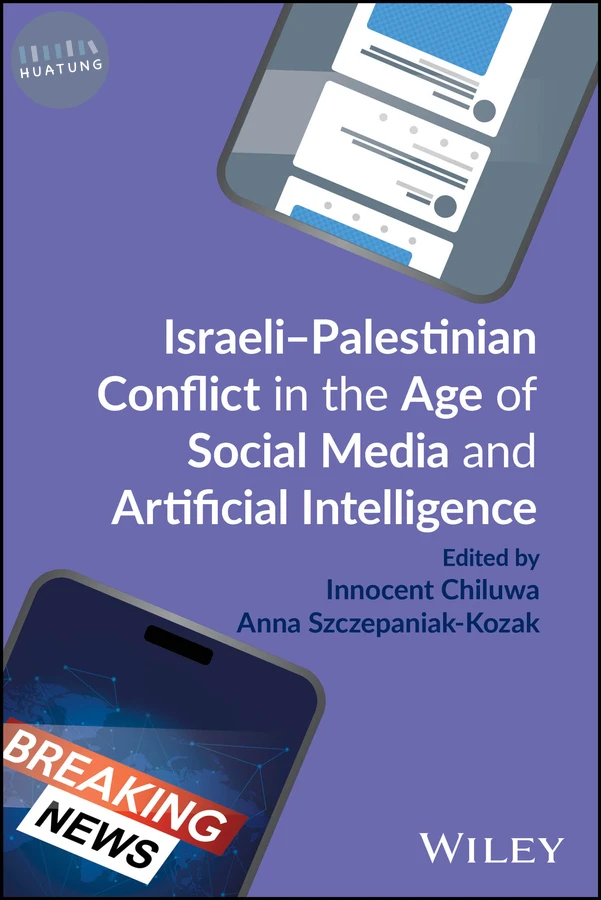
Israeli-Palestinian Conflict in the Age of Social Media and Artificial Intelligence
$2328元 定價: $2587 9折 可訂購
簡介
Examines How Social Media and AI Reshape Global Narratives of the Israeli–Palestinian Conflict The Israel–Palestine conflict has long stood at the center of international attention, but in the digital era, it has taken on new dimensions shaped by social media and machine intelligence. Israeli-Palestinian Conflict in the Age of Social Media and Artificial Intelligence offers an in-depth, interdisciplinary examination of how digital technologies have transformed the ways the conflict is represented, debated, and understood. By tracing the algorithmic amplification of propaganda, the rise of digital resistance movements, and the weaponization of disinformation, this pioneering collection provides an urgent scholarly response to a conflict increasingly mediated through data, platforms, and AI-driven systems of visibility and control. Editors Innocent Chiluwa and Anna Szczepaniak-Kozak bring together leading and emerging voices from across the humanities, social sciences, and information technology to address the interplay between communication, power, and justice in an age of algorithmic mediation. Through critical analyses of discourse, media structures, and technological infrastructures, the contributors reveal how social media and AI shape perceptions of legitimacy, violence, and victimhood, influencing both public sentiment and policy. Offering fresh frameworks for understanding how digital communication technologies not only reflect but actively construct geopolitical realities, Israeli-Palestinian Conflict in the Age of Social Media and Artificial Intelligence Explores how algorithms, bots, and generative AI shape global narratives of war, identity, and resistance
Offers interdisciplinary perspectives bridging linguistics, media studies, digital sociology, and political communication
Provides new evidence of how digital propaganda and misinformation influence public perception and policy debates
Demonstrates how online activism and AI-driven content amplify polarization and shape cultural imaginaries beyond the Middle East
Introduces innovative methodologies in critical discourse analysis and digital ethnography for studying conflict communication
The first comprehensive study of its kind, The Israel-Palestine Conflict in the Age of Social Media and Artificial Intelligence fills a vital gap in media and conflict scholarship. It is ideal for graduate and advanced undergraduate students, scholars, and researchers in linguistics, media and communication studies, political science, international relations, and conflict and peace studies. It is suitable for courses such as Media and Conflict Communication, Disinformation and Fake News, Algorithmic Media and AI in Communication, and Digital Ethics and Society within MA, MSc, and PhD programs.
目錄
Notes on Contributorsxiii
Foreword xviii
1 Introduction: How Social Media and Artificial Intelligence Construct the Israeli– Palestinian Conflict 1
Innocent Chiluwa and Anna Szczepaniak- Kozak
1.1 Introduction 1
1.1.1 The Conflict in the Age of Social Media and Artificial Intelligence 2
1.2 Summary of Chapters 5
1.3 Concluding Remarks 8
References 9
Part 1 Constructing Warfare in Algorithmic and AI-Generated Content 11
2 War in the Digital Realm: A Critical Study of Online Psychological Warfare in the Israeli– Palestinian Conflict 13
Mohul Sen and Nitesh Tripathi
2.1 Introduction 13
2.1.1 Defining Psychological Warfare, Propaganda, and Media Manipulation 14
2.1.2 Online Psychological Warfare and Manipulation 14
2.1.3 History of Digital Warfare 15
2.1.4 Impact of Digital Warfare on Global Security 16
2.2 Framing of War in the Media 16
2.2.1 Impact of Online Warfare 17
2.3 Methodology 18
2.4 Analysis and Findings 19
2.4.1 Posts by the Israel Defense Forces 19
2.4.1.1 Tweets by the Prime Minister of Israel 20
2.4.1.2 Tweets by the Israel Foreign Ministry 20
2.4.1.3 Tweet by Amichai Chikli— Minister of Diaspora Affairs of Israel 21
2.4.1.4 Tweets by Bezalel Smotrich, Israeli Finance Minister 22
2.4.1.5 Tweet by the Knesset, the Israeli Parliament 24
2.4.2 Posts from Palestine: Younis Tirawi, a Palestinian Journalist 25
2.4.2.1 Tweet by Husam Zomlot, a Palestinian Diplomat 26
2.5 Discussion and Conclusion 27
References 28
3 Algorithmic Imaginaries: AI- Generated Visual Narratives of the Israeli– Palestinian Conflict 30
Emre Meriç, Rahmi Uysal, and Onur Aker
3.1 Introduction 30
3.2 Literature Review 31
3.3 Data and Method 34
3.4 Findings 36
3.4.1 Visual Representations of Prompt #1: Destruction and Combat Aftermath 36
3.4.2 Visual Representations of Prompt #2: Civilian Perspectives and Conflict Impact 38
3.4.3 Visual Representations of Prompt #3: Peace and Negotiation 40
3.5 Discussion: Visual Elements in Conflict: Comparative Semiotic Analysis Across Platforms 44
3.6 Conclusion 47
References 48
4 Generic War Imaginaries: AI- Generated Images of the Israel– Gaza Conflict in the Adobe Stock Controversy 51
Stefano Brilli, Laura Gemini, and Chiara Spaggiari
4.1 Introduction: War as a Mediatized Process 51
4.2 The Post- photographic Turn and Documentary Photography 52
4.3 Methodology 54
4.4 The Adobe Controversy: Background Analysis 55
4.5 Findings 57
4.5.1 Production Site 57
4.5.2 Circulation Site 59
4.5.3 Audiencing Site 61
4.6 Conclusion 64
References 66
5 “Digital Justice in Wartime”. Content Strategy and Advocacy in the Coded Scenario 68
Sara Concetta Santoriello
5.1 Introduction 68
5.2 Watermelon Strategy Beyond Advocacy and Elusion 70
5.3 Terrorist Content Moderation: A Cross- platform Comparison 72
5.4 Double Standards in Policy- making 78
5.5 Conclusions 81
References 82
Part 2 Digital Activism and Resistance 85
6 Legitimating War and Retaliation in #IsraelUnderFire and #PrayForIsrael 87
Innocent Chiluwa and Katerina Strani
6.1 Introduction: The Israeli– Palestinian Conflict and the October 7
Attacks 87
6.2 Legitimation in Discourse 88
6.3 Hashtag Activism 90
6.4 Data and Method 91
6.4.1 Van Leeuwen’s Analytical Framework 91
6.5 Analysis and Discussion 93
6.5.1 Legitimation by Religion, Spiritual Authority, and Mythopoesis 93
6.5.2 Rationalization of the Right to Self- defense and Right to Exist 96
6.6 Conclusion 98
References 99
7 Disputing the Archive: Palestinian Women Filmmakers, AI, and the Battle over Representation 104
Carlos Navarro González
7.1 Introduction: An Initial Silence 104
7.2 Cinema and Archive as Forms of Palestinian Resistance 105
7.3 Palestinian Filmmakers and Design of AI Technology 107
7.4 “Cheap Synthetic Realism” and the Language of the Occupier 108
7.5 Contented Visions of Woman and Nationhood 110
7.6 The Border and Palestinian Identity 113
7.7 Conclusion 115
Acknowledgments 116
References 116
Interviews 117
Filmography 117
8 Subverting Pro- Israeli Tweets and “Hasbara” on X 119
Rhon Teruelle and Damani Wicks
8.1 Introduction 119
8.2 Pro- Israeli Media Bias 120
8.3 Digital Activism 122
8.4 Methods 123
8.5 Summary of Findings 124
8.6 Discussion and Conclusion 131
References 133
9 The Social Obligation Paradox: #BlockOut and Celebrity Silence in the Context of the Israel– Hamas War 138
Hannah Blundon
9.1 Introduction 138
9.2 Research Design 140
9.3 Analysis 142
9.3.1 Digital Activism as Contemporary Political Engagement 142
9.3.2 Navigating Uncertainty: Information Gaps and the Demand for Clarity 144
9.3.3 Intimacy and Irritation: Parasocial Relationships, Anti- Fandom, and the Influencer Economy 146
9.3.4 Backlash, Accountability, and the Ethics of Celebrity Silence 148
9.4 Conclusion: Reframing Influence, Accountability, and the Paradox of Public Expectation 150
References 152
10 [Re]Framing Victimhood: A Multimodal Discourse Analysis of Digital Narratives on the Israeli– Palestinian Conflict 155
Paulinus Nnorom, Oluwagbenga Kayode, and Bethel Obiyor
10.1 Introduction 155
10.2 Conceptualizing Victimhood in Digital Narratives 156
10.2.1 Victimhood in the Israeli– Palestinian Conflict 157
10.2.2 Digital Media, Contestation, and Framing in Conflict Narratives 158
10.2.3 Conflict Cartoons as Visual Discourse 158
10.3 Theoretical Paradigm: Multimodal Discourse Analysis 159
10.4 Methodology 160
10.5 Analysis and Discussions 160
10.5.1 Representational, Interactional, and Compositional Meaning 161
10.6 Findings and Conclusion 166
References 167
Part 3 Disinformation and Propaganda 173
11 Disinformation, Propaganda, and Hate Discourses on the Israel– Hamas Wars 175
Esra Demirci
11.1 Introduction 175
11.2 Media Framing of International Conflicts 176
11.3 Methodology 177
11.4 Analysis 178
11.4.1 Anadolu Ajansı 178
11.4.1.1 October 7 Hamas Attacks on October 7 in Three Questions (Anadolu Agency, October 7, 2023) 178
11.4.1.2 U.S. President Biden: Too Many Innocent Civilians Have
Lost Their Lives in Gaza (Anadolu Agency, February 13, 2024) 179
11.4.1.3 Reactions from Around the World to Israel’s Bombing of the Camp in Rafah (Anadolu Agency, May 27, 2024) 180
11.4.2 Al- Jazeera 182
11.4.2.1 What Happened in Israel? A Breakdown of How Hamas Attack Unfolded (Al Jazeera, October 7, 2023) 182
11.4.2.2 U.S. Pressure Could Derail ICC Arrest Warrants for Israeli Leaders (Al Jazeera, May 24, 2024) 183
11.4.2.3 What Do We Know About the Israel– Hamas Ceasefire Deal in Gaza? (Al Jazeera, January 15, 2025) 183
11.4.3 BBC 184
11.4.3.1 Hamas Blindsides Israel with Most Serious Attack in a Generation (BBC, October 7, 2023) 184
11.4.3.2 Top U.N. Court Orders Israel to Stop Rafah Offensive (BBC, May 25, 2024) 184
11.4.3.3 U.N. Says Worker Killed in Gaza as Israeli Air Strikes Resume (BBC, March 19, 2023) 185
11.4.4 Wall Street Journal 185
11.4.4.1 Israel Works to Expel Hamas Intruders and Secure Border (WSJ, October 8, 2023) 185
11.4.4.2 U.N. Court Orders Israel to Halt Some Military Operations in Rafah (WSJ, May 24, 2024) 186
11.4.4.3 Gaza Ceasefire Hit by Last- minute Delay (WSJ, January 19, 2025) 186
11.4.4.4 Overall Framing Tendencies and Code Relationships by Maxqda 187
11.5 Discussion 187
11.6 Conclusion 189
References 190
Web References 191
12 Algorithmic Bias in Social Media Platforms During Israel– Hamas War (2023– 2025): How Algorithms Magnify Divisive and Misleading Information 193
Muhammad Osama Shafiq
12.1 Introduction: The Digital Battlefield 193
12.2 AI Ranking Algorithms: Signals and Dynamics 194
12.3 Reinforcement Learning and Feedback Loops in Amplification 195
12.4 Platform Governance and Human- AI Moderation Architecture 196
12.5 Algorithmic Bias, Shadow Banning, and Content Suppression 198
12.5.1 General Concepts of Algorithmic Bias 198
12.5.2 Bias and Suppression in the Israel– Hamas Conflict 199
12.5.3 Legislative and Symbolic Context 200
12.6 Methodology 201
12.6.1 Findings from Personal Communication: Documented Cases of Content Restriction 201
12.7 Legal and Policy Influences on Algorithmic Moderation 204
12.8 Conclusion 206
References 207
13 Tactical Visibility: Algorithmic Affect and the Struggle Over Representation 209
Ayşe Aslı Bozdağ
13.1 Introduction 209
13.1.1 Visibility, Politics, and Representation 209
13.1.2 Algorithmic Visibility and the Politics of Amplification 210
13.2 Analysis and Discussion 212
13.2.1 Affect Above All: Infotainment 213
13.2.2 Gamified War 213
13.2.3 Glitches as Affective Cracks 215
13.2.4 Affective Algorithmics and Tactical Visibility 217
13.3 Conclusion 220
References 221
14 Weaponizing Lies on Social Media: Disinformation on the Israel– Palestine Conflict as Classified by PolitiFact 228
Aftab Hossain, Gregory John Simons, Abdul Kabil Khan, and Sakibul Alam
14.1 Introduction 228
14.1.1 Misinformation in Conflict Zones 229
14.1.2 Why the Israel– Palestine Conflict Is Vulnerable to Misinformation 230
14.1.2.1 Polarized Audiences and Confirmation Bias 230
14.1.2.2 Social Media and the Spread of False Narratives 230
14.1.3 Social Media, Misinformation, War, and Geopolitics 231
14.2 Methodology 232
14.2.1 Categories of Misinformation 233
14.2.2 Narrative Framing Techniques 234
14.3 Analytical Techniques 234
14.3.1 Descriptive Statistics 235
14.3.2 Cross- tabulation 235
14.3.3 Interpretive Narrative Analysis 235
14.3.4 Validity and Reliability 235
14.4 Analysis and Results 236
14.4.1 Quantitative Results 236
14.4.1.1 Narrative Framing Strategies 236
14.4.2 Qualitative Analysis 237
14.4.2.1 Amplifying Victimhood 237
14.4.2.2 Justifying Violence 238
14.4.2.3 Exploiting Historical Grievances 238
14.4.2.4 Other 238
14.4.3 Cross- analysis: Category vs. Narrative Strategy 239
14.4.4 Discussion and Conclusion 239
References 241
15 How IDF TikTok Videos Aestheticize War into Entertainment after October 7, 2023 246
Carolin Constanze Melz
15.1 Introduction 246
15.2 TikTok and the Culture of Spectacle 247
15.3 The Military- Entertainment Complex Amplified on TikTok 248
15.4 Theoretical Framework 249
15.5 Methodology 250
15.6 Analysis: The Spectacle of War on TikTok 252
15.6.1 Video 1: The Domestic as Theatre 252
15.6.1.1 Absence of the Victim 255
15.6.2 Video 2: Femininity as Soft Propaganda 255
15.6.3 Video 3: Bombing as Cinematic Performance 258
15.7 Conclusion: From Spectacle to Moral Numbness 261
References 262
Index 264