
簡介
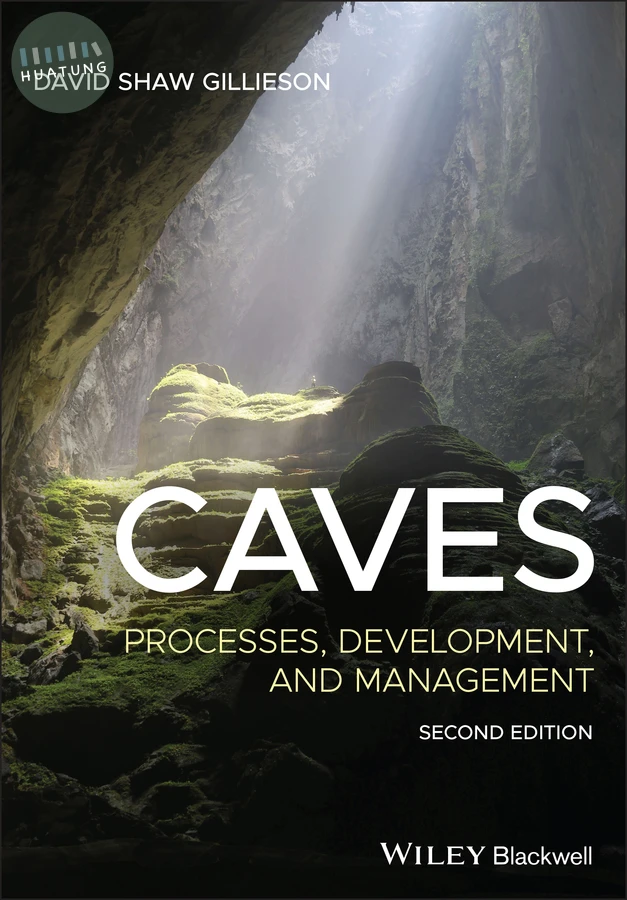
People have been interested in caves for a very long time. Our distant ancestors used them for shelter, as sources of water, and as places in which to conduct essential rituals. They adorned their walls with quite sophisticated artwork depicting both their existential and spiritual concerns. Caves feature in our mythology, they are used as places of worship in many cultures, and they are used throughout the world as places in which to store prized foodstuffs and wine. For at least two hundred years they have attracted scientists, artists, photographers, and recreational cavers. This book aims examines how caves form, the light they shed on past environments and climates, and the values, both environmental and cultural, that they provide to humanity.
This second edition of Caves: Processes, Development, and Management is a welcome revision of the author's earlier treatment released over twenty years ago. It has been updated, significantly expanded, and largely rewritten. The intervening years have seen a dramatic increase in karst and cave research globally, with significant advances in our understanding of fundamental processes, in our ability to extract proxy climatic and environmental data from cave deposits, and in our understanding of the breadth of cave values and as a result the complexity of their management needs. This new edition adopts a broad international perspective in the research examples used and the cited literature, and has actively sought out material from the tropical world and the southern continents, thus avoiding the European and North American bias frequently found in speleological publications.
Caves: Processes, Development, and Management, Second Edition, is organised into four sections. In the first section, contemporary processes of cave formation are examined. The second section of the book deals with past processes and their physical manifestation. In the third section, the use of caves by various organisms from bacteria to humans is explored. The final section of the book reviews our changing approaches to cave management and to catchment management on karst terrains. The book will be of use to anyone who is interested in caves and karst, or who wants to understand about cave formation, development, values and management.
目錄
Preface and Acknowledgements xiii
1 Introduction 1
1.1 Some Basic Propositions 1
1.2 Now the Details… 3
2 Caves and Karst 6
2.1 What Is a Cave? 6
2.2 What Is Karst? 7
2.3 Caves as Systems 9
2.4 Where Are the Deepest and Longest Caves? 14
3 Cave Hydrology 18
3.1 Basic Concepts in Karst Drainage Systems 18
3.2 Porosity and Permeability 20
3.4 Defining the Catchment of a Cave 30
3.5 Analysis of Karst Drainage Systems 32
3.6 Structure and Function of Karst Drainage Systems 41
3.7 Karst Hydrology of the Mammoth Cave Plateau, Kentucky 47
4 Processes of Rock Dissolution 55
4.1 Introduction 55
4.2 Karst Rocks 55
4.3 Processes of Dissolution of Karst Rocks 66
4.4 Hydrothermal Solution of Limestone 73
4.5 Solution of Evaporites 74
4.6 Solution of Silicates in MeteoricWaters 75
4.7 Caves in Quaternary Limestone in Southern Australia 77
5 Speleogenesis 86
5.1 Classifying Cave Systems 86
5.2 Controls of Rock Structure on Cave Development 89
5.3 Meteoric Speleogenesis, Unconfined and Confined 96
5.4 Hypogene Speleogenesis 115
5.5 Flank Margin Speleogenesis 120
5.6 Caves Formed in Gypsum 122
5.7 Lava Tubes, Weathering Caves, and Pseudokarst 123
5.8 Life History and Antiquity of Caves 126
5.9 Geological Control and theWorld’s Longest Cave 127
6 Cave Interior Deposits 138
6.1 Introduction 138
6.2 Carbonates 144
6.3 Controls over Carbonate Mineralogy 148
6.4 Other Cave Deposits Formed by Carbonate Minerals 149
6.5 Growth Rates of Speleothems 151
6.6 Important Non-carbonate Minerals 153
6.7 Ice in Caves 157
6.8 Other Minerals 158
6.9 Cave Deposits of the Nullarbor Plain, Australia 158
7 Cave Sediments 171
7.1 Introduction 171
7.2 Clastic Sediment Types 171
7.3 Processes of Sedimentation 172
7.4 Sediment Transport and Particle Size 185
7.5 Diagenesis of Cave Sediments 188
7.6 Stratigraphy and its Interpretation 189
7.7 Provenance Studies 190
7.8 Cave Sediments and Environmental History at Zhoukoudian, China 191
8 Dating Cave Deposits 198
8.1 The Importance of Dating Cave Deposits 198
8.2 Dating Techniques and the Quaternary Timescale 199
8.3 Palaeomagnetism 200
8.4 Uranium Series; Uranium-Thorium, Uranium-Lead 203
8.5 Radiocarbon 211
8.6 Other Dating Methods: Cosmogenic Radionuclides, and Tephrochronology 213
8.7 Timing Glacial and Interglacial Events in New Zealand 215
9 Cave Deposits and Past Climates 225
9.1 Introduction 225
9.2 Oxygen Isotope Analysis 226
9.3 The Last Glacial-Interglacial Temperature Record 228
9.4 Carbon Isotopes and Environmental Changes 234
9.5 Cyclone History in the Indo-Pacific Region 235
9.6 Other Proxy Records (Trace Elements, Annual Laminae, Pollen, Lipid iomarkers) 239
9.7 The Long Environmental History of the Nullarbor Plain, Australia 240
9.8 Some Speculations on the Future 245
10 Cave Ecology 248
10.1 Introduction 248
10.2 Classification of Cave Life and its Function 248
10.3 Adaptations and Modifications to Life in Darkness 249
10.4 Life Zones within Caves 252
10.5 The Cave as a Habitat 255
10.6 Energy Flows in Cave Ecosystems 261
10.7 Cave Microbiology 264
10.8 Origin and Dispersal of Cave-Dwelling Animals 267
10.9 Threats to Cave Fauna 270
10.10 Conservation of Biological Diversity in Caves 275
10.11 Caves and Ecosystem Services 277
10.12 White Nose Syndrome 280
10.13 Unravelling the Secrets of the Carrai Bat Cave 283
11 Cave Archaeology 292
11.1 Introduction 292
11.2 Prehistoric Uses of Caves 293
11.3 Cave Faunas and Hominids 294
11.4 Cave Art in Context 300
11.5 Depositional Environments in Caves 304
11.6 Cave Deposits and Biological Conservation 305
11.7 Taphonomy of Cave Deposits 306
11.8 Archaeology of Liang Bua Cave, Flores (the Hobbit Cave) 309
12 Historic Uses of Caves 318
12.1 Introduction 318
12.2 Caves as Shelter 318
12.3 Caves as Sacred Spaces 321
12.4 Caves as Sources of Raw Materials 324
12.5 Cave Tourism 333
12.6 Cave Dwellings in Turkey 335
13 Cave Management 342
13.1 Introduction -- Caves as Contested Spaces 344
13.2 Interpretation and Guide Training 345
13.3 Cave Lighting 348
13.4 Some Engineering Issues in Caves 349
13.5 Impacts of Visitors and Infrastructure on Show Caves 352
13.6 Radon Risk in Caves 358
13.7 Cave Cleaning and its Impacts 362
13.8 Impacts of Recreational Caving on Caves 362
13.9 Cave Rescue 367
13.10 Cave Inventories and Alternative Management Concepts 371
13.11 Rehabilitation and Restoration of Caves 374
13.12 Cave Classification and Management 376
13.13 Policy Approaches to Cave and Karst Protection 378
13.14 Management of the Gunung MuluWorld Heritage Area, Sarawak, Malaysia 379
14 Catchment Management in Karst 393
14.1 Introduction 393
14.2 Basic Concepts in Karst Management 393
14.3 Defining Karst Catchments 395
14.4 Vegetation and Caves 398
14.5 Accelerated Soil Loss in Karst 400
14.6 Agricultural Impacts 402
14.7 Fire Management in Karst 412
14.8 Conservation Issues in Karst 414
14.9 Assessing Vulnerability in Karst Management 415
14.10 Understanding Disputes Over Cave and Karst Resources 421
14.11 The IUCN Guidelines for Cave and Karst Protection 423
15 Documentation of Caves 432
15.1 Geoheritage Assessment 432
15.2 Cave Mapping 436
15.3 Cave Photography 442
15.4 3D Scanning of Caves 449
15.5 Drones 453
15.6 MappingWorld Heritage Caves in Gunung Mulu National Park, Malaysia 454
References 457
Glossary of Cave and Karst Terminology 461
Further Reading 474
Index 475