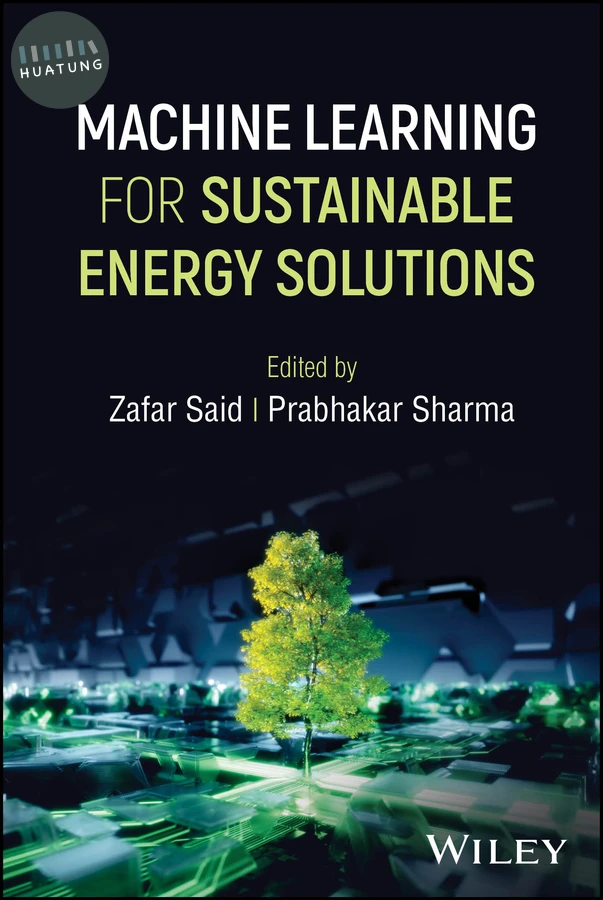

Machine Learning for Sustainable Energy Solutions
$6143元 定價: $6826 9折 可訂購
簡介
Comprehensive insights into integrating modern engineering techniques with machine learning and renewable energy to create a more sustainable world Through an interdisciplinary approach, Machine Learning for Sustainable Energy Solutions provides comprehensive insights into integrating modern engineering techniques such as machine learning (ML), artificial intelligence (AI), nanotechnology, digital twins, and the Internet of Things (IoT) with renewable energy. Each chapter is based on modern research and enhanced by experimental or simulated data. The book offers a thorough review of several energy storage techniques, helping readers fully grasp the larger background in which chemical, thermal, electrical, mechanical, and machine learning technologies may be used to evaluate, categorize, and maximize different storage systems. The book also reviews the confluence of the Internet of Things (IoT) and machine learning for real-time digestive parameter control and monitoring, along with the cooperative importance of mathematical modeling and artificial intelligence in maximizing reactor performance, gas output, and operational stability. Machine Learning for Sustainable Energy Solutions includes information on: Bio-based energy generation from biomass gasification and biohydrogen
Usage of hybrid approaches, support vector machines, and neural networks to anticipate and maximize bioenergy production from challenging organic feedstocks
Hydrogen-powered dual-fuel engines, covering response surface methodology (RSM) for multi-attribute optimization
Scalable, experimentally confirmed ML-based solutions for long-standing problems like sedimentation, pumping losses, and stability of nanofluids
The growing and important use of nanotechnology in energy systems, particularly in engine emissions management, energy storage, and heat transfer improvements
Machine Learning for Sustainable Energy Solutions is an essential reference for professionals, researchers, educators, and students working in the fields of energy, environmental science, and machine learning. The book also helps decision-makers in various fields by providing them the required knowledge to make informed choices on sustainable practices and policies.
目錄
List of Contributors xii
Preface xvi
1 Green Energy-Led Sustainable Development: Barriers and Opportunities 1
Arni Gesselle M. Pornea, and Hussein Safwat Hasan Hasan
1.1 Introduction 1
1.2 The Current Landscape of Green Energy 3
1.2.1 Green Energy Types and Technologies 3
1.2.2 Global Green Energy Usage Statistics 3
1.3 Barriers to Green Energy Implementation 4
1.3.1 Economic and Financial Challenges 4
1.3.1.1 High Initial Costs 5
1.3.1.2 Investment Risks 5
1.3.2 Regulatory and Policy Frameworks 5
1.3.3 Social Acceptance and Cultural Factors 6
1.3.4 Technological Barriers 6
1.4 ml and AI in Green Energy 7
1.4.1 Technological Assessment and Optimization 7
1.4.2 Predictive Net-Zero Initiative 8
1.4.3 Enhancing Energy Storage Systems 9
1.4.4 Energy Demand and Supply Forecasting 9
1.4.5 Setting Ambitious Goal 10
1.4.6 Activate Support and Financial Investment 10
1.5 Challenges in the Integration of ML and AI in Renewable Energy 10
1.6 Directive in ML and AI Improvement Toward Its Application 11
1.6.1 Workforce Capacity Increase 12
1.6.2 Large-Scale Project Implementation 12
1.6.3 Public Awareness 12
1.6.4 Continuous Progress Monitoring and Strategies Adjustment 12
1.7 Conclusion 13
References 14
2 Machine Learning-Driven Valorization of Organic Waste for Sustainable Bio-Hydrogen Production 17
Munusamy Arun, Debabrata Barik, and Sreejesh S. R. Chandran
2.1 Introduction 17
2.1.1 Objectives 18
2.2 Literature Review 18
2.3 Proposed Method 19
2.4 Results and Discussion 25
2.4.1 Bio-Hydrogen Production Efficiency Analysis 25
2.4.2 Performance Analysis 25
2.4.3 Adaptability Analysis 27
2.5 Conclusion 28
Author Contributions 29
Acknowledgment 29
Data Availability Statement 29
Funding Statement 29
Conflict of Interest 29
References 30
3 Application of Neural Networks for Model Prediction of Combustion and Emissions in Diesel Engines 33
Parampreet Singh Jassal, Sridhar Sahoo, and Neeraj Kumbhakarna
3.1 Introduction 34
3.2 Artificial Neural Networks 35
3.2.1 Types of Artificial Neural Networks 37
3.3 AI and ANN in Internal Combustion Engines 39
3.4 ANN in Diesel Engines 40
3.4.1 ANN for Different Fuel Properties 41
3.4.2 ANN for Diesel Engine Performance 41
3.4.3 ANN for Diesel Engines Using Biodiesel Blends 43
3.4.4 ANN for Gaseous Fuels 47
3.4.4.1 MISO Model Studies 48
3.4.4.2 MIMO Model Studies 48
3.4.4.3 Comparative Studies 48
3.4.5 ANN for HCCI Engines 50
3.5 Conclusions 52
References 53
4 Enhanced Energy Storage with Hybrid Nanoparticles and Machine Learning for Energy Sustainability 59
Arun Munusamy, Debabrata Barik, and Sreejesh S.R. Chandran
4.1 Introduction 59
4.2 Materials and Methods 61
4.3 Result and Discussion 67
4.4 Conclusion 69
Author Contributions 70
Acknowledgment 70
Data Availability Statement 70
Funding 70
Conflict of Interest 70
References 71
5 Model Prediction of Biomass Gasification Using Support Vector Machines 73
Arun Munusamy and Debabrata Barik
5.1 Introduction and Literature Survey 73
5.2 Materials and Methods 76
5.3 Results and Discussion 83
5.4 Conclusion 89
References 90
6 Role of Machine Learning Techniques in Modeling and Optimization of Biomass Gasification Parameters in a Downdraft Gasifier 93
Vikas Attri and Avdhesh Kr. Sharma
6.1 Introduction 93
6.2 Biomass Gasification 94
6.2.1 Gasification Process 95
6.2.2 Gasification Parameters 97
6.2.2.1 Biomass Characterization 98
6.2.2.2 Equivalence Ratio 98
6.2.2.3 Gasification Temperature 99
6.2.2.4 Biomass Consumption Rate 99
6.2.2.5 Cold Gas Efficiency (CGE) 99
6.2.2.6 Importance of Various Gasifying Agents in the Gasification Process 99
6.2.2.7 Effect of the Gasification Parameters on the Producer Gas 100
6.3 Machine Learning Techniques in Biomass Gasification 100
6.3.1 Gaussian Process Regression 101
6.3.2 Support Vector Machines 101
6.3.3 Artificial Neural Network 103
6.3.4 Decision Trees 105
6.4 Model Performance Metrics 105
6.5 Application of the ML Model in Biomass Gasification 106
6.6 Challenges and Prospects 107
6.7 Conclusion 108
References 109
7 Response Surface Methodology-Based Multiattribute Optimization of a Hydrogen-Powered Dual-Fuel Engines 115
Sanjeev Kumar, Prabhu Paramasivam, and Abdul Razak
7.1 Introduction 115
7.2 Materials and Methods 118
7.2.1 Test Engine Setup and Fuel 118
7.2.2 Analysis of Variance 119
7.2.3 Response Surface Methodology 120
7.3 Results and Discussion 121
7.3.1 Correlation Analysis 121
7.3.2 Analysis of Variance 121
7.3.3 Surface Diagrams and Predictions 126
7.3.4 Parametric Optimization 134
7.4 Conclusion 135
References 135
8 Addition of Nanoparticles to Biodiesel–Diesel Blends to Improve Engine Efficiency and Reduce Tailpipe Emission 139
Mudasar Zafar, Abida Hussain, Tauseef Ahmed, Ahmed Daabo, and Farman Ullah
8.1 Introduction 139
8.2 Background and Performance of Biodiesel Blends in Engine Efficiency 141
8.2.1 Properties of the Biodiesel 142
8.2.2 Performance 144
8.2.3 Performance of Biodiesel Blends in Emission Characteristics 145
8.3 Mechanisms of Nanoparticles in Combustion Improvement 147
8.4 Biodiesel–Diesel Blends Nanoparticle Method 148
8.4.1 Limitations 150
8.4.2 Future Work 151
8.5 Conclusion 151
Author Contributions 152
Statement of Interest 152
Acknowledgment 152
References 152
9 Hybrid Nanoparticles to Improve Solar-Based Energy Storage 161
Pethurajan Vigneshwaran, Abin Roy, B.S. Bibin, and Saboor Shaik
9.1 Introduction 161
9.2 Thermal Energy Storage Systems 162
9.2.1 Sensible Heat Storage 163
9.2.2 Latent Heat Storage (LHS) 164
9.2.2.1 Phase Change Material (PCM) 165
9.2.3 Thermochemical Energy Storage 166
9.3 Solar Energy Storage Systems 166
9.3.1 TES for Solar Energy Storage Systems 166
9.3.2 Latent Heat TES in Solar Energy Storage Systems 168
9.4 Role of Nanotechnology in Solar Energy Storage 169
9.4.1 Types of Nanoparticles 169
9.4.2 Nanoparticles in Thermal Energy Storage 170
9.4.2.1 Inorganic-Based Nanomaterials 172
9.4.2.2 Carbon-Based Nanomaterials 172
9.4.2.3 Hybrid Nanomaterials 172
9.5 Applications of Nanoparticles in Solar Energy Storage 173
9.5.1 Solar Collectors 173
9.5.2 Solar Thermal Energy Conversion 174
9.5.3 Solar Photovoltaic System 175
9.5.4 Solar Heater 175
9.5.5 Solar Desalination 176
9.5.6 Other Applications 176
9.6 Conclusions and Future Recommendations 176
References 178
10 Application of Artificial Intelligence to Model-Predict the Thermo-physical Property of Hybrid Nanofluids 185
Prabhakar Sharma, Sanjeev Kumar, and Zafar Said
10.1 Introduction 185
10.2 Materials and Methods 188
10.2.1 Synthesis 188
10.2.2 Machine Learning 188
10.2.2.1 Linear Regression 189
10.2.2.2 Tweedie Regression 189
10.2.2.3 Huber Regression 189
10.2.2.4 Extreme Gradient Boosting 190
10.3 Results and Discussion 191
10.3.1 Data Analysis and Correlation 191
10.3.2 Linear Regression Model 193
10.3.3 Huber Regression Model 195
10.3.4 Tweedie Regression Model 195
10.3.5 XGBoost Model 198
10.3.6 Model Comparison 200
10.4 Conclusion 202
References 202
11 Optimization of Nanofluids for Heat Exchangers: Dealing with Sedimentation and Pump Losses 209
Nikhil S. Mane, Sayantan Mukherjee, Redhwan Almuzaiqer, and Niteen Bhirud
11.1 Introduction 209
11.2 Sedimentation 211
11.3 Pump Losses 216
11.4 Thermo-Economic Aspect of the Nanofluids 217
11.5 Conclusion 219
References 221
12 Clean Combustion with Biogas and Nano-Biodiesel in CI Engines 225
S. Lalhriatpuia, Md. Gulam Mustafa, and Lalhmingsanga Hauchhum
12.1 Introduction 225
12.2 Materials and Methods 228
12.2.1 Engine Specifications 228
12.2.2 Experimental Design 228
12.2.3 Fuel Properties 230
12.3 Modeling and Optimization 231
12.3.1 RSM Modeling 231
12.3.2 ANN Modeling 232
12.3.3 Optimization of RSM and ANN model 233
12.4 Results and Discussion 236
12.4.1 RSM Model Analysis 236
12.4.2 ANN Model Analysis 240
12.4.3 Optimization of RSM and ANN Model 241
12.5 Conclusions 243
References 244
13 A Differentiation of Energy Storage Methods 247
H. Bahuruteen Ali Ahamadu, K Arun, S Arivazhagan, N Sendhil Kumar, S. Kaliappan, and M. D. Rajkamal
13.1 Introduction 247
13.1.1 Conventional Energy Storage 248
13.1.2 Mechanical Energy Storage 248
13.1.3 Electrical Energy Storage 249
13.1.4 Electrochemical Energy Storage 249
13.1.5 Thermal Energy Storage 250
13.1.6 Characteristics of Thermal Energy Storage 250
13.1.7 Sensible Heat Storage 251
13.1.8 Aquifer Thermal Energy Storage 252
13.1.9 Hot Water Energy Storage 253
13.1.10 Cavern Energy Storage 254
13.1.11 Gravel Energy Storage 254
13.1.12 Molten Salt Energy Storage 255
13.1.13 Borehole Energy Storage 255
13.1.14 Packed-Bed Energy Storage 255
13.1.15 Latent Heat Storage 256
13.1.15.1 Latent Heat Energy Storage by Phase Change Material 256
13.1.15.2 Encapsulation of PCM 257
13.1.15.3 Latent Heat Energy Storage by Salt Hydrates 257
13.1.16 Thermochemical Energy Storage 258
13.2 Artificial Intelligence (AI) 258
13.2.1 AI in Energy Sector 258
13.2.1.1 Artificial Neural Network (ANN) 259
13.2.1.2 Fuzzy Logic (FL) 259
13.2.1.3 Adaptive Neuro Fuzzy Inference System (ANFIS) 259
13.2.1.4 Particle Swarm Optimization (PSO) 260
13.2.1.5 Support Vector Machine (SVM) 260
13.2.1.6 Implementation of AI in Energy Storage 260
13.3 Conclusion 260
References 262
14 Application of IoT and Machine Learning to Improve Biogas Production Through Anaerobic Digestion 267
Akshay Jain and Bhaskor Jyoti Bora
14.1 Introduction 268
14.2 Biogas Production 268
14.3 Techniques for Biogas Production Enhancement 269
14.4 Literature Review 270
14.5 Implementation of Mathematical Techniques for Biogas Production Enhancement 273
14.6 Conclusion 275
References 276
Index 281