
簡介
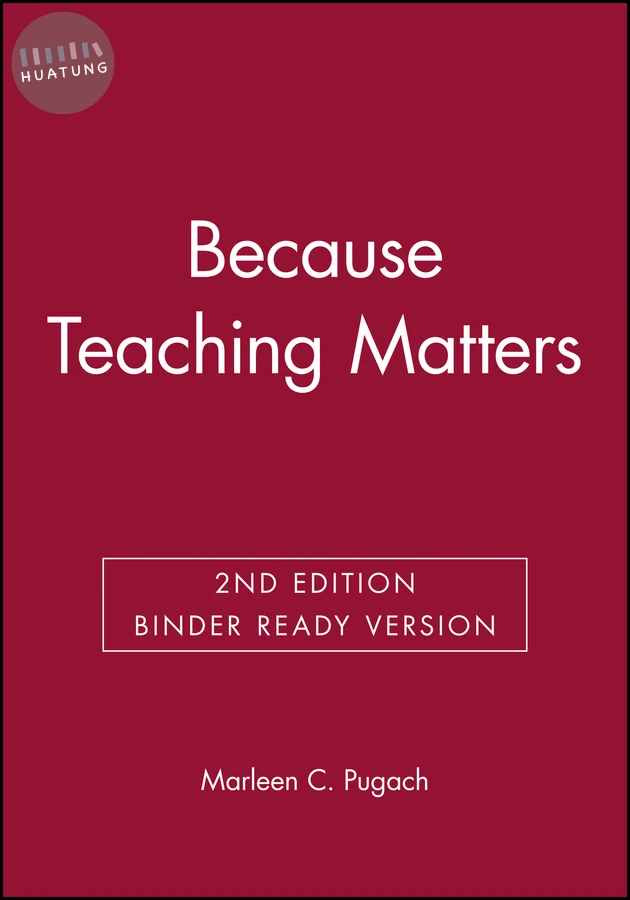
Because Teaching Matters provides teachers with a realistic depiction of today?s classrooms while highlighting the enormous impact they have on everyday lives. The second edition presents material around a framework of five professional commitments that allows them to make sense of what it means to be a teacher. A new critical-thinking framework helps them manage the content better and retain more of what they learn. Increased coverage of diversity and technology is integrated throughout the chapters. A new chapter has also been added on the history and philosophy of education. This book will help teachers make decisions and take responsibility for the consequences of those choices.
目錄
CHAPTER 1 Teaching: A Career That Makes a Difference 1
Five Professional Commitments to Guide the Choices You Make 2
Commitment #1: Learning from Multiple Sources of Knowledge Throughout Your Career 3
Commitment #2: Using the Curriculum Responsibly 5
Commitment #3: Crossing Your Own Familiar Borders to Embrace Diversity 6
Commitment #4: Meeting the Needs of Individual Students in the Context of the Classroom and the School 7
Commitment #5: Contributing Actively to the Profession 7
The Role of Reflection and Action in the Choices You Make 8
The Rewards and Demands of Making a Commitment to Teaching 8
The Rewards of Teaching 9
A Case In Point: Influencing the Lives of Students—A Teacher’s Gift 10
The Demands of Teaching 11
Meeting Standards for Good Beginning Teachers 12
Teaching: Is It Really for You? 14
Making a Choice about the Kind of Teacher You Want to Be 15
COMMITMENT #1 LEARNING FROM MULTIPLE SOURCES OF KNOWLEDGE THROUGHOUT YOUR CAREER 17
CHAPTER 2 Putting What You Already Know about Teaching into Perspective 19
Five Kinds of Experience That Create Prior Knowledge about Teaching 20
Knowledge about Teaching from Your Own Experience of Schooling 20
Autobiographical Knowledge about Teaching 23
Rewards and Challenges: Getting Started 25
A Case In Point: Natalie’s Story 26
Knowledge about Teaching from Working in Schools 27
A Case In Point: From Paraprofessional to Teacher 29
Knowledge about Teaching from Images in the Media 30
Historical Note: Catharine Beecher’s Image of Teachers 32
Digging Deeper: Is Teaching a Science or an Art? 35
Knowledge from Your Own Beliefs about Teaching 36
Philosophical Note: The Role of a Philosophy of Teaching 38
Observation and Interviewing: “Making the Familiar Strange” 39
Making the Familiar Strange through Formal Classroom Observation 40
Making the Familiar Strange through Interviewing 45
Final Pointers on Observation and Interviewing 48
Why It Counts in a Diverse World 48
CHAPTER 3 Learning to Teach:What Does It Mean? 57
The Research Is In: Good Teaching Matters 58
Who Governs Teacher Education and Certification? 60
What Do Prospective Teachers Study? 62
Subject Matter Content 62
Foundations of Education 63
Pedagogy 64
Field Experience in PK–12 Classrooms 65
Connecting the Elements of Teacher Education 66
Reforming the Preparation of Teachers: A National Commitment 67
Historical Note: Normal Schools and the Early History of Teacher Education 67
From Coursework to Standards: Increasing Rigor in Teacher Education 70
The Purpose of Standards in Teacher Education 71
The Role of Portfolios in Standards-Based Teacher Education 71
A Case In Point: How Portfolios Demonstrate What Teachers Know and Can Do 73
Good Teacher Education: A Shared Responsibility between Schools and Universities 74
A Case In Point: Working in a Professional Development School 76
The New Role of Testing in Preparing Beginning Teachers—Help or Hindrance? 76
Philosophical Note: An Essentialist View of Teaching and Teacher Education 78
Accreditation of Teacher Education Programs 79
National Accreditation 79
Accreditation and Standards: The Road to Greater Professionalization? 80
Digging Deeper: Do Standards and Accreditation Really Ensure Good Beginning Teachers? 80
Preparing Enough Teachers: Responding to Teacher Shortages 82
Shortages—A Cyclical Event in Teaching 82
Alternate Routes: A Solution to the Shortage? 82
Rewards and Challenges: From Teacher Education to the Classroom 85
After Formal Teacher Education: What Comes Next? 85
Induction—The First Stage of Your Career 86
A Case In Point: Mentoring a First-Year Teacher in an Urban School 87
Renewing Your Teaching License 89
Why It Counts in a Diverse World 90
CHAPTER 4 Learning from the History and Philosophy of Education 97
Historical Origins of American Education 98
Early Educational Efforts in the Colonies 99
Expanding Education, Literacy, and Civil Society 100
The Jeffersonian Ideal of Education 101
The Contested Problem of the Control of Public Education 102
Common Schools 103
The Late 19th Century: Building a System of Education 105
Digging Deeper: A Colonial Conflict in a Modern Setting: What High School Curriculum is Best? 105
The Limited Reach of Universal Education 108
A Case In Point: What Can a History of Educational Inequity Mean for Today’s Students 110
Into the 20th Century 112
The Historical Record and the Current Era: Enduring Dilemmas and Persistent Controversies 113
Philosophical Views of Education 114
Rewards and Challenges: A New Teacher’s Philosophy 115
The Map of Western Philosophical Concepts and Schools of Thought 115
Major Philosophies of Education 117
Philosophy and Purpose Revisited 120
Why It Counts in a Diverse World 121
COMMITMENT #2 USING THE CURRICULUM RESPONSIBLY 127
CHAPTER 5 Deciding What to Teach 129
Curriculum: A Multidimensional Concept 131
The Explicit Curriculum—What It Is and Is Not 131
Curriculum as What Is Taught 132
Curriculum as What Is Learned 133
What Isn’t Taught—The Null Curriculum 135
Curriculum Dilemmas 136
Developing the Curriculum: How Does It Work? 136
How Are Academic Content Standards Created? 137
What Do Academic Content Standards Look Like? 137
What Do Curriculum Guides Look Like? 138
A Case In Point: Developing a Teaching Unit 141
National Influences on Curriculum Development 143
Historical Note: The Influence of National Committees on Schooling and the Curriculum 144
Curriculum—Teaching with a Purpose 145
Philosophical Note: John Dewey and the Progressive View of Education 146
Beyond a Technical Approach—Special Curriculum Identities for Individual Schools 147
Digging Deeper: The Role of Basic Skills in the Curriculum 150
Making Sense of Standards, Accountability, and the Purposes of Curriculum 152
Rewards and Challenges: Making the Curriculum Meaningful 153
The Role of Textbooks in the Curriculum 155
How Teachers Use Textbooks 155
Textbooks, Standards, and the Curriculum 158
The Textbook Industry in the United States 158
Why It Counts in a Diverse World 161
CHAPTER 6 More Than “What Is Taught”: School as a Social Institution 167
The Power of the Hidden Curriculum 169
The Hidden Curriculum and the School as a Culture 170
Benefits of the Hidden Curriculum 172
Liabilities of the Hidden Curriculum 173
A Case In Point: Current Events as the Hidden Curriculum 175
The Hidden Curriculum as a Commentary on the Social Purposes of Schooling 176
The Current Societal Context 176
Historical Note: The Emergence of the Common School 177
Population and the Schools 179
Changing Family Structures 179
Child Abuse and Neglect 185
Violence and the Schools 187
Digging Deeper: Will Smaller High Schools Meet Students’ Needs? 189
Teen Pregnancy 191
Drug and Alcohol Abuse 192
Addressing Social Dynamics by Changing the Regularities of Schooling 193
Redefining the Environment 193
Rewards and Challenges: Making School Work for Every Student 195
A Case In Point: The Salomé Ureña de Henriquez Campus, New York City 197
The Teacher’s Role in Promoting Competence 198
Philosophical Note: Meeting Individual Needs through a Humanistic Philosophy of Education 198
A Brief Word about the Extracurriculum 199
Why It Counts in a Diverse World 200
COMMITMENT #3 CROSSING YOUR OWN FAMILIAR BORDERS TO EMBRACE DIVERSITY 207
CHAPTER 7 Teaching Students Whose Race, Class, Culture, or Language Differs from Your Own 209
What Changing Demographics in the United States Mean for Teachers 211
Understanding Diversity as an Asset, Not a Deficit 213
A Case In Point: Deficit or Asset? 214
How Knowing about Your Students’ Lives Helps You Teach 216
Using Funds of Knowledge as a Resource for Student Learning 218
Devaluing Students in School: How Does It Happen? 219
What Teachers Communicate through Their Expectations 219
Historical Note: The Brown v. Board of Education Supreme Court Decision 221
What Schools Communicate through Academic Tracking 222
A Case In Point: A Rude Awakening about Tracking 225
Addressing Diversity of Language in the Classroom 226
Digging Deeper: What about Bilingual Education? 229
Rethinking Teaching as a Culturally Responsive Profession 231
Culturally Responsive Teaching 231
Why “Celebrating Difference” Is not Enough 233
Rewards and Challenges: Honoring Students’ Cultural Differences 234
Beyond Cultural Knowledge—Multiple Perspectives and Social Transformation 235
Philosophical Note: Transforming Society through Social Reconstructionism 236
Recognizing Privilege and Power 237
“Not Seeing Color” as a Problematic Response to Diversity 238
A Special Responsibility—Teaching in a Monocultural School 239
Why It Counts in a Diverse World 241
CHAPTER 8 Teaching Students with Disabilities 249
A Broad Commitment to Equity for Students with Disabilities 251
Historical Note: Burton Blatt’s Campaign to Expose Institutions for Mentally Retarded Persons 252
Federal Mandates for Equity 254
A Case In Point: Daniel Greenwood 256
From Birth to Work: Extending the Age Range of Students in School 257
Philosophical Note: The Inclusion Movement 258
Does Labeling Students with Disabilities Help or Hinder a Teacher’s Work? 261
What Disability Categories Do and Do Not Provide for Teachers 264
How Disability Labels Can Lead to Inequities 264
Simplifying the Categories 267
The Teacher’s Role 267
Rewards and Challenges: Meeting Students’ Diverse Instructional Needs 268
Building Classroom Communities Where Students with Disabilities Belong 268
Being Flexible and Accommodating for Students with Disabilities 269
Collaboration Among Teachers: The Key to Success 270
The Goal: A Classroom Environment that Diminishes Differences 272
Digging Deeper: What Kind of Curriculum is Best for Students with Disabilities? 273
How Technology Can Help You Teach Students with Disabilities 275
Integrating Assistive Technology into the Classroom 275
Universal Design as a Strategy for Inclusion 276
A Final Point about Assistive Technology and Disabilities 277
Disability: The Same as or Different from Other Diversities? 277
What about Educating Gifted and Talented Students? 279
Why It Counts in a Diverse World 280
COMMITMENT #4 MEETING THE NEEDS OF INDIVIDUAL STUDENTS IN THE CONTEXT OF THE CLASSROOM AND THE SCHOOL 287
CHAPTER 9 Organizing Good Schools and Good Classrooms 289
What Makes a Good School? What Makes a Good Classroom? 291
In Good Schools, Students Are Motivated, Challenged, and Engaged 291
Good Schools and Classrooms Are Communities of Learners 293
Good Schools Know How Well They, and Their Students, Are Doing 295
Rethinking School Organization to Meet Students’ Needs 296
The Traditional Approach: Age-Graded Classrooms and Curriculum 297
Multi-Age Classrooms 298
Looping 299
Historical Note: One-Room Schools 300
Class Size Reduction at the Elementary Level 301
Block Scheduling at the High School Level 302
Digging Deeper: Introducing Innovations into Schools 303
The Small High Schools Movement 304
Rethinking the School Day to Increase Time to Learn 307
Philosophical Note: Organizing Schools and Classrooms for Democracy 309
Rewards and Challenges: Preparing the Next Generation of Recyclers 311
A Recap: Different Organizational Patterns, Different Social Settings 311
Rethinking What Happens at the Classroom Level to Meet Student Needs 312
Differentiating Instruction to Meet Students’ Needs: The Need for Flexibility 312
How Technology Helps Meet Student Needs 313
A Case In Point: Transforming a Sixth Grade Classroom with Technology 318
Meeting Student Needs through Peer Tutoring 320
Meeting Student Needs through Cooperative Learning 321
How Paraprofessionals Help Meet Student Needs 322
Why It Counts in a Diverse World 324
CHAPTER 10 How Governing and Financing Schools Influence Teachers’Work 331
Putting Governance into Perspective 332
The Influence of Local Control of Schools on a Teacher’s Work 333
The Role of the Superintendent of Schools 334
The Relationship between the School Board and the Superintendent 335
Local School Board Policymaking 335
Decision Making at the Building Level 338
The Role of the Principal 338
Local School Governance through Shared Decision Making 339
Teachers’ Leadership Roles in Schools 339
Negotiated Decisions: The Role of Teachers’ Unions 340
Historical Note: Governing the Nation’s Earliest Schools 342
How State Governance Influences a Teacher’s Work 343
The Influence of the Federal Government in Education 344
Rewards and Challenges: Sharing Power in the Classroom 345
Direct Federal Involvement in Education Programs through Legislation 346
A Case In Point: Title IX in Action? 350
Court Decisions and Education 351
Philosophical Note: The Separation of Church and State and Public Education 352
The Influence of Other External Groups on Education Decisions 354
Financing Education: How Dollars Make their Way to Schools, Teachers, and Students 355
Inequities in School Funding 357
From the Federal Government, the State, and the Community to the School 358
Changing Views of the Governance and Control of Schools 359
Digging Deeper: Strengthening or Weakening Public Schools through Choice? 361
Home Schooling: Where Does It Fit? 363
Why It Counts in a Diverse World 365
COMMITMENT #5 CONTRIBUTING ACTIVELY TO THE PROFESSION 371
CHAPTER 11 Ethical and Legal Issues in the Work of Teaching 373
Trust: The Basic Moral Obligation of Teachers 375
The Multiple Dimensions of Trust 376
Philosophical Note: Nel Noddings and the Ethic of Care 378
Creating and Maintaining Trusting Relationships 381
The Teacher as Advocate 382
Rewards and Challenges: The Day-to-Day Challenges of Teaching Ethically 383
Ethical Considerations at the Teacher-to-Teacher Level 385
A Case In Point: Unwanted Advice 385
The School as an Ethical Community 386
A Case In Point: In or Out of the Teachers’ Lounge? 386
Ethical Behavior, Codes of Ethics, and Standards of Professional Practice 389
The Role of Codes of Ethics for Teachers 389
The Ethics of Recommending Candidates for Teaching 389
Historical Note: The Moral Context in Colonial Schools 392
How Legal Issues Influence Teachers’ Ethical Practice 393
Students’ Rights to Free Expression of Opinions 394
Privacy and Confidentiality 395
Reporting Child Abuse and Neglect 396
Corporal Punishment 396
Search and Seizure 397
Religion in the Schools 398
Digging Deeper: The Persistent Debate over Teaching Evolution 399
Technology, The Internet, Fair Use, and Copyright Issues 400
The Personal versus the Professional as an Ethical Issue for Teachers 402
Personal Beliefs and Inclusivity in Public Schools 403
Personal Beliefs and the Curriculum 403
Why It Counts in a Diverse World 404
CHAPTER 12 Becoming a Teacher: New Visions and Next Steps 411
The Profession/Job Conflict 412
Defining the Tension 412
Enduring Myths about Teaching 415
Beyond the Myths: Teaching as a Profession 416
Teaching as a Collaborative and More Public Form of Work 417
Opening the Classroom Doors for Observation and Feedback 418
Philosophical Note: Collaboration and Autonomy for Teachers 420
Collaboration: A Shared Resource for Professional Dialogue 420
Historical Note: The Emergence of Teachers’ Organizations in the United States 421
Teacher Leadership 422
Mentoring as Teacher Leadership 423
Coaching as Teacher Leadership 424
Peer Review of Teaching as Teacher Leadership 425
Teacher Leadership and the New Teacher Unionism 426
Teachers as Researchers 426
How Do Teachers Conduct Their Own Research? 427
A Case In Point: Yolanda’s Research on Teaching Writing in a Middle School Language Arts Class 429
Why Is Teacher Research a Sign of Increased Professionalism? 430
Recognizing Accomplished Teaching through the National Board for Professional Teaching Standards 431
Digging Deeper: Differentiated Pay for Teachers? 434
The Role of Networking in Professional Growth and Development 435
Accountability and Control in the Profession of Teaching 437
Time to Grow, Time to Lead 439
Reflecting on Your Views and Beliefs, Assessing Your Progress 440
Reflection: An Enduring Habit 442
Incorporating New Developments in Teaching and Learning 442
School or Districtwide Professional Development 444
Setting Short- and Long-Term Goals 444
Rewards and Challenges: Revisiting Why We Teach 445
Becoming an Informed Professional 445
Challenges on the Horizon in Education 446
Global Education 447
World Languages Education 448
Resegregation of Schools 450
The Future of Public Education 450
Finding Your First Teaching Position: Smart Preparation Pays Off 451
Take Your Preparation Seriously 451
Make Your Portfolio Count 453
Become an Informed Job Applicant 453
Prepare for Your Job Interviews 454
What Counts for You Now as a Teacher in a Diverse World? 456
GLOSSARY 463
REFERENCES 469
NAME INDEX 483
SUBJECT INDEX 487