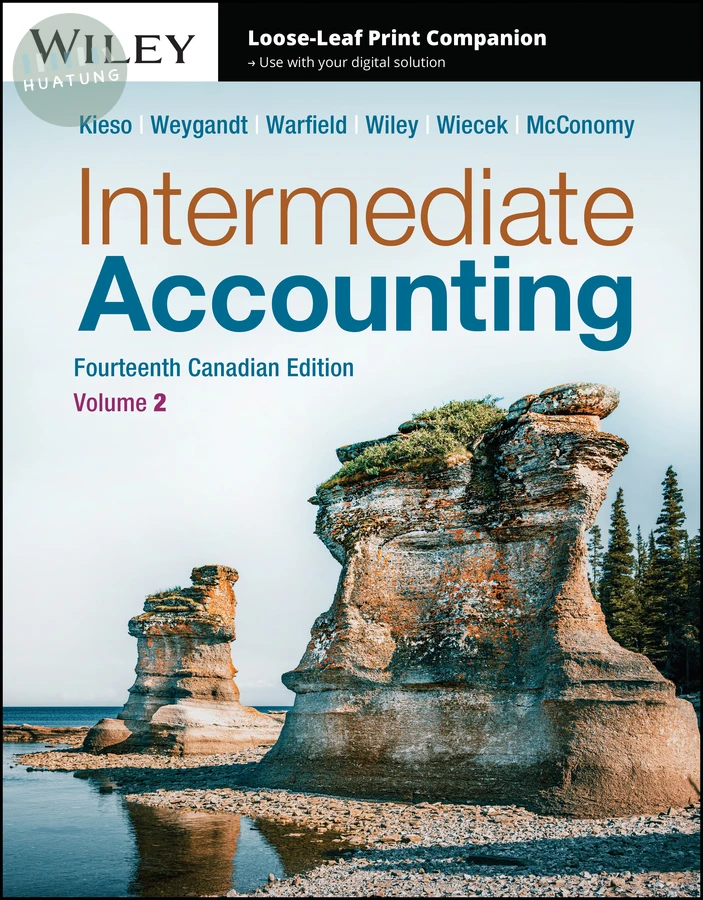

Intermediate Accounting, Volume 2
$5047元可訂購
簡介
Intermediate Accounting continues to be the gold standard when it comes to helping students connect the what, how, and why of accounting. With strategic content updates for currency and the inclusion of topics that will resonate with today's students, the 14th Canadian Edition presents an active, hands-on approach designed to develop problem solving skills and better prepare the next generation of accounting professionals.
To promote a deeper understanding of course concepts, the text provides students with scaffolded, high-quality assessments and integrated practice opportunities at the point of learning. Integrated Cases and Research and Analysis questions help students take their understanding further as well, teaching them how to analyze business transactions, apply IFRS and ASPE, and explore the ways in which accounting standards impact real companies. Throughout the text, students will also have the chance to work through a variety of hands-on activities and resources, including Analytics in Action Features with real world applications and Data Analytics problems. These applications help students build confidence in their critical thinking skills, while simultaneously preparing them for the ever-evolving landscape of the accounting industry.
目錄
VOLUME One VOLUME Two
Preface VIII 13 Non-financial and Current Liabilities 13-1
1 The Canadian Financial Reporting Environment 1-1
2 Conceptual Framework Underlying Financial Reporting 2-1
3 Data, Decisions, and Measurement 3-1
4 Reporting Financial Performance 4-1
5 Financial Position and Cash Flows 5-1
6 Revenue Recognition 6-1
7 Cash and Receivables 7-1
8 Inventory 8-1
9 Investments 9-1
10 Property, Plant, and Equipment: Accounting Model Basics 10-1
11 Depreciation, Impairment, and Disposition 11-1
12 Intangible Assets and Goodwill 12-1
Appendix A Time Value of Money Tables AP- 1
Appendix B A Summary of the Case Primer AP- 6
Online content only.
Appendix c The Accounting Information System C- 1
Appendix d Specimen Financial Statements D- 1
Appendix E Coverage of the CPA Competency
Map Knowledge Supplement
E- 1
Glossary G- 1
Company Index I- 1
Subject Index I- 3
14 Long-Term Financial Liabilities 14-1
15 Shareholders’ Equity 15-1
16 Complex Financial Instruments 16-1
17 Earnings per Share 17-1
18 Income Taxes 18-1
19 Pensions and Other Post-Employment Benefits 19-1
20 Leases 20-1
21 Accounting Changes and Error Analysis 21-1
22 Statement of Cash Flows 22-1
23 Other Measurement and Disclosure Issues 23-1 Appendix A Time Value of Money Tables AP- 1
Appendix B A Summary of the Case Primer AP- 6
Online content only.
Appendix c
The Accounting Information System C- 1
Appendix D Sustainability Reporting D- 1
Appendix E Coverage of the CPA Competency Map Knowledge Supplement E- 1
Glossary G- 1
Company Index I- 1
Subject Index I- 5
Preface
viii
13 Non-Financial and Current Liabilities 13-1
Accounting for Vehicle Warranties 13-1
Preview of Chapter 13 13-3
13.1 Understanding Non-Financial and Current Liabilities 13-3
13.2 Recognition and Measurement 13-4
Liability Definition and Characteristics 13-4
Financial Liabilities and Non-Financial Liabilities 13-6
13.3 Common Current Liabilities 13-7
What Is a Current Liability? 13-7
Bank Indebtedness and Credit Facilities 13-8
Accounts Payable 13-9
Notes Payable 13-9
Current Maturities of Long-Term Debt 13-11
Short-Term Debt Expected to Be Refinanced 13-12
Dividends Payable 13-13
Rents and Royalties Payable 13-13
Customer Advances and Deposits 13-14
Taxes Payable 13-14
13.4 Employee-Related Liabilities 13-17
Payroll Deductions 13-17
Short-Term Compensated Absences 13-19
Profit-Sharing and Bonus Agreements 13-22
13.5 Decommissioning and Restoration Obligations 13-22
Measurement 13-23
Recognition and Allocation 13-24
Subsequent Recognition and Measurement of Asset Retirement Obligations: Summary 13-26
13.6 Product Guarantees, Customer Programs, and Unearned Revenue 13-26
Product Guarantees and Warranty Obligations 13-26
Other Customer Program Obligations 13-30
Unearned Revenue 13-33
13.7 Contingencies, Uncertain Commitments, and Requirements for Guarantees and Other Commitments 13-35
Contingencies and Uncertain Commitments 13-36
Financial Guarantees 13-39
Commitments 13-41
13.8 Presentation, Disclosure, and Analytics 13-41
Presentation and Disclosure of Current Liabilities 13-41
Presentation and Disclosure of Contingencies, Guarantees, and Commitments 13-42
Analytics 13-43
13.9 IFRS/ASPE Comparison 13-47
A Comparison of IFRS and ASPE 13-47
Looking Ahead 13-49
14 Long-Term Financial Liabilities 14-1
Green Bonds as a Form of Financing 14-1
Preview of Chapter 14 14-3
14.1 Understanding Debt Instruments 14-3
Bonds and Notes Payable 14-4
Credit Ratings 14-6
Defeasance 14-8
Types of Companies That Have Significant Debt Financing 14-8
Information for Decision-Making 14-10
14.2 Measurement 14-10
Bonds and Notes Issued at Par 14-10
Discounts and Premiums 14-11
Special Situations 14-18
14.3 Recognition and Derecognition 14-22
Repayment Before Maturity Date 14-22
Exchange of Debt Instruments 14-23
Troubled Debt Restructurings 14-23
Defeasance Revisited 14-28
Off-Balance Sheet Financing 14-28
14.4 Presentation, Disclosure, and Analytics 14-30
Presentation 14-30
Disclosure 14-30
Analytics 14-31
14.5 IFRS/ASPE Comparison 14-33
A Comparison of IFRS and ASPE 14-33
Looking Ahead 14-33
15 Shareholders’ Equity 15-1
A “Token” Way of Raising Money 15-1
Preview of Chapter 15 15-3
15.1 Understanding the Corporate Form, Share Capital, and Profit Distribution 15-3
Corporate Law and the Share Capital System 15-4
Types of Shares 15-6
Limited Liability of Shareholders 15-10
Formality of Profit Distribution 15-10
15.2 Recognition, Derecognition, and Measurement 15-12
Issuance of Shares 15-12
Reacquisition, Retirement, and Conversion of Shares 15-16
Dividends 15-18
15.3 Presentation, Disclosure, and Analytics 15-24
Components of Shareholders’ Equity 15-24
Presentation of Shareholders’ Equity 15-24
Transactions Affecting Shareholders’ Equity 15-26
Capital Disclosures 15-27
Analytics 15-28
15.4 IFRS/ASPE Comparison 15-32
A Comparison of IFRS and ASPE 15-32
Looking Ahead 15-33
Appendix 15A Par Value and Treasury Shares 15-33
Par Value Shares 15-34
Treasury Shares 15-34
Appendix 15B Accounting for Financial Reorganization
Financial Reorganization 15-35
Comprehensive Revaluation 15-36
16 Complex Financial Instruments 16-1
Two Accounting Sides of the Bitcoin 16-1
Preview of Chapter 16 16-3
16.1 Derivatives 16-4
Managing Risks 16-5
Accounting for Derivatives 16-9
16.2 Debt Versus Equity: Issuer Perspective 16-21
Economics of Complex Financial Instruments 16-21
Presentation and Measurement of Hybrid/ Compound Instruments 16-22
16.3 Share-Based Compensation 16-31
Types of Plans 16-32
Recognition, Measurement, and Disclosure of Share-Based Compensation 16-34
16.4 IFRS/ASPE Comparison 16-38
A Comparison of IFRS and ASPE 16-38
Looking Ahead 16-40
Appendix 16A Hedging 16-41
Derivatives Used for Hedging and the Need for Hedge Accounting Standards 16-41
Hedge Accounting 16-44
Appendix 16B Stock Compensation Plans—Additional Complications 16-54
Share Appreciation Rights Plans 16-54
Performance-Type Plans 16-56
Appendix 16C Advanced Models for Measuring Fair Value and Disclosure of Fair Value Information 16-57
Options Pricing Models 16-57
Fair Value Disclosure for Financial Instruments 16-58
17 Earnings per Share 17-1
Catching the Market by Surprise 17-1
Preview of Chapter 17 17-3
17.1 Overview 17-3
Objective of EPS 17-4
Presentation and Disclosure 17-4
Analytics 17-6
17.2 Basic EPS 17-8
Capital Structure 17-8
Income Available to Common/Ordinary Shareholders 17-9
Weighted Average Common/Ordinary Shares 17-10
Comprehensive Illustration 17-13
17.3 Diluted EPS 17-14
Complex Capital Structure 17-14
Convertible Securities 17-15
Options and Warrants 17-17
Contingently Issuable Shares 17-22
Antidilution Revisited 17-22
Additional Disclosures 17-25
Comprehensive Earnings per Share Exercise 17-26
17.4 IFRS/ASPE Comparison 17-31
A Comparison of IFRS and ASPE 17-31
Looking Ahead 17-32
18 Income Taxes 18-1
The Future of Taxation Policy After COVID- 19 18-1
Preview of Chapter 18 18-4
18.1 Income Taxes from a Business Perspective 18-4
18.2 Current Income Taxes 18-6
Accounting Income and Taxable Income 18-6
Calculating Taxable Income 18-7
Calculating Current Income Taxes 18-11
18.3 Deferred/Future Income Taxes 18-12
Deferred Tax Liabilities 18-14
Deferred Tax Assets 18-17
18.4 Income Tax Accounting Objectives and Analyses of Temporary Deductible Differences 18-21
Income Tax Accounting Objectives 18-21
Analysis of Multiple Differences Illustrated 18-22
18.5 Tax Rate Considerations 18-25
Future Tax Rates 18-27
Revision of Future Tax Rates 18-28
18.6 Income Tax Loss Carryover Benefits 18-29
Loss Carryback Illustrated 18-31
Loss Carryforward Illustrated 18-31
18.7 Review of Deferred Tax Asset Account 18-37
18.8 Presentation, Disclosure, and Analytics 18-39
Statement of Financial Position Presentation 18-39
Income and Other Statement Presentation 18-40
Disclosure Requirements 18-42
Analytics 18-45
Outstanding Conceptual Questions 18-47
18.9 IFRS/ASPE Comparison 18-47
A Comparison of IFRS and ASPE 18-47
Looking Ahead 18-48
Appendix 18A A Comprehensive Illustration of the Future Income Taxes Method and/or the Temporary Difference Approach 18-49
Comprehensive Example—Year 1 18-49
Comprehensive Example—Year 2 18-53
19 Pensions and Other Post-Employment Benefits 19-1
Delivering on Pension Obligations 19-1
Preview of Chapter 19 19-3
19.1 Overview of Pensions and Their Importance from a Business Perspective 19-4
Nature of Pension Plans 19-6
19.2 Types of Pension Plans 19-8
Defined Contribution Plan 19-8
Defined Benefit Plan 19-9
19.3 Defined Benefit Obligation 19-12
The Employer’s Obligation 19-12
19.4 Plan Assets and Plan Surplus or Deficit 19-16
Plan Asset Composition 19-16
Changes in Plan Assets 19-16
Surplus or Deficit 19-18
19.5 Defined Benefit Cost Components 19-18
Illustration of Pension Accounting Using a Pension Work Sheet 19-20
Other Considerations 19-28
19.6 Other Defined Benefit Plans 19-28
Other Post-Employment and Long-Term Employee Benefit Plans with Benefits That Vest or Accumulate 19-28
Other Employee Benefit Plans with Benefits That Do Not Accumulate 19-30
19.7 Presentation, Disclosure, and Analytics 19-30
Presentation 19-31
Disclosure 19-31
Analytics 19-35
19.8 IFRS/ASPE Comparison 19-36
A Comparison of IFRS and ASPE 19-36
Looking Ahead 19-37
Appendix 19A Example of a One-Person Plan 19-38
20 Leases 20-1
Leases Under IFRS 20-1
Preview of Chapter 20 20-4
20.1 Importance of Leases from a Business Perspective 20-5
20.2 The Leasing Environment 20-7
Advantages of Leasing 20-7
Conceptual Nature of a Lease 20-10
Standards Under Transition 20-10
20.3 Determination of Rental Payments 20-12
Initial Direct Costs 20-12
Impact of Purchase Option and Residual Value 20-13
20.4 Lease Criteria for Lessees 20-13
Assessing Lease Contracts 20-13
IFRS Lease Criteria 20-14
ASPE Requirements—A Closer Look 20-15
20.5 Accounting for Right-of-Use Assets and Capital Leases 20-17
Initial Measurement 20-18
Measurement After Recognition 20-19
Comparison of Accounting for Leases Under IFRS and ASPE 20-21
Right-of-Use (IFRS) and Capital Lease (ASPE) Methods—Illustration 1 20-22
20.6 Accounting for Residual Values and Purchase Options in a Leased Asset 20-26
Right-of-Use (IFRS) and Capital Lease (ASPE) Methods—Illustration 2 20-26
20.7 Accounting for Operating Leases Under ASPE, and Short-Term and Low-Value Leases Under Ifrs 20-32
Accounting for Operating Leases (ASPE) and Short-Term and Low-Value Leases (ifrs) 20-32
Capital and Operating Leases Compared Under ASPE 20-34
20.8 Presentation and Disclosure 20-35
Presentation 20-35
Disclosure 20-36
20.9 Lease Criteria for Lessors 20-38
Who Are the Lessors? 20-39
Overview—IFRS Lessor Accounting and ASPE Lease Criteria 20-39
20.10 Accounting for Financing and Manufacturer/ Dealer or Sales-Type Leases 20-41
Accounting for a Financing-Type Lease 20-42
Accounting for a Manufacturer/Dealer or Sales-Type Lease 20-45
20.11 Accounting for Residual Values and Purchase Options in a Financing or Manufacturer/Dealer or Sales-Type Lease 20-47
Financing-Type Lease 20-47
Manufacturer/Dealer or Sales-Type Lease 20-48
Disclosure 20-51
20.12 Accounting for an Operating Lease 20-51
Initial Direct Costs 20-51
Disclosure 20-51
20.13 IFRS/ASPE Comparison 20-52
A Comparison of IFRS and ASPE 20-52
Looking Ahead 20-54
Appendix 20A Other Lease Issues 20-54
Sale and Leaseback Transactions 20-54
Real Estate Leases 20-58
21 Accounting Changes and Error Analysis 21-1
Communicating Changes to Accounting Policies 21-1
Preview of Chapter 21 21-3
21.1 Changes in Accounting Policies and Estimates, and Errors 21-3
Types of Accounting Changes 21-3
Alternative Accounting Methods 21-10
Accounting Standards 21-10
Retrospective Application—Change in Accounting Policy 21-11
Retrospective Restatement—Correction of an Error 21-16
Prospective Application 21-21
21.2 Analytics 21-24
Motivations for Change 21-25
Interpreting Accounting Changes 21-26
21.3 IFRS/ASPE Comparison 21-28
A Comparison of IFRS and ASPE 21-28
Appendix 21A Error Analysis 21-29
Statement of Financial Position Errors 21-31
Statement of Profit or Loss/Income Statement Errors 21-31
Statement of Financial Position and Statement of Profit or Loss/Income Statement Errors 21-31
Comprehensive Illustration: Numerous Errors 21-36
Preparation of Comparative Financial Statements 21-39
22 Statement of Cash Flows 22-1
Are “Cash Gushers” Good Investments? 22-1
Preview of Chapter 22 22-3
22.1 Purpose, Uses, and Importance of Cash, Cash Equivalents, and Cash Flows 22-3
22.2 Classification of Cash Flows 22-6
22.3 Format of the Statement 22-9
Formatting Basics 22-9
Direct Versus Indirect Method 22-11
22.4 Basic Steps in the Preparation of the Statement of Cash Flows 22-11
22.5 Preparing a Statement of Cash Flows Using the Direct Method 22-13
22.6 Preparing a Statement of Cash Flows Using the Indirect Method 22-16
22.7 Preparing a Statement of Cash Flows Using Both Methods 22-22
22.8 Presentation 22-33
Disclosure Requirements 22-33
Presentation Requirements 22-34
Illustrative Example 22-35
22.9 Analyzing the Statement of Cash Flows 22-36
Interpreting the Statement of Cash Flows 22-36
Sensitivity Analysis 22-38
Free Cash Flow 22-39
22.10 IFRS/ASPE Comparison 22-40
A Comparison of IFRS and ASPE 22-40
Looking Ahead 22-41
Appendix 22A Using a Work Sheet to Prepare a Statement of Cash Flows 22-41
Use of a Work Sheet 22-41
Preparing the Work Sheet 22-42
Analyzing Transactions Using a Work Sheet 22-43
23 Other Measurement and Disclosure Issues 23-1
Communicating Business Information 23-1
Preview of Chapter 23 23-4
23.1 The Importance of Disclosure from a Business Perspective 23-4
23.2 Full Disclosure Principle 23-5
Full Disclosure Principle Revisited 23-6
Increase in Disclosure Requirements 23-6
Accounting Policies 23-7
23.3 Segmented Reporting 23-8
Objective of Reporting Segmented Information 23-11
Basic Principles of Segmented Reporting 23-11
Identifying Operating Segments 23-12
Measurement Principles 23-13
Segmented and Enterprise-Wide Disclosures 23-14
23.4 Interim Reporting 23-15
Interim Reporting Requirements 23-16
Unique Problems of Interim Reporting 23-17
Online Financial Reporting and Continuous Disclosures 23-19
23.5 Related Party Transactions 23-19
23.6 Other Accounting Issues 23-23
Subsequent Events 23-23
Unincorporated Businesses 23-26
23.7 Bankruptcy and Receivership 23-27
23.8 Auditor’s Reports 23-28
Unmodified Opinions 23-30
Qualified Opinions and Disclaimers of Opinion 23-30
Adverse Opinions 23-31
23.9 Financial Statement Analysis 23-31
An Overview of Financial Statement Analysis 23-31
Financial Statement Analysis Techniques 23-32
Limitations of Financial Statement Analysis 23-37
23.10 IFRS/ASPE Comparison 23-38
A Comparison of IFRS and ASPE 23-38
Looking Ahead 23-39
Appendix A Time Value of Money Tables AP- 1
Appendix B A Summary of the Case Primer AP- 6
Online content only.
Appendix C The Accounting Information System C- 1
Appendix D Sustainability Reporting D- 1
Appendix E Coverage of the CPA Competency Map Knowledge Supplement E- 1
Glossary G- 1
Company Index I- 1
Subject Index I- 3