
Rad Tech's Guide to Computed Tomography
$1908元可訂購
簡介
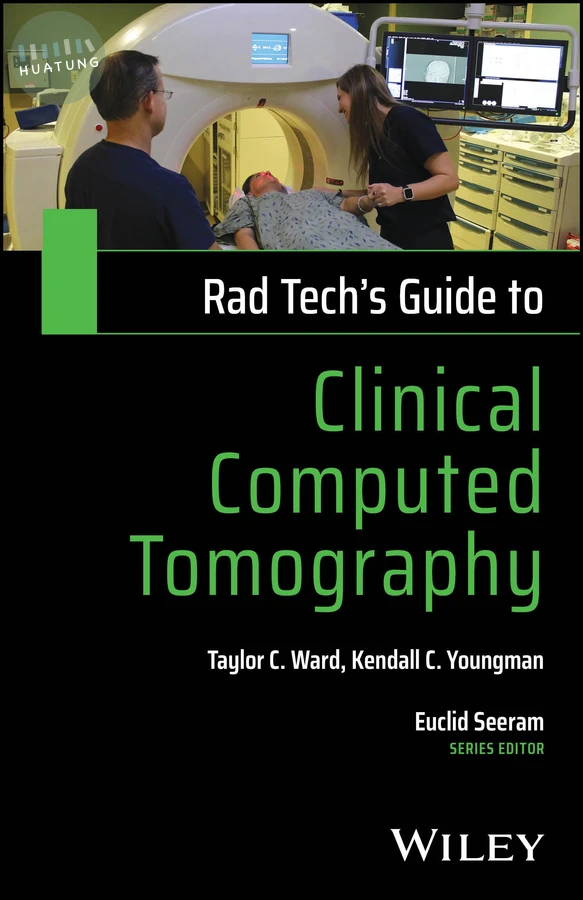
An up-to-date guide to CT that offers a comprehensive discussion of the technology and science of computed tomography and instructions for applying that knowledge to real-world practice Rad Tech’s Guide to Computed Tomography: Physics and Instrumentation is a comprehensive and accessible approach to learning the physics and instrumentation of CT. The text offers an intuitively organized treatment of the history of CT development, data acquisition, image reconstruction, and the relationship between image quality and radiation dose. Using clear language, hands-on examples and useful diagrams, the book is written to demystify complex topics like Hounsfield units, attenuation coefficients, and interpolation algorithms, without compromising technical accuracy. This is an educational resource that shows readers how to perform imaging that generates diagnostically useful results that keep patients safe. Readers will find: An up-to-date exploration of the use of artificial intelligence in medical imaging
Concise explorations of the physics of state-of-the-art CT scanners, relevant to the day-to-day work of practicing RTs
Practical discussions of relevant, selected topics, including multi-slice CT, the basics of image postprocessing, and quality control fundamentals
Guidance on how to ensure consistent diagnostic performance without compromising patient safety
Complete treatments of data acquisition, including slice-by-slice and volume data acquisition
Perfect for students preparing to take professional certification examinations in CT, Rad Tech’s Guide to Computed Tomography will also benefit practicing technologists interested in advancing their understanding, refining their technique, and expanding their professional skillset.
目錄
Foreword viii
Preface xi
Acknowledgments xiv
1 The Invention of the CT Scanner and the Nobel Prize 1
Computed Tomography: A Definition 2
Three Major Stages of CT Imaging 4
Invention of the CT Scanner: The Nobel Prize for Pioneers Godfrey Hounsfield and Alan Cormack 8
Evolution of CT Scanners Leading to Present- Day Multi- Slice CT Imaging 10
References 14
2 Essential Physics of CT 17
Introduction 17
Radiation Attenuation: Essential Physics Related to CT Imaging 18
Attenuation and Hounsfield Units 22
The CT Gray- Scale Image 24
References 25
3 Data Acquisition: Principles and Technology 27
What Is Data Acquisition? 28
Types of Data Acquisition 28
Major Technical Data Acquisition Components 31
Detectors: Types, Principles, and Technology 35
References 41
4 Image Reconstruction Principles 43
Image Reconstruction: A Definition 45
Image Reconstruction Algorithms 45
Artificial Intelligence and Its Subsets: Definitions 52
References 59
5 Multi- Slice CT: Principles and Instrumentation 62
What Is Multi- Slice CT (MSCT)? 63
MSCT System Components 65
Selectable Scan Parameters 71
Advantages of MSCT 73
References 74
6 Image Postprocessing 76
Scope of Image Processing 77
Windowing: Effect on Image Contrast and Image Brightness 79
Multiplanar Image Reformatting 82
Advanced Image Postprocessing Techniques 84
References 88
7 Image Quality 90
What Is Image Quality in Computed Tomography? 90
Spatial Resolution 91
Low- Contrast Resolution 93
Noise 95
Artifacts in a Nutshell 98
References 99
8 CT Radiation Dose Considerations 101
CT Dose Trends 101
The Basics of CT Dosimetry 102
Factors Affecting the Dose in CT 105
Dose Optimization 107
References 109
9 CT Quality Control for Technologists/ Radiographers 114
Quality Assurance/Quality Control: Definitions 115
Essential Steps in QC 116
Tolerance Limits/Acceptance Criteria 117
Equipment for QC Testing 118
Routine QC Tests for the CT Technologist 121
References 124
Index 125