Social Exclusion of Children
$1519元可訂購
簡介
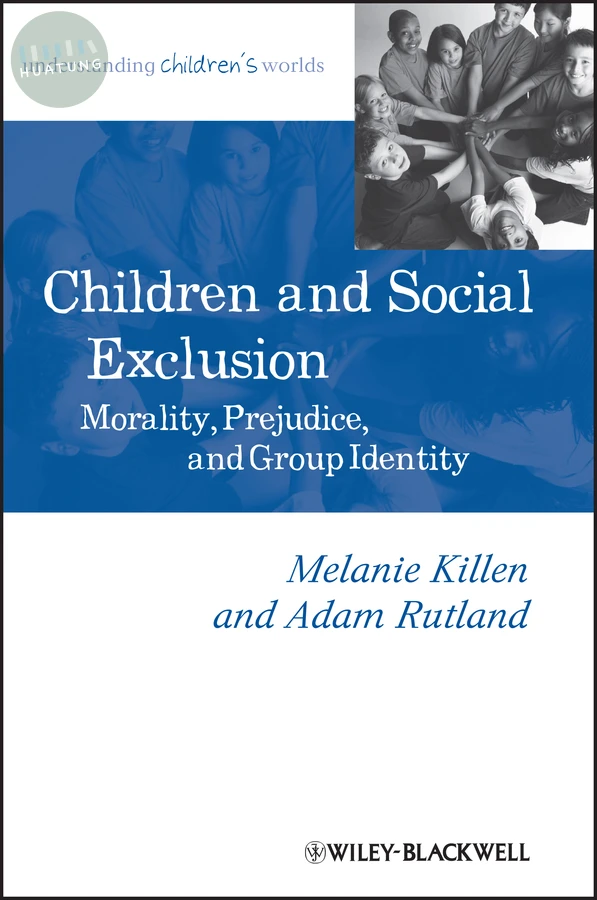
In the past decade, an increasing volume of psychological research has been conducted on social exclusion by social and developmental psychologists. The very best of this new body of work is showcased in this volume, providing an understanding of how children experience, evaluate, and understand exclusion as well as inclusion. For interventions to be effective, programs designed to ameliorate social problems associated with exclusion need to be based on an understanding of how, why, and under what conditions, social groups make decisions to exclude others, how children experience this exclusion, and how this originates and changes over the course of the lifespan. This volume draws together and foregrounds social and developmental psychological research to show its central relevance to the social exclusion of children.
目錄
INTRODUCTION
Social Exclusion of Children: Developmental Origins of Prejudice
Dominic Abrams and Melanie Killen 1
SECTION I: PSYCHOLOGICAL FOUNDATIONS OF INCLUSION AND EXCLUSION
Peer Group Rejection in Childhood: Effects of Rejection Ambiguity, Rejection Sensitivity, and Social Acumen
Drew Nesdale, Melanie J. Zimmer-Gembeck, and Natalie Roxburgh 11
When Do Children Dislike Ingroup Members?: Resource Allocation from Individual and Group Perspectives
Kelly Lynn Mulvey, Aline Hitti, Adam Rutland, Dominic Abrams, and Melanie Killen 28
Does Moral and Social Conventional Reasoning Predict British Young People’s Judgments About the Rights of Asylum Seeker Youth?
Martin D. Ruck and Harriet R. Tenenbaum 46
Do Adolescents’ Evaluations of Exclusion Differ Based on Gender Expression and Sexual Orientation?
Justin E. Heinze and Stacey S. Horn 62
SECTION II: REVEALING AND CHALLENGING EXCLUSION NORMS
Of Affect and Ambiguity: The Emergence of Preference for Arbitrary Ingroups
Yarrow Dunham and Jason Emory 80
How Young Children Evaluate People With and Without Disabilities
Lauren K. Huckstadt and Kristin Shutts 98
Can Fostering Children’s Ability to Challenge Sexism Improve Critical Analysis, Internalization, and Enactment of Inclusive, Egalitarian Peer Relationships?
Erin Pahlke, Rebecca S. Bigler, and Carol Lynn Martin 113
Ethnic Classroom Composition and Peer Victimization: The Moderating Role of Classroom Attitudes
Jochem Thijs, Maykel Verkuyten, and Malin Grundel 132
How Peer Norms of Inclusion and Exclusion Predict Children’s Interest in Cross-Ethnic Friendships
Linda R. Tropp, Thomas C. O’Brien, and Katya Migacheva 149
What Makes a Young Assertive Bystander? The Effect of Intergroup Contact, Empathy, Cultural Openness, and In-Group Bias on Assertive Bystander Intervention Intentions
Nicola Abbott and Lindsey Cameron 165
SECTION III: COMMENTARY
Intergroup Social Exclusion in Childhood: Forms, Norms, Context, and Social Identity
Mark Bennett 181