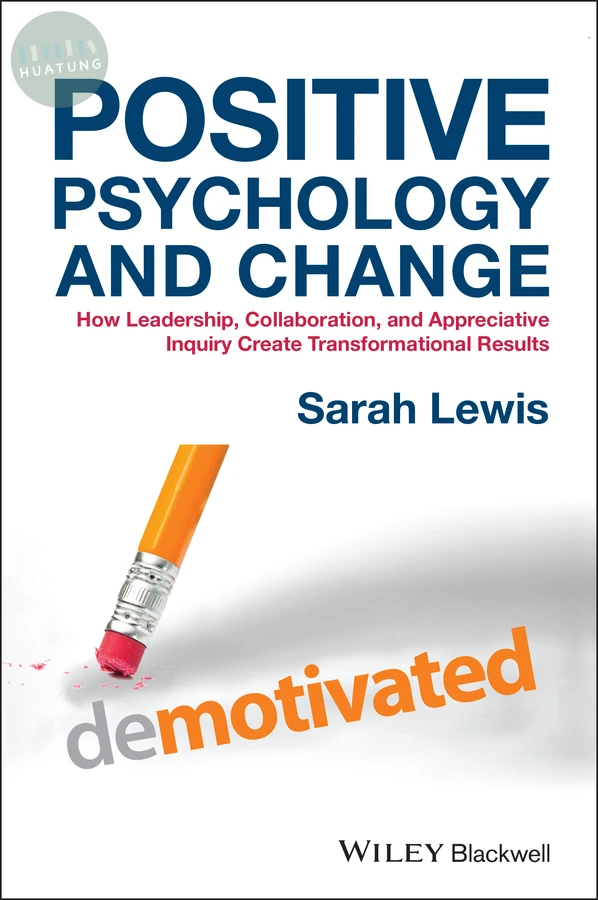
Positive Psychology and Change
$1251元 定價: $1390 9折 可訂購
簡介
Positive Psychology and Change explores how areas of positive psychology such as strengths, flow, and psychological capital can be applied to the everyday challenges of leading a dynamic and adaptive work community, and how collaborative group approaches to transformational change can be combined with a positive mindset to maintain optimism and motivation in an unpredictable working environment.
Articulates a unique vision for organizational leadership in the 21st century that combines positive psychology, Appreciative Inquiry (AI), and collaborative group technologies
Focuses on four specific co-creative approaches (Appreciative Inquiry, Open Space, World Café and SimuReal) and the ways in which they surpass traditional methods for organizational change
Explains the latest theory, research, and practice, and translates it into concrete, actionable ideas for meeting the day-to-day challenges of effective and adaptive leadership and management
Includes learning features such as boxed text, short case studies, stories, and cartoons
目錄
About the Author xi
Foreword xiii
Preface xix
Acknowledgements xxiii
1 The Legacy of Twentieth‐Century Ideas about Organizational Change 1
Introduction 2
A Changing World 3
The Roots of Many Change Models 4
Legacy Thinking about Organizational Change 6
The Legacy Beliefs of Lewin and Taylor in Our Understanding of Organizational Change 8
Conclusion 20
2 The Challenge of Leadership 21
Introduction 23
Should Decisiveness Be the Priority in Leaders? 24
The Need to Make a Difference 26
What Does Shifting the Organizational Metaphor Mean for Leaders? 29
New Definition of Leadership 30
Doing Leadership Differently 30
Characteristics of a New Leadership Style 32
Conclusion 50
3 Helping People Engage Positively with Imposed Change 51
Introduction 53
Typical Experience of Imposed Change 53
Unintended Consequences of Imposed Change 55
Understanding the Psychological Impact of Imposed Change on People 55
Accessing Psychological Resources to Increase Efficacy and Resilience 60
Conclusion 75
4 A Different Approach to Organizations and Change 77
Introduction 78
Key Factors that Create Living Human System Learning and Change 78
Distinctive Features of Co‐creative Approaches to Change 80
Principles of Practice for Achieving Change in Living Human Systems 88
Conclusion 96
5 Using Positive Psychology to Achieve Change at the Team and Individual Level 97
Introduction 98
Principles 98
Positive and Appreciative Practices 105
Conclusion 117
6 Appreciative Inquiry 119
Introduction 121
Process 122
Purpose 123
Recommended Use 123
Key Ideas 123
Critical Success Factors 128
Key Skills 132
Origins of the Methodology 136
When to Use and Counter‐indications 136
Conclusion 139
7 World Café 141
Introduction 143
The Process 143
Purpose 145
Recommended Use 145
Key Ideas 147
Critical Success Factors 151
Key Skills 157
Origins of the Methodology 158
Conclusion 160
8 Open Space 161
Introduction 162
Purpose 163
The Process 164
Recommended Use 167
Key Ideas 170
Critical Success Factors 173
Key Skills 176
Origins of the Methodology 181
Conclusion 183
9 Simu‐Real 185
Introduction 188
Purpose 189
The Process 190
Recommended Use 191
Key Ideas 192
Critical Success Factors 194
Key Skills 200
Origins of the Methodology 202
Long‐Term Effects 202
When to Use and When Not to 203
Conclusion 203
10 Pulling It All Together 205
Introduction 205
Rise of Planned Change Approaches 205
Co‐creative Approaches to Change 207
Features of Co‐created Change 208
Linking Theory, Research, and Practice 215
Time for Something Different 216
Bringing Emergent Change Insights to Planned Change Projects 219
Positive: The Whole Strengths Spectrum Approach to Change 223
Conclusion 226
References 227
Index 237