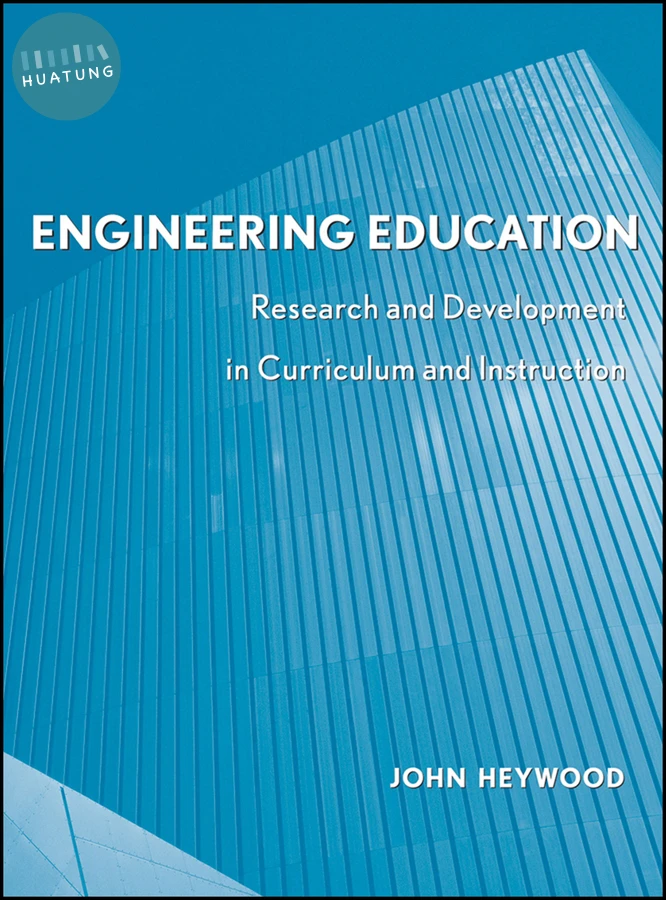
Engineering Education
$6796元 定價: $7551 9折 可訂購
簡介
A synthesis of nearly 2,000 articles to help make engineers better educators While a significant body of knowledge has evolved in the field of engineering education over the years, much of the published information has been restricted to scholarly journals and has not found a broad audience. This publication rectifies that situation by reviewing the findings of nearly 2,000 scholarly articles to help engineers become better educators, devise more effective curricula, and be more effective leaders and advocates in curriculum and research development.
The author's first objective is to provide an illustrative review of research and development in engineering education since 1960. His second objective is, with the examples given, to encourage the practice of classroom assessment and research, and his third objective is to promote the idea of curriculum leadership.
The publication is divided into four main parts:
Part I demonstrates how the underpinnings of education—history, philosophy, psychology, sociology—determine the aims and objectives of the curriculum and the curriculum's internal structure, which integrates assessment, content, teaching, and learning
Part II focuses on the curriculum itself, considering such key issues as content organization, trends, and change. A chapter on interdisciplinary and integrated study and a chapter on project and problem-based models of curriculum are included
Part III examines problem solving, creativity, and design
Part IV delves into teaching, assessment, and evaluation, beginning with a chapter on the lecture, cooperative learning, and teamwork
The book ends with a brief, insightful forecast of the future of engineering education. Because this is a practical tool and reference for engineers, each chapter is self-contained and may be read independently of the others.
Unlike other works in engineering education, which are generally intended for educational researchers, this publication is written not only for researchers in the field of engineering education, but also for all engineers who teach. All readers acquire a host of practical skills and knowledge in the fields of learning, philosophy, sociology, and history as they specifically apply to the process of engineering curriculum improvement and evaluation.
目錄
Part I. Aims and Objectives (Outcomes) and Their Screening 1
Chapter 1. Curriculum Design, Implementation and Evaluation 3
Chapter 2. Aims and Objectives (Outcomes) 19
Chapter 3. Philosophy and Sociology and the Aims of the Engineering Curriculum 53
Chapters 4. Concepts and Principles (Rules) 91
Chapter 5. Learning Strategies and Learning Styles 119
Chapter 6. Human Development 153
Part II. The Curriculum and Its Paradigms in Practice 175
Chapter 7. Curriculum Change and Changing the Curriculum 177
Chapter 8. Interdisciplinary and Integrated Studies 199
Chapter 9. From Projects to Problem-Based Learning 221
Part III. Problem Solving, Creativity, and Design 241
Chapter 10. Problem Solving 243
Chapter 11. Creativity 261
Chapter 12. Design 283
Part IV. Introduction to Chapters 13 and 14. The Lecture 317
Chapter 13. Cooperative Learning and Teamwork 321
Chapter 14. Other Instructional Practices and the New Technologies 353
Chapter 15. Assessment and Evaluation 391
Chapter 16. The Formal Assessment of Student Learning: Alternative Assessment 417
Chapter 17. Attrition and Retention 443
Epilogue 459
Author Index 465
Subject Index 483