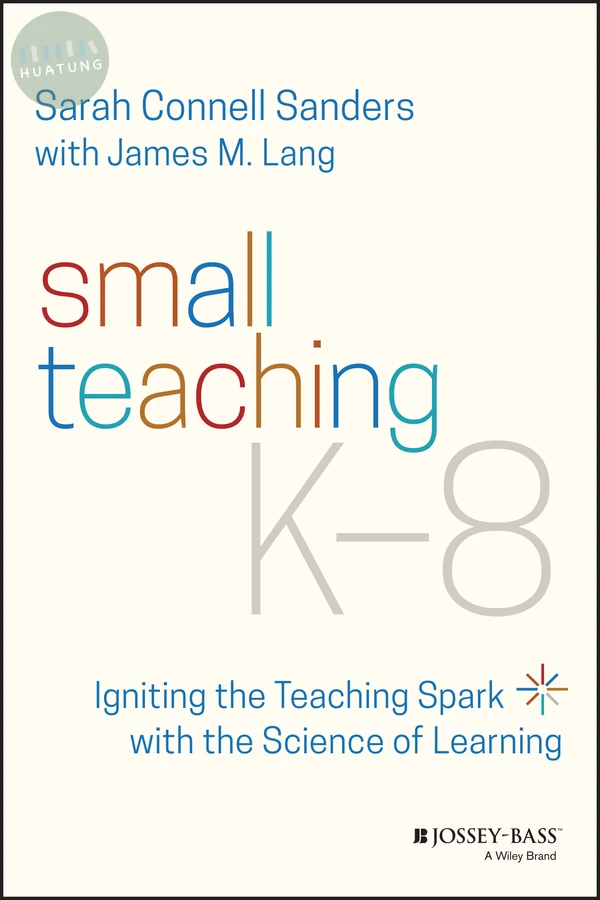

Small Teaching K-8
$778元 定價: $864 9折 可訂購
簡介
Cognitive science research-based teaching techniques any educator can implement in their K-8 classroom In Small Teaching K-8, a team of veteran educators bridges the gap between cognitive theory and the K-8 classroom environment, applying the same foundational research found in author James Lang’s bestselling Small Teaching: Everyday Lessons from the Science of Learning to the elementary and middle school setting. Via clear descriptions and step-by-step methods, the book demonstrates how to integrate simple interventions into pre-existing pedagogical techniques to dramatically improve student outcomes. The interventions consist of classroom or online learning activities, one-time additions, or small modifications in course design or communication. Regardless of their form, they all deliver powerful, positive consequences. In this book, readers will also find: Foundational concepts from up-to-date cognitive research that has implications for classroom teaching and the rationales for using them in a K-8 classroom
Concrete examples of how interventions have been used by faculty in various disciplines
Directions on the specific timing of each intervention, backed by evidence-based reasons
An essential resource for K-8 educators seeking ways to improve their efficacy in the classroom, Small Teaching K-8 offers teachers intuitive and actionable advice on helping students absorb and retain knowledge for the long-term.
目錄
About the Author xi
Foreword xiii
Introduction xvii
Part I Knowing: The Six-Minute Fix 1
1 Retrieving 7
What’s the Theory? 10
In Short 15
Models 15
Three-Two-One 16
Closing Questions 17
Big Basket Quizzes 19
Multi-Part Quizzes 19
Polling 21
Principles 22
Frequency Matters 22
Align Practice and Assessment 22
Require Thinking 23
Small Teaching Quick Tips: Retrieving 23
Conclusion 24
2 Self-Explaining 27
What’s the Theory? 29
In Short 34
Models 35
Think Aloud 36
How Does This Connect to Our Goal? 37
Turn-and-Talk 38
Discussion Protocols 40
Principles 43
Scaffold Self-Explanation 43
Point to Principles 43
Utilize Peer Power 44
Small Teaching Quick Tips: Self-Explaining 44
Conclusion 45
3 Predicting 47
What’s the Theory? 49
In Short 53
Models 53
Predict during Do Nows 54
Pretesting 57
Anticipation Guides 59
Tea Party 60
Closing Predictions 62
Principles 63
Stay Conceptual 63
Provide Fast Feedback 63
Leave Time for Reflection 64
Small Teaching Quick Tips: Predicting 64
Conclusion 65
4 Putting It All Together: Jennifer Hedrington, Grade 7 Teacher 67
Part II Thinking: Strength and Conditioning 73
5 Synthesizing 77
What’s the Theory? 79
In Short 81
Models 82
Synthesis Sentence Starters 83
Knowledge Dumps 86
Finding the Main Idea 88
Concept Maps 90
The Minute Thesis 92
Principles 93
Provide the Framework 94
Facilitate Synthesis 94
Leverage Peer Learning 94
Small Teaching Quick Tips: Synthesis 94
Conclusion 95
6 Practicing 97
What’s the Theory? 99
In Short 103
Models 104
Unpack Your Assessments 104
Parcel Them Out and Practice Them 106
Provide Feedback 109
Principles 111
Make the Time for In-Class Practice 111
Space It Out 111
Practice Mindfully 112
Small Teaching Quick Tips: Practice 112
Conclusion 113
7 Mapping 117
What’s the Theory? 119
In Short 125
Models 125
Year-Long Theme 126
Writing an Objective 131
Post an Agenda 133
Principles 134
Set a Timer 134
Utilize Strong Verbs 135
Don’t Be Afraid to Dipstick 136
Small Teaching Quick Tips: Mapping 136
Conclusion 137
8 Putting It All Together: Jennessa Burks, Grade 4 Teacher 141
Part III Transforming: Balance and Agility 147
9 Growing 151
What’s the Theory? 154
In Short 157
Models 157
Reward Growth 157
Give Growth-Language Feedback 160
Promote Success Strategies 162
Principles 163
Design for Growth 164
Communicate for Growth 164
Feedback for Growth 164
Small Teaching Quick Tips: Growing 165
Conclusion 165
10 Motivating 167
What’s the Theory? 172
In Short 175
Models 176
Positive Recognition 178
Tell Great Stories 180
Invoke Self-Transcendent Purpose 181
Share Your Enthusiasm 182
Show Compassion 183
Principles 184
Acknowledge the Emotions in the Room 185
Make It Social 185
Let Your Enthusiasm Show 185
Small Teaching Quick Tips: Motivating 186
Conclusion 186
11 Expanding 191
Models, Principles, and Resources 194
Project-Based Learning 194
Community Service Learning 196
Games and Simulations 199
Resources 204
Small Teaching Quick Tips: Expanding 207
Conclusion 207
12 Putting It All Together: Matt Halpern, Kindergarten Teacher and Literacy Consultant 211
13 Conclusion 217
References 221
Index 237