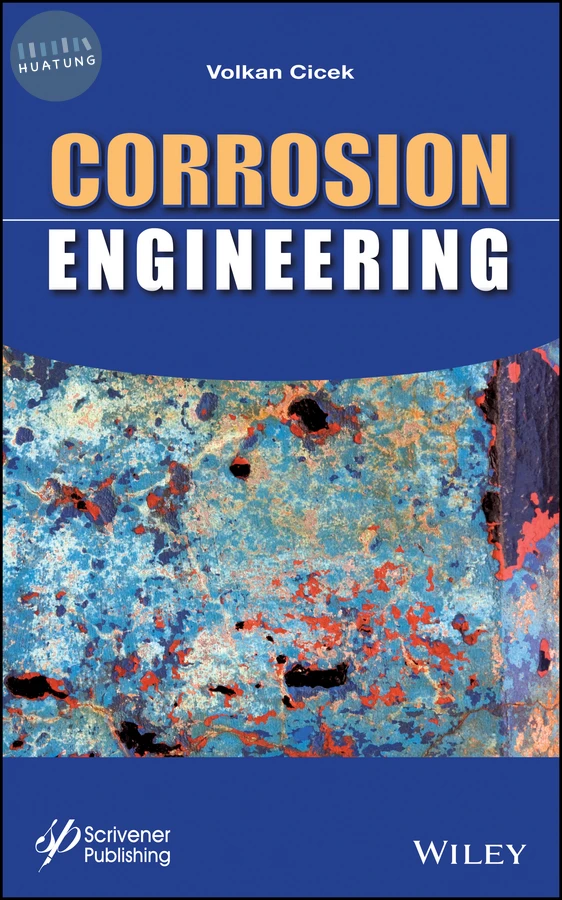
Corrosion Engineering
$5241元 定價: $5823 9折 可訂購
簡介
Corrosion costs billions of dollars to each and every single economy in the world. Corrosion is a chemical process, and it is crucial to understand the dynamics from a chemical perspective before proceeding with analyses, designs and solutions from an engineering aspect. The opposite is also true in the sense that scientists should take into consideration the contemporary aspects of the issue as it relates to the daily life before proceeding with specifically designed theoretical solutions. Corrosion Engineering is advised to both theoreticians and practitioners of corrosion alike.
Corrosion engineering is a joint discipline associated primarily with major engineering sciences such as chemical engineering, civil engineering, petroleum engineering, mechanical engineering, metallurgical engineering, mining engineering among others and major fundamental sciences such as sub-disciplines of physical, inorganic and analytical chemistry as well as physics and biology, such as electrochemistry, surface chemistry, surface physics, solution chemistry, solid state chemistry and solid state physics, microbiology, and others.
Corrosion Engineering is a must-have reference book for the engineer in the field that covers the corrosion process with its contemporary aspects with respect to both of its scientific and engineering aspects. It is also a valuable textbook that could be used in an engineering or scientific course on corrosion at the university level.
目錄
Foreword xiii
Preface xv
1 Corrosion of Materials 1
1.1 Deterioration or Corrosion of Ceramic Materials 2
1.2 Degradation or Deterioration of Polymers 3
1.3 Corrosion or Deterioration of Metals 4
2 Cost of Corrosion 21
2.1 Corrosion Preventative Measures 22
2.2 Lost Production Due to Plants Going out of Service or Shutdowns 22
2.3 Product Loss Due to Leakages 22
2.4 Contamination of the Product 23
2.5 Maintenance Costs 23
2.6 Overprotective Measures 23
3 Factors Influencing Corrosion 25
3.1 Nature of the Metal 27
3.2 Nature of the Corroding Environment 29
4 Corrosion Mechanisms 35
4.1 Direct Chemical Attack or Chemical or Dry Corrosion 35
4.2 Electrochemical or Aqueous or Wet Corrosion 38
4.3 Differences between Chemical and Electrochemical Corrosion 41
5 Types of Corrosion 43
5.1 Uniform Corrosion 43
5.2 Non-Uniform Corrosion 56
6 The Thermodynamics of Corrosion 83
6.1 Gibbs Free Energy (ΔG) 84
6.2 Passivity 85
6.3 Pourbaix Diagrams 87
6.4 Corrosion Equilibrium and Adsorptions 89
6.5 Concentration Corrosion Cells 91
6.6 Polarization 93
6.7 Polarization Curves 96
7 Corrosion Prevention and Protection 101
7.1 Proper Design 103
7.2 Choice of Material 105
7.3 Protective Coatings 109
7.4 Changing the Environmental Factors that Accelerate Corrosion 124
7.5 Changing the Electrochemical Characteristic of the Metal Surface 147
8 Corrosion and Corrosion Prevention of Concrete Structures 171
8.1 Concrete’s Chemical Composition 172
8.2 Corrosion Reactions of Concrete 173
8.3 Factors Affecting Corrosion Rate in Reinforced Concrete Structures 174
8.4 Corrosion Measurements in Reinforced Concrete Structures 183
8.5 Corrosion Prevention of Reinforced Concrete 186
9 Corrosion and Corrosion Prevention of Metallic Structures in Seawater 191
9.1 Factors Affecting Corrosion Rate of Metallic Structures in Seawater 192
9.2 Cathodic Protection of Metallic Structures in the Sea 195
10 Corrosion and Corrosion Prevention in Petroleum Industry 199
10.1 Chemicals that Cause Corrosion in Petroleum Industry 201
10.2 Petroleum or Crude Oil Pipeline Systems 211
10.3 Crude Oil or Petroleum Storage Tanks 214
11 Corrosion and Corrosion Prevention in Water Transportation and Storage Industry 217
11.1 Water Pipeline Systems 217
11.2 Cooling Water Systems 221
11.3 Potable Water Tanks 222
11.4 Boilers 222
11.5 Geothermal Systems 229
References 231
Index 263