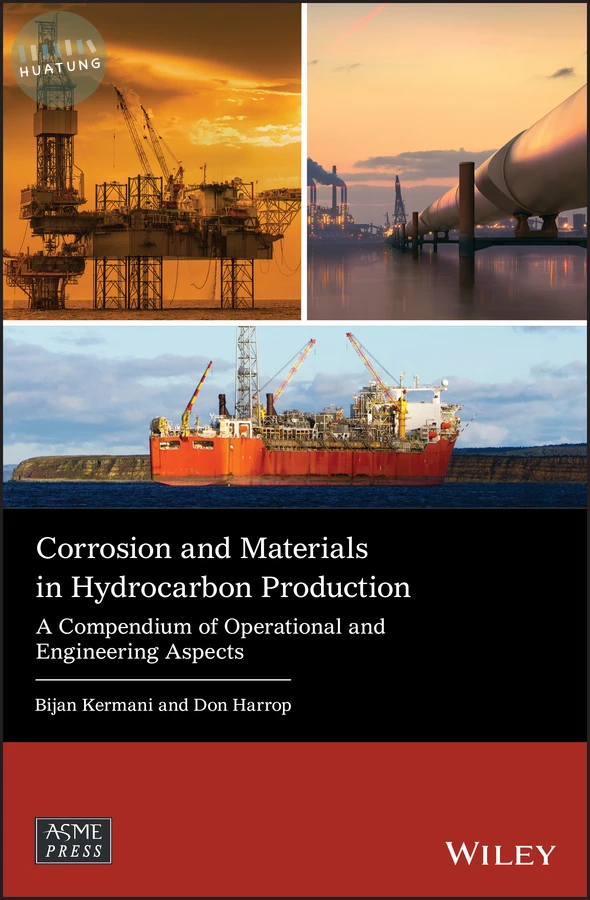
Corrosion and Materials in Hydrocarbon Production
$4658元 定價: $5176 9折 可訂購
簡介
Comprehensively covers the engineering aspects of corrosion and materials in hydrocarbon production
This book captures the current understanding of corrosion processes in upstream operations and provides a brief overview of parameters and measures needed for optimum design of facilities. It focuses on internal corrosion occurring in hydrocarbon production environments and the key issues affecting its occurrence, including: the types and morphology of corrosion damage; principal metallic materials deployed; and mitigating measures to optimise its occurrence. The book also highlights important areas of progress and challenges, and looks toward the future of research and development to enable improved and economical design of facilities for oil and a gas production.
Written for both those familiar and unfamiliar with the subject—and by two authors with more than 60 years combined industry experience—this book covers everything from Corrosion Resistant Alloys (CRAs) to internal metal loss corrosion threats, corrosion in injection systems to microbiologically influenced corrosion, corrosion risk analysis to corrosion and integrity management, and more, notably:
Comprehensively covers the engineering aspects of corrosion and materials in hydrocarbon production
Written by two, renowned experts in the field
Offers practical guide to those unfamiliar with the subject whilst providing a focused roadmap to addressing the topics in a precise and methodical manner
Covers all aspects of corrosion threat and remedial and mitigation measures in upstream hydrocarbon production applicable to sub-surface, surface, and transportation facilities
Outlines technology challenges that need further research as a pre-cursor to moving the industry forward.
Operational and Engineering Aspects of Corrosion and Materials in Hydrocarbon Production is an excellent guide for both practicing materials and corrosion engineers working in hydrocarbons production as well as those entering the area who may not be fully familiar with the subject.
目錄
Preface xvii
Acknowledgement xix
1 Introduction 1
1.1 Scope and Objectives 2
1.2 The Impact of Corrosion 2
1.3 Principal Types of Corrosion in Hydrocarbon Production 5
1.4 The Way Ahead: Positive Corrosion 7
1.5 Summary 8
References 9
Bibliography 9
2 Carbon and Low Alloy Steels (CLASs) 11
2.1 Steel Products 11
2.2 Development of Mechanical Properties 12
2.3 Strengthening Mechanisms 14
2.4 Hardenability 16
2.5 Weldability 16
2.6 Line Pipe Steels 17
2.7 Well Completion Downhole Tubulars 17
2.8 Internally Clad Materials 18
2.9 Summary 18
Reference 20
Bibliography 20
API/ISO Specifications 20
ASME Standard 21
Further Reading 21
3 Corrosion‐Resistant Alloys (CRAs) 23
3.1 Background 23
3.2 Alloying Elements, Microstructures, and their Significance for Corrosion Performance 24
3.3 Common Types/Grades of CRA Used in the Hydrocarbon Production Systems 30
3.4 Important Metallurgical Aspects of CRAs 33
3.5 Limits of Application 36
3.6 Selection Criteria 37
3.7 Future Demands and Requirements 39
3.8 Summary 40
References 41
Bibliography 42
Specifications 42
Further Reading 42
4 Water Chemistry 43
4.1 Sources of Water 44
4.2 Water Chemistry 45
4.3 Other Impacts on Corrosivity 46
4.4 Water Sampling Locations and Analysis Techniques 49
4.5 Influential Parameters in System Corrosivity 53
4.6 Summary 54
References 54
Bibliography 55
Standards 55
5 Internal Metal Loss Corrosion Threats 57
5.1 CO2 Metal Loss Corrosion 58
5.2 Key Influential Factors 60
5.3 Metal Loss CO2 Corrosion Prediction 63
5.4 Metal Loss Corrosion in Mixed H2S/CO2 Containing Streams 66
5.5 Summary 68
References 69
Bibliography 71
6 Environmental Cracking (EC) 73
6.1 Environmental Cracking Threat in Steels 73
6.2 EC Associated with Hydrogen Sulphide 74
6.3 Current Industry Practices 83
6.4 ISO 15156 83
6.5 Summary 86
Bibliography 87
7 Corrosion in Injection Systems 89
7.1 The Intent 90
7.2 Injection Systems 90
7.3 Water Treatment Methods 92
7.4 Water Corrosivity 94
7.5 Means of Corrosion Prediction 95
7.6 Materials Options 97
7.7 Supplementary Notes 100
7.8 Hydrotesting 101
7.9 Summary 103
References 104
Bibliography 104
8 Corrosion Mitigation by the Use of Inhibitor Chemicals 105
8.1 Inhibitor Characteristics 105
8.2 Inhibitor Testing and Application 111
8.3 Inhibitor Application/Deployment 116
8.4 Summary 119
References 120
9 Coating Systems 123
9.1 External Pipeline Coatings 123
9.2 Internal Coating and Lining 128
9.3 External Painting of Structures 130
9.4 Summary 132
References 132
Bibliography 132
10 Corrosion Trending 133
10.1 The Purpose of Corrosion Trending 134
10.2 Corrosion Monitoring 135
10.3 Corrosion Barrier Monitoring 142
10.4 Collection and Analysis of Real‐Time Monitoring Data 143
10.5 Downhole Corrosion Monitoring 145
10.6 Inspection Techniques 146
10.7 Intelligent Pigging 147
10.8 Future Considerations 149
10.9 Summary 150
References 150
Bibliography 151
Specifications 151
11 Microbiologically Influenced Corrosion (MIC) 153
11.1 Main Features 154
11.2 The Primary Causes 155
11.3 The Motive for Promotion of Corrosion by Micro‐organisms 157
11.4 Most Susceptible Locations and Conditions 161
11.5 Potential Prevention Measures 165
11.6 Means of Monitoring 168
11.7 Summary 170
References 171
Bibliography 172
12 Dense Phase CO2 Corrosion 173
12.1 Background 173
12.2 CO2 Stream Composition 175
12.3 Corrosion in the Presence of Aqueous Phases 177
12.4 Means of Corrosion Prediction 178
12.5 Method of Corrosion Mitigation 179
12.6 Summary 181
References 181
13 Corrosion Under Insulation (CUI) 183
13.1 Historical Context 183
13.2 Key Parameters Affecting CUI 184
13.3 CUI Prevention Methods 189
13.4 CUI Mitigation Strategy 192
13.5 CUI Inspection 193
13.6 NDE/NDT Techniques to Detect CUI 195
13.7 Summary 196
References 197
14 Metallic Materials Optimisation Routes 199
14.1 Background 199
14.2 Production Facilities 200
14.3 The Operating Regimes 204
14.4 System Corrosivity 205
14.5 Oxygen Corrosion 206
14.6 Metallic Materials Optimisation Methodology 206
14.7 Materials Options 207
14.8 Internal Corrosion Mitigation Methods 208
14.9 Whole Life Cost (WLC) Analysis 210
14.10 Materials Optimisation Strategy 211
14.11 Summary 212
References 212
Bibliography 213
15 Non‐metallic Materials: Elastomer Seals and Non‐metallic Liners 215
15.1 Elastomer Seals 215
15.2 Non‐metallic Liner Options for Corrosion Control 221
15.3 Flexible Pipes 226
15.4 Summary 229
References 230
Bibliography 230
16 Cathodic Protection (CP) 231
16.1 Key Points of Effectiveness 232
16.2 Cathodic Protection in Environmental Waters 232
16.3 Cathodic Protection and Hydrogen‐Induced Cracking (HAC) 237
16.4 Cathodic Protection of Structures in Contact with the Ground 238
16.5 Cathodic Protection of Well Casings 240
16.6 Cathodic Protection and AC Interference 241
16.7 Inspection and Testing 242
16.8 Internal Cathodic Protection Systems 242
16.9 Summary 242
16.10 Terminologies 243
References 244
Bibliography 245
17 Corrosion Risk Analysis 247
17.1 Risk 248
17.2 The Bow Tie Concept 248
17.3 Risk Matrix 249
17.4 Corrosion RBA Process 250
17.5 Corrosion RBA: Input 251
17.6 Corrosion RBA: Analysis 252
17.7 Corrosion RBA: Output 255
17.8 Corrosion RBA: Overall Process 257
17.9 Risky Business 258
17.10 Behaviours 258
17.11 Bayes’ Theorem 259
17.12 Moving Forward 260
17.13 Summary 260
References 261
18 Corrosion and Integrity Management 263
18.1 Integrity Management (IM) 263
18.2 Corrosion Management (CM) 266
18.3 Data Management 271
18.4 The Future 274
18.5 Summary 275
References 276
Bibliography 276
19 Corrosion and Materials Challenges in Hydrocarbon Production 277
19.1 Energy Viewpoint and the Role of Technology 277
19.2 Future Focus Areas and Horizon 278
19.3 Challenges in Materials and Corrosion Technology 278
19.4 Shortfalls in Technology Implementation and Knowledge Partnership 279
19.5 Summary 284
References 284
Bibliography 286
Abbreviations 287
Index 291