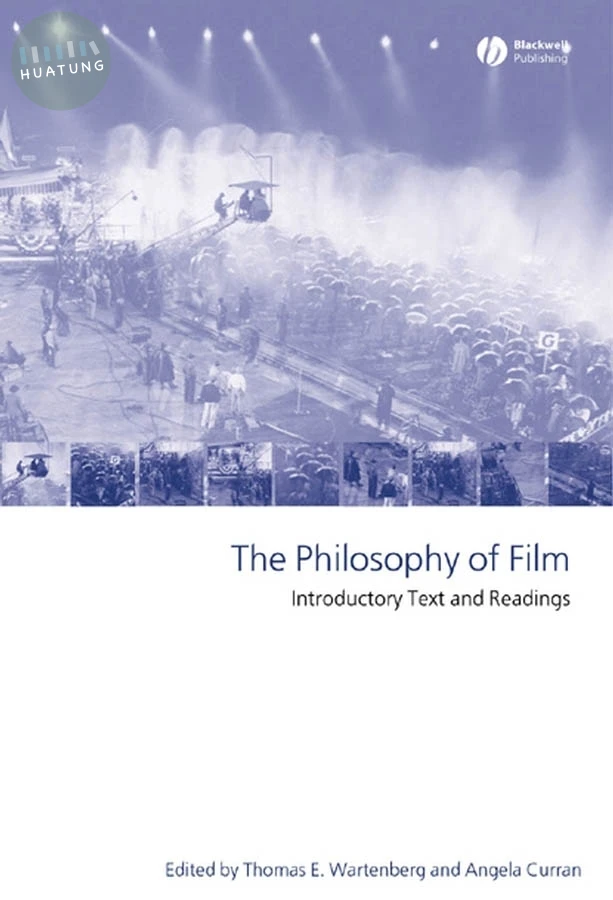

The Philosophy of Film
$4979元 定價: $5532 9折 可訂購
簡介
Organized around a series of philosophic questions about film, The Philosophy of Film: Introductory Text and Readings offers an accessible and engaging overview of the discipline.
Provides thorough selection of readings drawn from philosophy, film studies, and film criticism
Multiple points of view highlighted in discussion of film theory, narration, authorship, film and emotion, and the social values of cinema
Presents thought-provoking reading questions as well as clear and helpful introductions for each section
More information about this text along with further resources are available from the accompanying website at: http://www.mtholyoke.edu/omc/phil-film/index.html
目錄
Acknowledgments. General Introduction..
Part I: Do We Need Film Theory?.
Introduction.
Study Questions.
1. Prospects for Film Theory (Noël Carroll).
2. Can Scientific Models of Theorizing Help Film Theory (Malcolm Turvey).
3. Philosophy of Film as the Creation of Concepts (Gilles Deleuze).
Part II: What Is the Nature of Film?.
Introduction.
Study Questions.
4. Defining the Photoplay (Hugo Munsterberg).
5. The Artistry of Silent Film (Rudolph Arnheim).
6. Cinematic Realism (Andre Bazin).
7. Film, Photography, and Transparency (Kendall L. Walton).
8. Non-fictional Cinematic Artworks and Knowledge (Trevor Ponech).
Part III: Do Films Have Authors?.
Introduction.
Study Questions.
9. La Politique des Auteurs (François Truffaut).
10. Auteur Theory and Film Evaluation (Andrew Sarris).
11. The Idea of Film Criticism (Pauline Kael).
12. Against Authorship (Stephen Heath).
13. DVD’s and the Director’s Intentions (Deborah Parker and Mark Parker).
Part IV: How Do Films Engage Our Emotions?.
Introduction.
Study Questions.
14. Narrative Desire (Gregory Currie).
15. Spectator Emotion and Ideological Film Criticismm (Carl Plantinga).
16. Engaging Characters (Murray Smith).
17. The Paradox of Horror (Noël Carroll).
Part V: Must Films Have Narrators?.
Introduction.
Study Questions.
18. Principles of Film Narration (David Bordwell).
19. The Cinematic Narrator (Seymour Chatman).
20. Narration as Showing (George M. Wilson).
Part VI: Can Films Be Socially Critical?.
Introduction.
Study Questions.
21. The Politics of Representation (Michael Ryan and Douglas Kellner).
22. But Would You Want Your Daughter To Marry One? Politics and Race in Guess Who’s Coming To Dinner (Thomas E. Wartenberg).
23. Stella at the Movies: Critical Spectatorship and Melodrama in Stella Dallas (Angela Curren).
Part VII: What Can We Learn From Films?.
Introduction.
Study Questions.
24. Knowledge as Transgression: It Happened One Night (Stanley Cavell).
25. Realist Horror (Cynthia A. Freeland).
26. Philosophy Screened: Viewing The Matrix (Thomas E. Wartenberg).
27. Virtue and Happiness in Groundhog Day (Joseph Kupfer).
Suggestions for Further Reading.
Index.