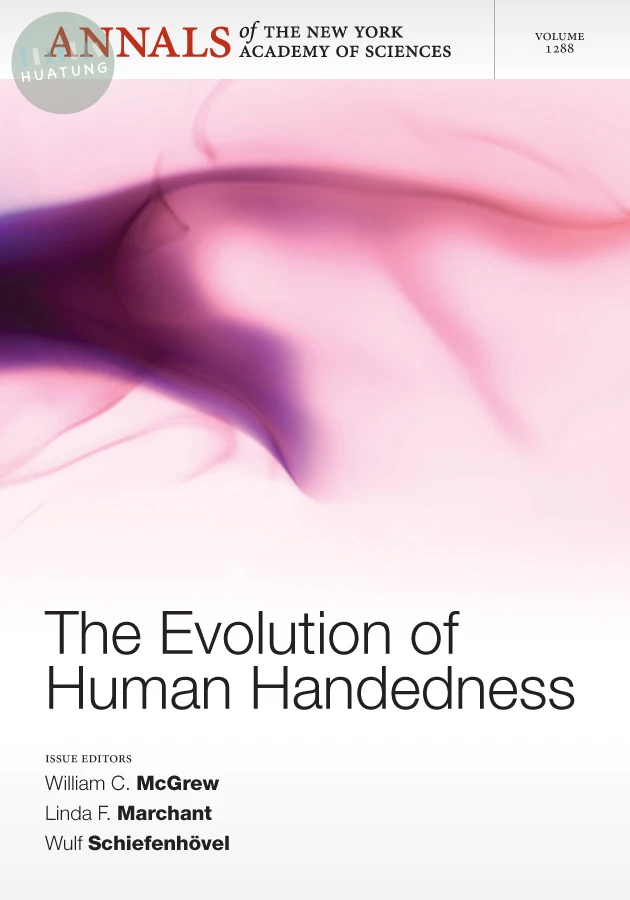

The Evolution of Human Handedness, Volume 1288
$4208元 定價: $4676 9折 可訂購
簡介
Handedness, or manual laterality of function, is thought to be both universal and unique to humans, making it a highly derived trait, based on an equally specialized neural substrate. By contrast, in various non-human species, both living and extinct, extent of lateralization varies. All known populations of living human beings apparently favor the right hand, motorically, culturally, and symbolically, thus right-handedness is species-typical, as well as species-specific. This laterality of function is correlated with asymmetry of structure, that is, neural, skeletal and muscular, for example as manifest especially in skilled movement, such as handwriting. Human brains are lop-sided, and sagitally-paired organs (hand, foot, eye, ear, etc.) are skewed in their use, usually biased to the right; explaining this variation appears to require both cultural and environmental causal variables. To tackle these questions and advance our knowledge of this basic human trait requires genuinely multi-disciplinary input by scholars willing to think inter-disciplinarily. Thus, participants in this Annals volume come from anthropology, archaeology, genetics, neurosciences, palaeo-anthropology, primatology, psychology, and psychiatry.
NOTE: Annals volumes are available for sale as individual books or as a journal.
目錄
v Introduction to The Evolution of Human Handedness
William C. McGrew, Wulf Schiefenhövel, and Linda F. Marchant
Comparative
1 Handedness is more than laterality: lessons from chimpanzees
Linda F. Marchant and William C. McGrew
9 Laterality in the gestural communication of wild chimpanzees
Catherine Hobaiter and Richard W. Byrne
17 Neuroanatomical asymmetries and handedness in chimpanzees (Pan troglodytes): a case for continuity in the evolution of hemispheric specialization
William D. Hopkins
Substrates
36 The protocadherin 11X/Y (PCDH11X/Y) gene pair as determinant of cerebral asymmetry in modern Homo sapiens
Thomas H. Priddle and Timothy J. Crow
48 Multilocus genetic models of handedness closely resemble single-locus models in explaining family data and are compatible with genome-wide association studies
J.C. McManus, Angus Davison, and John A. L. Armour
59 Laterality and the evolution of the prefronto-cerebellar system in anthropoids
Jeroen B. Smaers, James Steele, Charleen R. Case, and Katrin Amunts
Human evolution
70 Primate laterality and the biology and evolution of human handedness: a review and synthesis
W. Tecumseh Fitch and Stephanie N. Braccini
86 Skeletal evidence for variable patterns of handedness in chimpanzees, human hunter-gatherers, and recent British populations
Jay T. Stock, Meghan K. Shirley, Lauren A. Sarringhaus, Tom G. Davies, and Colin N. Shaw
100 The fighting hypothesis in combat: how well does the fighting hypothesis explain human left-handed minorities?
Ton G.G. Groothuis, I.C. McManus, Sara M. Schaafsma, and Reint H. Geuze
110 The fighting hypothesis as an evolutionary explanation for the handedness polymorphism in humans: where are we?
Charlotte Faurie and Michel Raymond
Modern Humans
114 The nature and nurture of human infant hand preference
Jacqueline Fagard
124 Laterality of handgrip strength: age- and physical training-related changes in Lithuanian schoolchildren and conscripts
Janina Tutkuviene and Wulf Schiefenhövel
135 Biased semantics for right and left in 50 Indo-European and non-Indo-European languages
Wulf Schiefenhövel