
How to Reach and Teach All Children Through Balanced Literacy
$872元 定價: $969 9折 可訂購
簡介
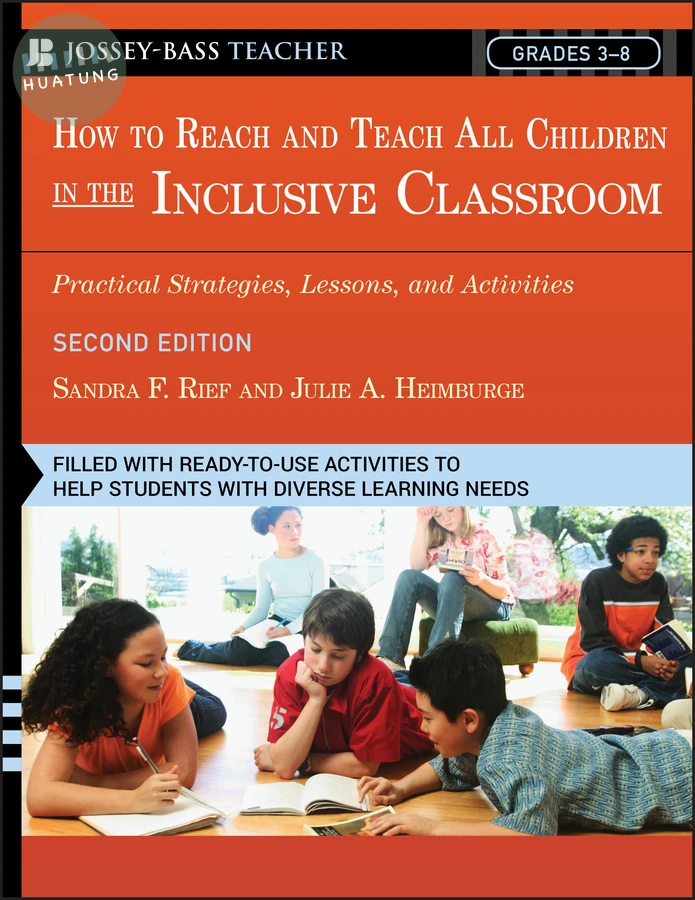
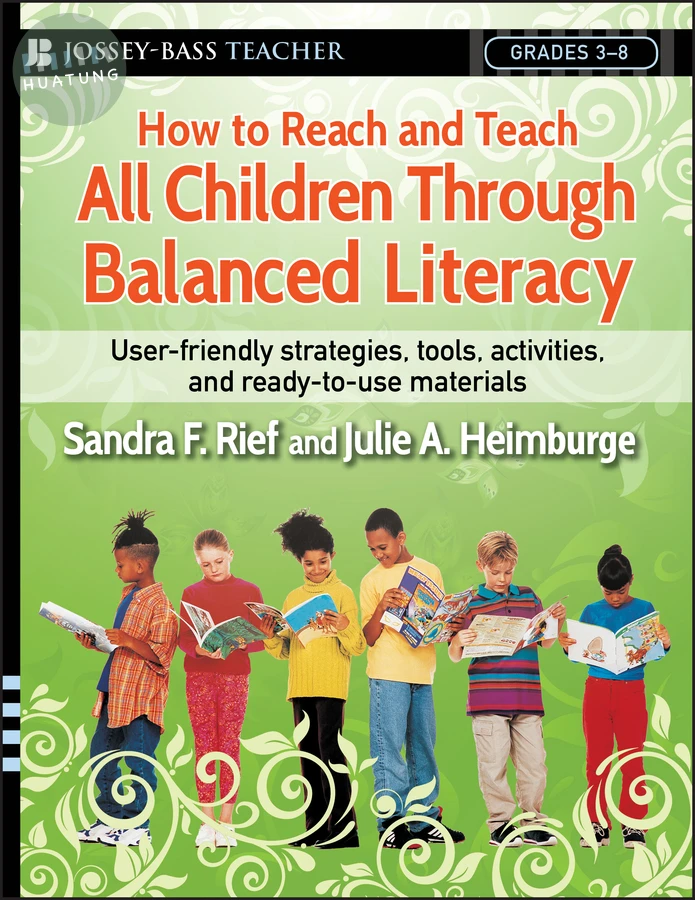
How to Reach and Teach All Children Through Balanced Literacy offers you a handbook for teaching literacy to diverse students in grades 3-8. The balanced literacy method combines the best practices of phonics and other skill-based language instruction with the holistic, literature-based approach in order to help you teach reading, writing, and speaking in a clear and approachable format. This dynamic resource offers an easily accessible research-based approach to balanced literacy that is grounded in the innovative ideas developed by authors Sandra F. Rief and Julie A. Heimburge. The book includes detailed descriptions of what a balanced literacy classroom looks like and shows how to create a program from the ground up or give your existing program a boost. The book can be used across content areas and is filled with reproducible worksheets, activities, and other handy classroom tools. Some topics covered include:
Shared book experiences
Reading aloud
Oral language and vocabulary development
Guided reading for comprehension
Modeled writing
Reading and writing conferences
Book clubs
Content area reading and writing
Ongoing assessments
Enhancing literacy through technology
目錄
About This Book vii
About the Authors ix
Acknowledgments xi
How This Book Maps to Standards xxv
Chapter 1 BALANCED LITERACY IN THE CLASSROOM—1
Balance and the Challenges of Reaching and Teaching Diverse Readers and Writers 1
Components of Balanced Literacy 2
Balancing Quality Literature and Other Resources in Our Libraries 3
Balancing Reading, Writing, Speaking, Listening, and Word Study 3
Integrating Content in the Literacy Block 3
Balancing Instructional Approaches 4
Balancing Learning Style Preferences of Students 4
Balancing Grouping in the Classroom 5
Balancing Teacher Talk and Student Talk 5
Balancing Teacher-Directed and Student-Directed Activities 6
Balancing Formal and Informal Assessments 6
Establishing a Community of Learners 6
Chapter 2 SETTING UP A BALANCED LITERACY ENVIRONMENT—11
The Look of the Classroom Library Today 12
Selecting Books 12
Choosing Quality Books 12
Newbery Award Books 12
Picture Books and the Caldecott Award Winners 13
Young Readers Choice Awards 13
Choosing Books that Are ‘‘Just Right’’ 13
Involving Students in Book Selection 16
Obtaining More Books for Your Library 16
A Classroom Visit to a Bookstore 17
Making Space for Reluctant Readers’ Needs 17
Organizing the Classroom Library 18
Categorizing Books 18
Enlisting Student Help for Categorizing 19
Labeling Books That Fit 20
Keeping Books for Yourself 20
Knowing Thy Books 21
Displaying Books 21
Lending and Keeping Track of Books 21
Introducing New Books 22
Marking Books 22
Protecting Books 23
Keeping a Fresh Look to the Library 23
Dealing with a Tired-Looking Library 23
Checking Up on What Students Are Reading 23
Tips for Parents 23
Not-So-User-Friendly Public Libraries or Bookstores 24
Reproducibles
Activity 2.1. Independent Reading Books: Selection and Evaluation 25
Activity 2.2. Reading Log 26
Activity 2.3. Home Reading Log 27
Chapter 3 READING IN THE LITERACY WORKSHOP—29
Setting Up the Reading Workshop 30
Setting Goals for Reading 30
Managing the Literacy Workshop 30
Assessment in the Literacy Workshop. 30
Selecting Quality Books 31
Strategies for Reading 32
Whole-Class Instruction 32
A Deeper Look at the Read-Aloud 32
A Deeper Look at Shared Reading 33
Guided Reading 34
Literacy Stations 35
Strategies to Help Students Improve Literacy 37
Accountable Talking 37
Graphic Organizers 38
Conferring with Students 38
Conferring Baskets 39
Reproducibles
Activity 3.1. Conferring Notes for Reading 41
Activity 3.2. Book Recommendation Form 42
Chapter 4 WRITING IN THE LITERACY WORKSHOP—43
Setting Up the Writing Workshop 44
The Six Traits of Writing and How They Help Direct a Writing Program 47
Balancing Teacher-Directed and Choice Writing 47
Developing Writing Stamina 48
Writing Essentials 48
Establishing Audience 48
Writing in Different Genres 49
Helping Students with Topic Sentences 49
Conventions: How Important Are They? 49
Wall Reading 50
Word Banks 50
Spelling Difficulties 51
Demonstration of Writing 51
The Writing Conference: The Importance of Talk 51
Writing Conference Guidelines 52
Tips for Volunteers 53
Use of the Rubric 53
Publishing 54
Student Reading and Writing Portfolio 55
Raising the Bar 56
Keeping Parents Informed 56
Celebrating Writing 57
Handwriting for Older Students 58
Reproducible
Activity 4.1. Conferring Notes for Writing 59
Chapter 5 NONFICTION AND ITS PLACE IN BALANCED LITERACY—61
What Is Nonfiction? 61
Why Teach Nonfiction Explicitly? 62
Entry Points for Nonfiction 62
Learning About Text Structures 64
What Are Common Text Structures? 64
Teaching Text Structures 65
A Deeper Look at Description 66
Sequence or Time Order Through Biographies 66
The Structure of Cause and Effect 68
Text Features 69
Delving into Text Features 69
Instructional Activities to Ensure Understanding of Text Features 70
Skills and Strategies for Accessing Nonfiction 70
Vocabulary in Nonfiction 70
Skimming and Scanning 71
Highlighting and Using Sticky Notes 72
Technology: Benefits and Challenges 73
Supporting Struggling Readers and Writers During This Study 73
Nonfiction Assessment Practices: Baseline and Finale 74
Reproducibles
Activity 5.1. Text Feature Activity 75
Activity 5.2. Do You Know Your Text Structures? 76
Activity 5.3. Feature and Structure Search 77
Activity 5.4. Text Structure or Text Feature for a Children’s Book 79
Chapter 6 STRENGTHENING WORD KNOWLEDGE AND FLUENCY—81
What Is Word Study? 81
The Teacher’s Role in Word Study 82
Spelling 83
Developmental Stages of Spelling 83
Characteristics of Proficient Spellers 84
High-Frequency and Commonly Misspelled Words 85
Instructional Activities 86
Vocabulary 90
Instruction: The Big Picture 90
Strategies, Activities, and Scaffolds 91
Vocabulary Charts and Lists 93
Reading Fluency 94
Factor That Contribute to Fluency 94
Strategies to Build Fluency 95
Interventions 96
Reproducibles
Activity 6.1. A Study in Homophones 97
Activity 6.2. Vocabulary Detective Work 99
Chapter 7 MAKING ORAL LANGUAGE A PRIORITY—101
Speaking and Listening: Natural Skills? 102
Communication Skills as Part of the Core Curriculum 102
The Whole Group: A Scary Place 102
The Magnificent Seven. 103
Start Small, with Opportunities for Students to Speak 103
Strategies for Practicing Oral Language 104
Quick Talks 104
Prompts for Talking with Partners or Small Groups 104
One-on-One Conferencing 105
Accountable Talk 105
Book Talks and Book Clubs 105
Commercials 106
Fishbowl for Peer Modeling 106
Talking Before, During, and After Writing 106
Use of a Microphone in the Classroom 107
Writer’s, Author’s, or Reader’s Chair 107
Storytelling or Acting Out A Scene 107
Hot Seat 108
Tongue Twisters 108
Performing Poems 108
Guidelines for Performing a Poem 109
Group Poetry 109
Newscast Creation 110
Interviews to Build Confidence in Speaking 110
Oral Language with Puppetry 111
Reader’s Theater for Literature and History Presentations 111
Fun with Role Playing 112
Teaching Board Games to Peers 112
Demonstrating Science Experiments 112
Formal Speeches 112
Accommodations for Reluctant Speakers 114
Oral Language Assessment 114
An After-School Speakers’ or Drama Club 114
Reproducibles
Activity 7.1. Cereal Box Book Report and Persuasive Commercial 115
Activity 7.2. Interview Planning Sheet 116
Activity 7.3. Science Experiment Planning Sheet: Oral Presentation 117
Activity 7.4. Speech Plan Sheet 118
Activity 7.5. Monthly Oral Language Presentations 119
Activity 7.6. Oral Language Presentation: A How-to Speech 120
Activity 7.7. Oral Language Teacher Evaluation 122
Chapter 8 USING A THEMATIC APPROACH: SURVIVAL—123
Establishing a Theme 123
Getting Help from Other Teachers 124
Involving Parents 124
Modifying to Meet the Needs of Students 124
Getting Started 124
Survival as a Theme 125
Why Survival? 125
Fitting Survival into the Curriculum 125
Getting Started with Grade-Level Novels 125
Comparing Books to Movies 126
Island Survival: A Sample Plan 127
Supplementary Activities 129
Using Fact Cards 130
Organizing a Survival Book Club 130
Keeping a Response Journal 130
Incorporating Nonfiction 131
Using Audiobooks and Compact Discs 131
Tying In Other Subject Areas 131
Other Resources for a Survival Theme Study 133
Reproducibles
Activity 8.1. A Group Newspaper About Brian Robeson’s Adventure in Hatchet and The River 134
Activity 8.2. A Letter from Character to Character 136
Activity 8.3. Prejudice and Discrimination Based on The Cay 137
Activity 8.4. The Perfect Island 138
Activity 8.5. World War II Project Based on Number the Stars by Lois Lowry 140
Activity 8.6. World War II Project Teacher or Student Evaluation 143
Activity 8.7. Survival Theme: Critical Reading and Interviewing 144
Chapter 9 SPECIAL UNITS OF STUDY—145
Author Studies to Produce Stronger Readers and Writers 145
Chris Van Allsburg, Author and Illustrator 145
Avi: A Versatile Writer 147
Katherine Paterson: Comparing and Contrasting 148
Digging Deeper into Story Elements 148
Character Study 149
Developing Character Sketch Cards 152
Symbolism in Because of Winn Dixie 153
Similes in The Thirteenth Floor 155
Genre Studies 155
Reproducibles
Activity 9.1. Creating a Flip Book: Story Elements 156
Activity 9.2. Flip Book for Charlotte Doyle: Story Element Response to Literature 157
Activity 9.3. Compare and Contrast Two Books by the Same Author 158
Activity 9.4. Just a Few Reading and Writing Terms You Should Know 159
Activity 9.5. Character Chart 163
Activity 9.6. Character Sketch Card (Front) 164
Activity 9.7. Character Sketch Card (Back) 165
Activity 9.8. Author’s Writing Tools and Story Elements 166
Activity 9.9. Monthly Genre Study Schedule 168
Activity 9.10. Book Jacket 169
Activity 9.11. Picture Book Study: Caldecott Books Recording and Information Sheet 170
Chapter 10 BOOK CLUBS AND LITERATURE CIRCLES—173
‘‘Literature Circles’’ or ‘‘Books Clubs’’: What Shall We Call Them? 173
What Is a Book Club? 174
The Benefits of Book Clubs 174
Putting Book Clubs into Practice 175
Timing for Book Clubs 175
Ideas for Grouping 175
Choosing Materials to Read 176
Getting Started 177
Setting the Schedule 177
Student Roles in Book Clubs 178
Managing Book Clubs 178
Rules of Etiquette 178
Book Club Folders. 179
Questions to Bring Out the Voices 179
Keeping the Discussion Moving 180
Using Sticky Notes 180
Response Journals and Literature Logs 180
Charting 181
Troubleshooting 182
Accommodations for Special Needs 182
Culminating Activities and Assessment 183
Variations of Book Clubs 183
Building a Schoolwide Reading Community 184
Buddy Classes 186
One Big Book Club 186
Reproducibles
Activity 10.1. Book Club Reading Schedule 187
Activity 10.2. Book Club Roles 188
Activity 10.3. Book Club Daily Evaluation Sheet 190
Activity 10.4. Book Club Discussion Notes 191
Activity 10.5. Book Club Group Planning Sheet 192
Activity 10.6. ‘‘Fat Questions’’ to Keep Your Book Club Conversation Going 193
Activity 10.7. Book Club Culminating Activities 194
Activity 10.8. Rubric for Book Club Presentation and Project 198
Activity 10.9. Book Club End-of-Unit Student Evaluation Sheet 199
Chapter 11 READING AND WRITING DIFFICULTIES IN STUDENTS—201
Reading Problems and Research 202
Struggling Older Readers 203
Learning Disabilities and Other Brain-Based Reading Problems 204
Dyslexia 204
Attention Deficit/Hyperactivity Disorder (AD/HD) 205
The Gender Gap in Reading 206
Strategies for Working with Struggling Readers 206
Struggles with Writing 207
Planning and Organization 208
Memory 208
Language Processing 208
Graphomotor Skills 209
Spelling 210
Other Mechanics 210
Editing 210
Self-Monitoring 211
Speed of Processing 211
The Teacher’s Role 211
Strategies for Bypassing and Accommodating Writing Difficulties 211
Research-Based Literacy Intervention Programs 213
Chapter 12 READING COMPREHENSION STRATEGIES AND SCAFFOLDS—217
Characteristics of Good Readers 217
Metacognitive Readers 218
Prereading Comprehension Strategies 219
Prereading Instructional Strategies 219
Prereading Metacognitive Strategies 219
During-Reading Comprehension Strategies 220
During-Reading Instructional Strategies 220
During-Reading Metacognitive Strategies 221
After-Reading Comprehension Strategies 224
After-Reading Instructional Strategies 224
After-Reading Metacognitive Strategies 225
Cognitive Reading Comprehension Strategies 226
Graphic Outlines or Graphic Aids 227
Text Structure 228
Expository or Informational Text Structure 228
Narrative Text Structure 228
Active Reading and Discussion Formats and Activities 229
Reproducibles
Activity 12.1. Mapping What I Read 230
Activity 12.2. Narrative Text Organization Chart 231
Activity 12.3. Narrative Text Organization Script 232
Chapter 13 WRITING STRATEGIES, SCAFFOLDS, AND ACCOMMODATIONS—233
The Importance of Modeling 234
Guided Writing 234
Strategies to Help with Writing 234
Prewriting 234
Checklists 236
Planning Forms and Graphic Organizers 236
Drafting 237
Revising 237
Editing 239
Publishing 239
Formats and Genres 239
Paragraphs 239
Powerful Leads and Closings 240
Summaries 240
Response to Literature 241
Letters 241
Narrative 241
Story Grammar 241
The Narrative Organizer Chart 242
Expository Writing 242
Research Papers 243
Persuasive Letters and Essays 243
The Use of Rubrics 244
Note Taking 244
Lecture Notes 245
Textbook Notes 246
Reproducible
Activity 13.1. Persuasive Five-Paragraph Essay Rubric 247
Chapter 14 TEACHING AND ENHANCING LITERACY THROUGH TECHNOLOGY—249
Programs for Use in the Classroom 250
Prewriting Software 250
Word Processing 250
Desktop Publishing 251
Multimedia 251
Uses for PowerPoint in Balanced Literacy 252
PowerPoint Web Sites 256
Audiobooks 256
Electronic Books (E-Books) 257
Electronic Mail (E-Mail) 257
The Internet 258
Online Instruction (E-Learning) 258
Handheld Devices 259
Visual Technology 259
Digital Cameras 259
Digital Video. 260
Video Streaming 260
Document Cameras 261
Interactive Whiteboards 262
Sound-Field Classroom Amplification 262
Assistive Technology 266
Portable Word Processors 266
Word Predictors and Spell-Checkers 266
Text-to-Speech Software 267
Scanned Books 267
Speech Recognition Systems 267
Software for Students with Reading and Writing Disabilities 267
Scanner Pens 268
Sources for Assistive Technology 268
Appendix A Sixty Recommended Web Sites for Teachers and Students, Grades 3 Through 8: A Wealth of Resources for Enhancing Literacy 269
Appendix B Building Community: A Two-Week Unit of Study 275
References 287
Name Index 299
Subject Index 303