The Internet of Things
$4204元 定價: $4671 9折 可訂購
簡介
Provides comprehensive coverage of the current state of IoT, focusing on data processing infrastructure and techniques
Written by experts in the field, this book addresses the IoT technology stack, from connectivity through data platforms to end-user case studies, and considers the tradeoffs between business needs and data security and privacy throughout. There is a particular emphasis on data processing technologies that enable the extraction of actionable insights from data to inform improved decision making. These include artificial intelligence techniques such as stream processing, deep learning and knowledge graphs, as well as data interoperability and the key aspects of privacy, security and trust. Additional aspects covered include: creating and supporting IoT ecosystems; edge computing; data mining of sensor datasets; and crowd-sourcing, amongst others. The book also presents several sections featuring use cases across a range of application areas such as smart energy, transportation, smart factories, and more. The book concludes with a chapter on key considerations when deploying IoT technologies in the enterprise, followed by a brief review of future research directions and challenges.
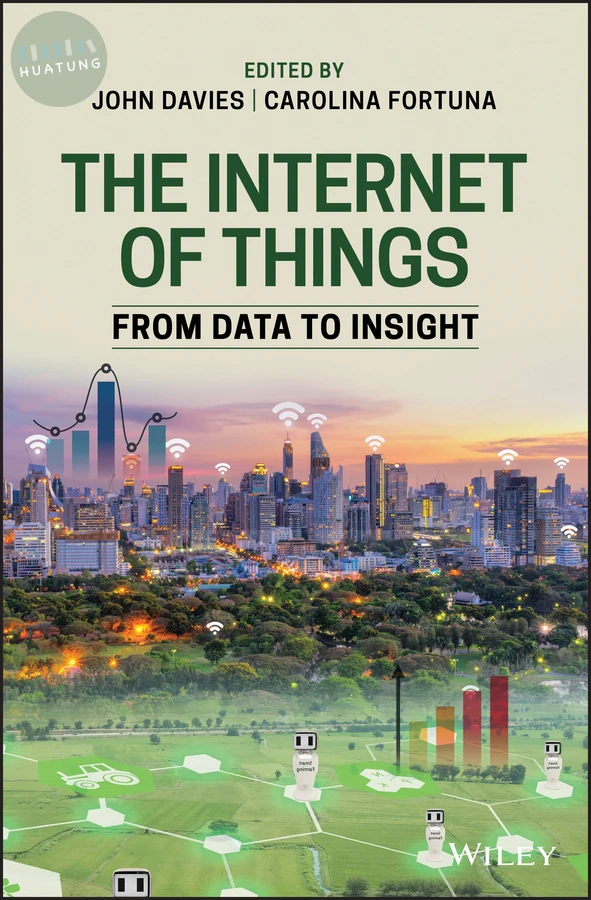
The Internet of Things: From Data to Insight
Provides a comprehensive overview of the Internet of Things technology stack with focus on data driven aspects from data modelling and processing to presentation for decision making
Explains how IoT technology is applied in practice and the benefits being delivered.
Acquaints readers that are new to the area with concepts, components, technologies, and verticals related to and enabled by IoT
Gives IoT specialists a deeper insight into data and decision-making aspects as well as novel technologies and application areas
Analyzes and presents important emerging technologies for the IoT arena
Shows how different objects and devices can be connected to decision making processes at various levels of abstraction
The Internet of Things: From Data to Insight will appeal to a wide audience, including IT and network specialists seeking a broad and complete understanding of IoT, CIOs and CIO teams, researchers in IoT and related fields, final year undergraduates, graduate students, post-graduates, and IT and science media professionals.
目錄
About the Editors xi
List of Contributors xiii
Acknowledgments xvii
1 Introduction 1
John Davies and Carolina Fortuna
1.1 Stakeholders in IoT Ecosystems 3
1.2 Human and IoT Sensing, Reasoning, and Actuation: An Analogy 4
1.3 Replicability and Re-use in IoT 5
1.4 Overview 6
References 7
2 Connecting Devices: Access Networks 9
Paul Putland
2.1 Introduction 9
2.2 Overview of Access Networks 10
2.2.1 Existing Technologies are Able to Cover a Number of IoT Scenarios 10
2.3 Low-Power Wide Area Network (LPWAN) 12
2.3.1 Long-Range (LoRa) Low-Power Wide Area Network 14
2.3.2 Sigfox Low-Power Wide Area Network 14
2.3.3 Weightless Low-Power Wide Area Network 15
2.4 Cellular Technologies 15
2.4.1 Emerging 5G Cellular Technology 16
2.5 Conclusion 18
References 18
3 Edge Computing 21
Mohammad Hossein Zoualfaghari, Simon Beddus, and Salman Taherizadeh
3.1 Introduction 21
3.2 Edge Computing Fundamentals 22
3.2.1 Edge Compute Strategies 22
3.2.2 Network Connectivity 25
3.3 Edge Computing Architecture 25
3.3.1 Device Overview 25
3.3.2 Edge Application Modules 26
3.3.3 IoT Runtime Environment 26
3.3.4 Device Management 27
3.3.5 Secure Runtime Environment 27
3.4 Implementing Edge Computing Solutions 28
3.4.1 Starter Configuration 28
3.4.2 Developer Tools 28
3.4.3 Edge Computing Frameworks 29
3.5 Zero-Touch Device On-boarding 30
3.6 Applying Edge Computing 32
3.7 Conclusions 33
References 33
4 Data Platforms: Interoperability and Insight 37
John Davies and Mike Fisher
4.1 Introduction 37
4.2 IoT Ecosystems 38
4.3 Context 40
4.4 Aspects of Interoperability 41
4.4.1 Discovery 41
4.4.2 Access Control 43
4.4.3 Data Access 44
4.5 Conclusion 48
References 49
5 Streaming Data Processing for IoT 51
Carolina Fortuna and Timotej Gale
5.1 Introduction 51
5.2 Fundamentals 52
5.2.1 Compression 52
5.2.2 Dimensionality Reduction 52
5.2.3 Summarization 53
5.2.4 Learning and Mining 53
5.2.5 Visualization 53
5.3 Architectures and Languages 54
5.4 Stream Analytics and Spectrum Sensing 56
5.4.1 Real-Time Notifications 57
5.4.2 Statistical Reporting 57
5.4.3 Custom Applications 58
5.5 Summary 59
References 60
6 Applied Machine Vision and IoT 63
V. García, N. Sánchez, J.A. Rodrigo, J.M. Menéndez, and J. Lalueza
6.1 Introduction: Machine Vision and the Proliferation of Smart Internet of Things Driven Environments 63
6.2 Machine Vision Fundamentals 65
6.3 Overview of Relevant Work: Current Trends in Machine Vision in IoT 67
6.3.1 Improved Perception for IoT 67
6.3.2 Improved Interpretation and Learning for IoT 68
6.4 A Generic Deep Learning Framework for Improved Situation Awareness 69
6.5 Evaluating the Impact of Deep Learning in Different IoT Related Verticals 70
6.5.1 Sensing Critical Infrastructures Using Cognitive Drone-Based Systems 70
6.5.2 Sensing Public Spaces Using Smart Embedded Systems 71
6.5.3 Preventive Maintenance Service Comparison Based on Drone High-Definition Images 72
6.6 Best Practice 74
6.7 Summary 75
References 75
7 Data Representation and Reasoning 79
Maria Maleshkova and Nicolas Seydoux
7.1 Introduction 79
7.2 Fundamentals 80
7.3 Semantic IoT and Semantic WoT (SWoT) 81
7.4 Semantics for IoT Integration 82
7.4.1 IoT Ontologies and IoT-O 83
7.4.2 The Digital Twin Approach 85
7.5 Use Case 87
7.6 Summary 88
References 89
8 Crowdsourcing and Human-in-the-Loop for IoT 91
Luis-Daniel Ibáñez, Neal Reeves, and Elena Simperl
8.1 Introduction 91
8.2 Crowdsourcing 92
8.3 Human-in-the-Loop 95
8.4 Spatial Crowdsourcing 97
8.5 Participatory Sensing 99
8.6 Conclusion 100
References 101
9 IoT Security: Experience is an Expensive Teacher 107
Paul Kearney
9.1 Introduction 107
9.2 Why is IoT Security Different from IT Security? 108
9.3 What is Being Done to Address IoT Security Challenges? 110
9.3.1 Governments 110
9.3.2 Standards Bodies 111
9.3.3 Industry Groups 112
9.4 Picking the Low-Hanging Fruit 113
9.4.1 Basic Hygiene Factors 113
9.4.2 Methodologies and Compliance Frameworks 115
9.4.3 Labeling Schemes and Consumer Advice 116
9.5 Summary 117
References 118
10 IoT Data Privacy 121
Norihiro Okui, Vanessa Bracamonte, Shinsaku Kiyomoto, and Alistair Duke
10.1 Introduction 121
10.2 Basic Concepts in IoT Data Privacy 122
10.2.1 What is Personal Data? 122
10.2.2 General Requirements for Data Privacy 123
10.2.3 Personal Data and IoT 124
10.2.4 Existing Privacy Preservation Approaches 126
10.2.5 Toward a Standards-Based Approach in Support of PIMS Business Models 128
10.3 A Data Handling Framework Based on Consent Information and Privacy Preferences 129
10.3.1 A Data Handling Framework 129
10.3.2 Privacy Preference Manager (PPM) 130
10.3.3 Implementation of the Framework 131
10.4 Standardization for a User-Centric Data Handling Architecture 132
10.4.1 Introduction to oneM2M 132
10.4.2 PPM in oneM2M 133
10.5 Example Use Cases 133
10.5.1 Services Based on Home Energy Data 133
10.5.2 HEMS Service 133
10.5.3 Delivery Service 134
10.6 Conclusions 137
References 137
11 Blockchain: Enabling Trust on the Internet of Things 141
Giampaolo Fiorentino, Carmelita Occhipinti, Antonello Corsi, Evandro Moro, John Davies, and Alistair Duke
11.1 Introduction 141
11.2 Distributed Ledger Technologies and the Blockchain 143
11.2.1 Distributed Ledger Technology Overview 143
11.2.2 Basic Concepts and Architecture 145
11.2.2.1 Consensus Algorithm 148
11.2.3 When to Deploy DLT 149
11.3 The Ledger of Things: Blockchain and IoT 150
11.4 Benefits and Challenges 150
11.5 Blockchain Use Cases 152
11.6 Conclusion 154
References 154
12 Healthcare 159
Duarte Gonçalves-Ferreira, Joana Ferreira, Bruno Oliveira, Ricardo Cruz-Correia, and Pedro Pereira Rodrigues
12.1 Internet of Things in Healthcare Settings 159
12.1.1 Monitoring Patient Status in Hospitals 160
12.1.2 IoT from Healthcare to Everyday Life 160
12.1.3 Systems Interoperability 161
12.2 BigEHR: A Federated Repository for a Holistic Lifelong Health Record 163
12.2.1 Why a Federated Design? 164
12.2.2 System Architecture 164
12.3 Gathering IoT Health-Related Data 165
12.3.1 From Inside the Hospitals 166
12.3.2 Feeding Data from Outside Sources 166
12.4 Extracting Meaningful Information from IoT Data 167
12.4.1 Privacy Concerns 167
12.4.2 Distributed Reasoning 167
12.5 Outlook 168
Acknowledgments 169
References 169
13 Smart Energy 173
Artemis Voulkidis, Theodore Zahariadis, Konstantinos Kalaboukas, Francesca Santori, and Matev Vučnik
13.1 Introduction 173
13.2 Use Case Description 175
13.2.1 The Role of 5G in the Smart Grid IoT Context 177
13.3 Reference Architecture 178
13.4 Use Case Validation 182
13.4.1 AMI-Based Continuous Power Quality Assessment System 183
13.5 Conclusion 187
Acknowledgment 187
References 187
14 Road Transport and Air Quality 189
Charles Carter and Chris Rushton
14.1 Introduction 189
14.2 The Air Pollution Challenge 191
14.3 Road Traffic Air Pollution Reduction Strategies 193
14.4 Monitoring Air Pollution Using IoT 194
14.5 Use Case: Reducing Emissions Through an IoT-Based Advanced Traffic Management System 196
14.6 Limitations of Average Speed Air Quality Modeling 201
14.7 Future Roadmap and Summary 202
References 203
15 Conclusion 207
John Davies and Carolina Fortuna
15.1 Origins and Evolution 207
15.2 Why Now? 207
15.2.1 Falling Costs and Miniaturization 208
15.2.2 Societal Challenges and Resource Efficiency 208
15.2.3 Information Sharing Comes of Age 208
15.2.4 Managing Complexity 208
15.2.5 Technological Readiness 208
15.3 Maximizing the Value of Data 209
15.4 Commercial Opportunities 209
15.5 A Glimpse of the Future 210
References 212
Index 213