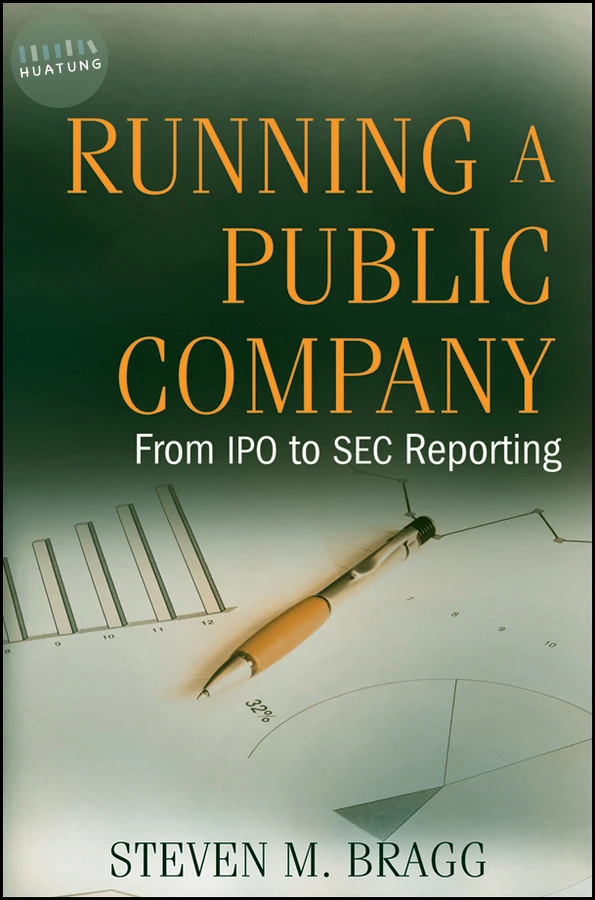
Running a Public Company
$3845元 定價: $4272 9折 可訂購
簡介
Praise for Running a Public Company: From IPO to SEC Reporting "Steve Bragg's book is an essential read for anyone contemplating a public offering or taking on leadership responsibility in a public company. Not only does he explain the complicated aspects of registration and reporting, he provides practical examples of policies, procedures, and controls to keep a public company on the right track. This book is easy to follow and will continue to be a resource for the reader."—Tom Wilkinson , PMB Helin Donovan, LLP
"I will recommend Running a Public Company: From IPO to SEC Reporting to my clients and consulting colleagues as an excellent resource. The book provides helpful guidance about the decision to go public, and about managing the requirements once a company is public. Steve Bragg's extensive knowledge stems from actual business experience, and his writing style makes a complex topic easier to follow and understand."—Valerie G. Walling, CPA, CMC, Management and Internal Controls Consultant
"I highly recommend Steve's new book, Running a Public Company: From IPO to SEC Reporting, because it's a reference manual and insider's guide that contains a treasure trove of valuable insights certain to help managers, accountants, and attorneys navigate through the countless challenges that arise when taking (and keeping) a company public."—Matthew Posta, Esq., CPA, Vice President of Finance, Key Air, LLC
"Mr. Bragg has done an excellent job of demystifying what is required to run your company and sell your stock in the public markets. I consider this a must-read for anyone considering a public offering or working with a public company."—Wray Rives, CPA
"Running a Public Company: From IPO to SEC Reporting is an incredibly exhaustive guide to going public, spanning the process from first deciding to take the leap to filing with the SEC and everything in between—so comprehensive that it even includes the SEC's account number for paying filing fees! This is yet another Steven Bragg title for professionals that takes a complicated and oftentimes confusing process and breaks it down into simple, easy-to-follow steps. Should our company ever decide to make that jump, it is reassuring to know that Running a Public Company has laid out the path before us in perfect detail. Whether used as a reference or a guide, Mr. Bragg makes the process simple, clear, and amazingly straightforward."—Adrienne Gonzalez, Project Coordinator, Roger CPA Review, Chief Information Officer, JrDeputyAccountant.com
"The first A to Z guide that I have seen. An excellent reference for management and investors alike."—Brian A. Lebrecht, Esq., President, The Lebrecht Group, APLC
目錄
About the Author xiii
Preface xv
Part I How to Go Public 1
Chapter 1 The Initial Public Offering 3
Introduction 3
Reasons to Go Public 3
Reasons Not to Go Public 5
The Cost of an IPO 7
Preparing for the IPO 7
Finding an Underwriter 10
Registering for and Completing the IPO 14
Summary 18
Chapter 2 Acquiring a Public Shell Company 19
Introduction 19
Pros and Cons of Acquiring a Public Shell Company 19
The Mechanics of a Shell Company 21
Summary 22
Chapter 3 Listing on a Stock Exchange 23
Introduction 23
The Listing Process 23
The American Stock Exchange 24
The NASDAQ 27
Overview 27
The NASDAQ Capital Market 27
The NASDAQ Global Market 27
The New York Stock Exchange 29
Comparing the Stock Exchanges 31
Summary 33
Part II Dealing with Investors 35
Chapter 4 Investor Relations Overview 37
Introduction 37
Investor Relations Objectives and Goals 38
Investor Relations Tools 39
The Fact Sheet 41
The Press Release 42
The Annual Report 46
The Annual Meeting 48
The Company Web Site 49
The Road Show 54
The Conference Call 55
Float Management 57
Summary 59
Chapter 5 The Investment Community 61
Introduction 61
The Analyst’s Perspective 61
Finding the Right Analyst 63
The Sell Side 64
Analysts 64
Brokers 67
Investment Bankers 69
Investor Relations Specialists 70
The Buy Side 70
Types of Investors 70
Institutional Investors 71
Individual Investors 73
Investment Clubs 75
Foreign Investors 76
Presentations to Investors 76
Summary 77
Chapter 6 Regulation FD (Fair Disclosure) 79
Introduction 79
Policies 80
Procedures 82
Controls 83
Summary 86
Chapter 7 Stock Repurchases 87
Introduction 87
Impact on Earnings per Share 87
Legal Ramifications 88
SEC Reporting 89
Adequate Disclosure and Repurchase Instructions 90
Impact of Repurchases on Rule 13e-3 91
Summary 91
Part III Dealing with the Securities and Exchange Commission 93
Chapter 8 Registration Statements 95
Introduction 95
Form S- 1 95
Form S- 3 98
Form S- 8 99
The Shelf Registration 100
Declaring a Registration Statement Effective 100
Controls 101
Summary 102
Chapter 9 Regulation D (Sale of Unregistered Securities) 103
Introduction 103
Policies 104
Procedures 105
Controls 109
Summary 112
Chapter 10 Rule 144 (Registration Exemption for Resale of Securities) 113
Introduction 113
Procedures 115
Controls 115
Summary 117
Chapter 11 Rule 10b5-1 (Stock Trading Plans) 119
Introduction 119
Policies 122
Summary 123
Chapter 12 Regulation A (Small Issue Exemption) 125
Introduction 125
Policies 127
Procedures 127
Controls 129
Summary 132
Chapter 13 Fedwire Payments 133
Introduction 133
Summary 135
Chapter 14 Form 8-K 137
Introduction 137
Controls 144
Summary 145
Chapter 15 Insider Securities Ownership and Trading 147
Introduction 147
SEC Filing Codes 151
Short-Swing Profits 153
Short Sales by Insiders 154
Policies 154
Controls 154
Summary 154
Chapter 16 Proxy Solicitations 157
Introduction 157
Online Proxy Voting 161
Policies 164
Procedures 165
Controls 169
Summary 170
Chapter 17 Regulation M-A (Mergers and Acquisitions) 171
Introduction 171
Policies 174
Procedures 177
Controls 179
Summary 182
Chapter 18 Private Securities Litigation Reform Act (Forward-Looking Statements) 183
Introduction 183
The Private Securities Litigation Reform Act 184
Forward-Looking Statements 185
Policies 188
Procedures 189
Controls 190
Summary 193
Chapter 19 Sarbanes-Oxley Act 195
Introduction 195
The Public Company Accounting Oversight Board 195
Auditor Independence 197
Corporate Responsibility 198
Enhanced Financial Disclosures 201
Analyst Conflicts of Interest 202
Other Significant Parts of the Act 203
Summary 204
Part IV Special Accounting Standards for a Public Company 205
Chapter 20 Interim Reporting 207
Introduction 207
Example of Interim Reporting of Various Expenses 208
Second Example of Interim Reporting of Various Expenses 209
Policies 210
Procedures 210
Controls 211
Disclosures 212
Summary 213
Chapter 21 Segment Reporting 215
Introduction 215
Policies 217
Procedures 219
Controls 220
Disclosures 220
Summary 222
Chapter 22 Earnings per Share 225
Introduction 225
The Simple Capital Structure 225
Example of EPS Computation—Simple Capital Structure 226
Preferred Stock Dividends Payable in Common Shares 230
The Complex Capital Structure 231
Example of the Impact of Contingent Stock Issuances on Earnings per Share 232
Examples of EPS Computation—Complex Capital Structure 235
Participating Securities and the Two-Class Method 240
Example—Participating Convertible Preferred Stock 241
Example—Participating Convertible Debt Instrument 242
Example—Participating Warrants 243
The Effect of Contracts That May Be Settled in Stock or Cash on DEPS 244
Inclusions/Exclusions from Computation of DEPS 245
The Effect of Contingently Convertible Instruments on DEPS 245
Example—Contingently Convertible Debt with a Market Price Trigger 246
Effect on EPS of Redemption or Induced Conversion of Preferred Stock 246
Earnings per Share Implications of Share-Based Employee Compensation 247
Presentation of Earnings per Share 248
Controls 249
Summary 250
Chapter 23 Staff Accounting Bulletins 251
Introduction 251
Selected Staff Accounting Bulletins 252
Summary 255
Chapter 24 Regulation G (Non-GAAP Information) 257
Introduction 257
Policies 258
Procedures 259
Controls 261
Reporting Examples 262
Summary 264
Part V Closing The Books of A Public Company 267
Chapter 25 Constructing and Filing the Quarterly 10-Q and Annual 10-K Reports 269
Introduction 269
Constructing the SEC Filing 269
Quarterly Auditor Reviews and Audits 276
Quarterly Legal Review 279
Officer Certification 279
Audit Committee Approval 280
EDGARizing 281
Summary 283
Chapter 26 Controls for Financial Reporting 285
Introduction 285
Controls for Financial Reporting 285
Summary 295
Part VI Going Private 297
Chapter 27 How to Take a Company Private 299
Introduction 299
The Going Private Transaction 299
Rule 13e-3 300
Filling Out Schedule 13E-3 301
Form 15 304
The 300 Shareholder Limit 304
Summary 305
Appendix A Board Questionnaire 307
Index 311