簡介
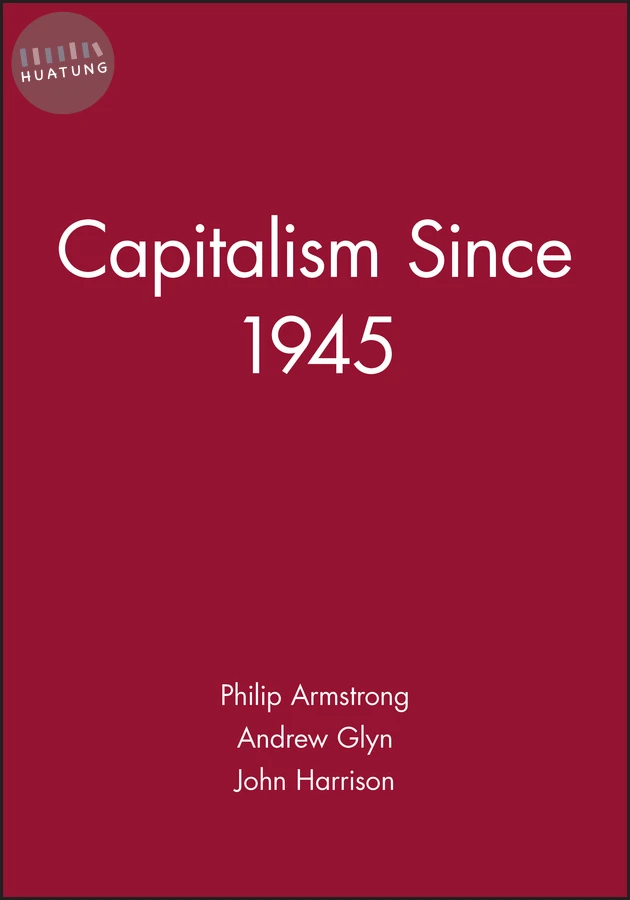
This book charts the development of capitalism in the post-war period and describes the challenges that the system has faced since 1945. It describes the measures that were taken to deal with the post-war slump and the ways in which most capitalist economies achieved steady growth and affluence in the 1950s and 1960s. It goes on to show how this boom was undermined by unemployment ensued.
目錄
List of Figures ix List of Tables xi
Preface iv
PART I: Postwar Reconstruction, 1945-1950 1
1 Chaos and Despair 3
2 Behind the Chaos 6
The means to produce 7 Workers 7 War damage 8 Investment 8
Bottlenecks 10 Capital and labour 11 The United States and the United Kingdom 12
Japan and Germany 16 Italy and France 20
International relations 22 Relations betmeen the advanced countries 22
The colonies 23 Relations mith the USSR 24
3 Great Power Policies 27
Uncle Sam out for himself 27 Aid to Europe and Japan 28
International money and trade systems 30 US occupation policy 31
Uncle Joe in control 35 People's democracy 36
4 The First Two Years 38
Investment and wages 38 Japan 41 Germany 47 Italy 52
France 56 The United Kingdom 60
5 Marshall Aid: the United States Changes Tack 68
Europe's crisis? 68 Economic problems in the United States 73
US labour 75 How the Marshall Plan worked 78
6 The New Turn in Europe and Japan 81
France 84 Italy 87 Japan 90 Germany 94
The United Kingdom 101 Summary 105
7 Towards the Boom 106
The US recession 106 The 1949 devaluations 107
The Korean upswing 108 Investment and the boom 109
PART II: The Great Boom, 1950-1974 115
8 The Golden Years 117
Workers and means of production 118 Profits 119 Profit shares and rates 119
Production and realization 120 Wages 122 Why wages rose 124
Exports 126 Government spending 126 Investment 127
The Japanese economic miracle 129
9 A New, Managed Capitalism? 136
The welfare state 137 German codetermination 141
French economic planning 143 Japanese industrial policy 146
Conclusions 150
10 The Eclipse of US Domination 151
The growth of trade 153 International oligopoly 154
US business slips back 155 Lom accumulation at home 158
Investment abroad 160 The boom, Bretton Woods and the dollar 162
US gains 163 Costs of maintaining the dollar 165
International monetary reform 166
11 Overaccumulation 169
Development of the working class 169 The late 1960s: the problem of full employment 172
Tight labour markets 172 Accumulation and the demand for labour 173
The profits squeeze 176 Productivity growth 177 Product wages 179
International competition 180 Falling output-capital ratio 181 Falling rate of profit 182
Post-tax profits 184 Did workers gain? 185
Inflation 187
12 Overheating 192
Strike waves and wage explosions 192 Italy's Hot Autumn 196
May 1968 200 Clampdown and the 1970-1 recession 207
The break-up of Bretton Woods 207 Dollar devaluation 210
The surplus countries 211 US competitiveness and payments 212
The 1972-3 mini-boom 215 The commodities boom 217
The grain market 218 End of an era 220
13 Oil and the Crash of 1974 221
The oil crisis 221 The crash 225
PART III: Coping with the Slowdown, 1974- 231
14 The Great Slowdown 233
Why growth has slowed 234 Consumers to blame ... 234
Or foreigners ... 236 ... Or governments? 236 Investment 237
Stagnation of productivity and rising unemployment 240
The productivity crisis 240 The rise in unemployment 243
De-industrialization and structural change 244
Women's and men's employment 247
Profits 248 Profitability and accumulation 251
Inflation and unemployment 254
Finance and the legacy of Government debt 256
Consumer debt 257
Financing productive investment 258
15 Workers and the Organization of Production 262
Unions and strikes 262 Relocating production 267
From Fordism to Toyotaism 269
Conclusion 280
16 International Relations 282
The Eastern bloc 282 The less developed countries 284
The oil producers 287 The nemly industrializing countries 288
The debt crisis 290 The advanced countries 295 Trade 296
1992 298 Foreign investment 300 International money 301
17 Reversing the Consensus 305
Restrictive monetary and fiscal policy 307 Cutting down the state 310
Tax cuts 312 Privatization 314 Deregulation 317
Deregulation of the labour market 318 Has it worked? 320
18 Against the Tide 322
Attempts at expanding demand 322 Market forces and the problems of expansion 324
Radical measures to curb market forces 327
Inflation and wages 327 The balance of payments and speculation 328
Industrial policy 328 Distributing the results of slower growth 332
Conclusions 339
19 Capitalism Triumphant? 340
Data Appendix 344
Sources 359
Bibliography 368
Index 383