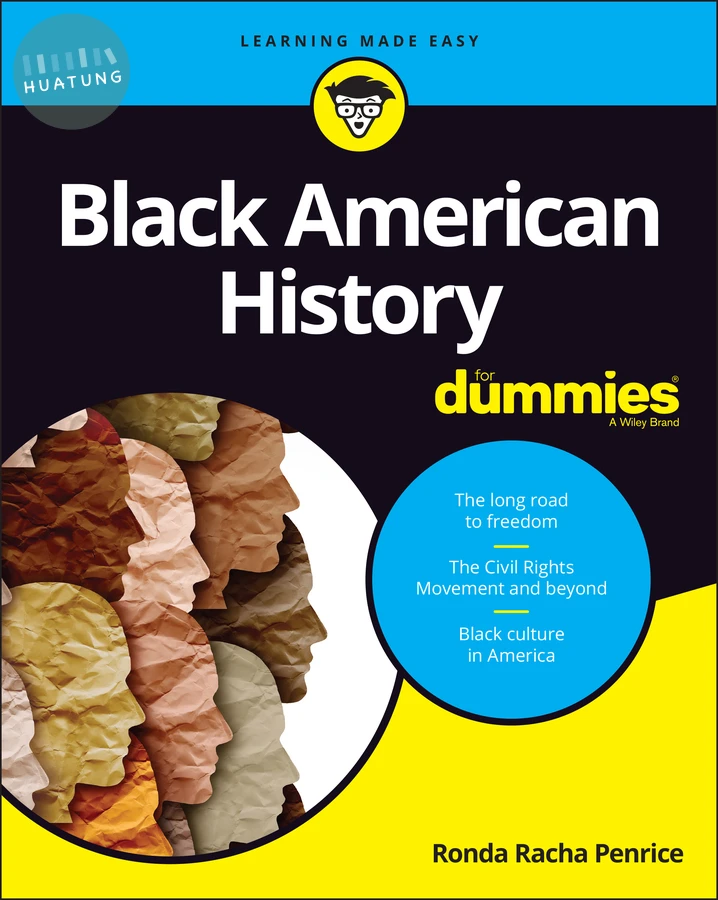

Black American History For Dummies
$720元 定價: $800 9折 可訂購
簡介
Go deeper than the Black History you may think you know!
Black American History For Dummies reveals the terrors and struggles and celebrates the triumphs of Black Americans. This handy book goes way beyond what you may have studied in school, digging into the complexities and the intrigues that make up Black America. From slavery and the Civil Rights movement to Black Wall Street, Juneteenth, redlining, and Black Lives Matter, this book offers an accessible resource for understanding the facts and events critical to Black history in America.
The history of Black Americans is the history of Americans; Americans dance to Black music, read Black literature, watch Black movies, and whether they know it or not reap the benefits of the vibrant political, athletic, and sociological contributions of Black Americans. With this book, you can dive into history, culture, and beyond. See how far there’s yet to go in the approach to studying Black American culture and ending racism.
Get the authoritative story on the growth and evolution of Black America from slavery, Reconstruction, Jim Crow, the Civil Rights era through to today
Discover the Black artists, musicians, athletes, and leaders who have made the United States what it is
Develop a fuller understanding of concerns about police brutality and other front-and-center race issues
Find out how every aspect of American life connects to Black history
Black American History For Dummies is for anyone who needs to learn or re-learn the true history about Black Americans.
目錄
Introduction 1
About This Book 2
Foolish Assumptions 3
Icons Used in This Book 4
Where to Go from Here 5
Part 1: Coming to America 7
Chapter 1: The Soul of America 9
A Peek at the Past 10
Life before slavery 11
Life before emancipation 11
Life before civil rights 12
Being Black in America Today 14
Contributions to history and culture 15
Challenges 19
Black Pride Goes Mainstream 22
Celebrating Black heritage 23
Black cultural tourism booms 24
Reconciling the Past to Create the Future 26
Slavery as an American (not Southern) institution 28
Flagging the issue 28
A question of reparations 30
Chapter 2: From Empires to Bondage: Bringing Africans to the Americas 33
Touring African Empires 34
Ghana Empire 35
Mali 35
Songhai 36
Interaction with the rest of the world 37
Origins of the Transatlantic Slave Trade 38
Slavery on the African continent 38
Launching the European slave trade 39
Enslaving Africans in Latin America and the Caribbean 41
Sanctioning and opposing slavery 42
Dealing with life enslaved 44
Seeking freedom 45
Chapter 3: The Founding of Black America 49
From Servitude to Slavery 49
Inching toward slavery 50
Why Africans? 51
The Triangular Trade 51
The Middle Passage 52
The capture 52
The voyage 54
Safe arrival 55
Black Americans and the Revolution 57
A bit of background 58
Fighting for freedom 58
Hope and disappointment 60
The Free African Society and the Birth of Black America 61
Part 2: Long Road to Freedom 63
Chapter 4: American Slavery, American Freedom 65
American Bondage 66
Northern slavery 66
Enslaved life in the South 69
Before I’d Be a Slave: Fighting the System 73
The Slave Codes 74
Rebellions 75
Running away 79
“Free” Black People 81
Different paths to freedom 82
Perhaps free, but not equal 82
Chapter 5: Bringing Down the House: Marching toward Civil War and Freedom 85
Picking Fights 86
Arguing against slavery 87
Arguing for slavery 88
Leading the Antislavery Assault: Key Abolitionists 89
Anthony Benezet 89
David Walker 90
William Lloyd Garrison 90
Frederick Douglass 91
Fighting with Words 92
Slave narratives 92
Origins of the Black press 93
Colonization (or Emigration) Movement 94
Early resettlement efforts 95
Cuffe: Man on a mission 95
Questioning motives 96
The Effects of Proslavery Politics 96
The Fugitive Slave Clause 96
Stronger fugitive slave measures: Fugitive Slave Act of 1793 97
Battling over the slave status of new land 97
The Missouri Compromise 98
The Underground Railroad 98
Operation Freedom 99
Key people along the line 99
Message in the music 103
The Breaking Point 103
Straining North-South relations 104
The Compromise of 1850 104
The Kansas-Nebraska Act 105
Slavery continues 105
Dred Scott: A strike against freedom 106
Defining events at Harpers Ferry 106
Facing the Moment of Truth 107
Chapter 6: Up from Slavery: Civil War and Reconstruction 109
The Question: To End Slavery or Not? 110
Teetering on a tightrope 110
The first Confiscation Act, 1861 111
Black People in the Early Days of the Civil War 111
Serving the Union 112
Surviving in the South 112
Moving toward the Emancipation Proclamation 113
Shutting down the illegal slave trade 113
Passing the Second Confiscation Act 114
Courting England’s support 114
Free at Last (Well, Sort of): The Emancipation Proclamation 114
What the Proclamation did 115
Reaction to the order 115
Finally in the Fight 116
As Union soldiers 116
As Confederate soldiers 118
The War’s End and the Thirteenth Amendment 119
(Re)constructing Democracy 121
Undermining Lincoln’s plan 121
Taking back the power: Reconstruction Act of 1867 123
A Mixed Bag of Hope and Despair 123
The Freedmen’s Bureau 123
Where’s my 40 acres and a mule? 124
Back to the land 127
Finding a new way 128
Banking on wealth 128
Taking office 129
The Fifteenth Amendment 130
A Turn for the Worse: The End of Reconstruction 131
The Redeemers 131
The Mississippi Plan 132
Civil Rights Act of 1875 132
Pulling the plug 132
Part 3: Pillars of Change: The Civil Rights Movement 135
Chapter 7: Living Jim Crow 137
Post-Reconstruction Blues 137
The Exoduster Movement 138
Black Town, U.S.A. 139
Lynchings and riots/massacres 140
Instituting Jim Crow: Plessy v. Ferguson 146
Court cases before Plessy 146
The actual case: Plessy v. Ferguson 147
Strategies for Achieving Equality 147
Booker T. Washington: The Accommodationist 148
W.E.B. Du Bois: The Integrationist 148
Organizing for Freedom 150
National Afro-American Council 150
The National Negro Business League 150
The Niagara Movement 152
The NAACP 153
The National Urban League 154
Keep on Moving: The Great Migration 154
Leaving the South 154
Life up North 156
Marcus Garvey: Man with a Plan 156
Advocating racial pride 157
Going “Back to Africa” 157
Powerful enemies 158
Can’t Catch a Break: The Depression Years and FDR 158
FDR: Friend or foe? 159
Striking a new deal 159
Can’t Fool Us Twice: Black Americans and WWII 161
Chapter 8: I, Too, Sing America: The Civil Rights Movement, 1954–1963 163
The Tide Turns: Brown v. Board of Education (1954) 163
The 1954 ruling and the reaction 164
Desegregating Central High School 167
Massive resistance follows in Virginia 169
Putting a Face to Racial Violence: Emmett Till 169
Emmett Till’s murder 170
The outrage of the nation 170
A New Twist in Leadership: Reverend Dr. Martin Luther King Jr. 171
Adopting the philosophy of nonviolence 172
Founding the Southern Christian Leadership Conference (SCLC) 173
Sit-ins, Boycotts, and Marches: The King Era of the Civil Rights Movement Begins 173
The Montgomery Bus Boycott and Rosa Parks 174
Sitting in for justice 177
Founding SNCC 179
Riding for freedom 179
The Albany Movement: A chink in the armor 180
Integrating Ole Miss and Increasing Federal Involvement 181
1963: A Bloody Year 182
Not-so-sweet home Alabama: Birmingham 182
Murder in Mississippi: Medgar Evers 184
March of All Marches: The March on Washington for Jobs and Freedom (1963) 185
Chapter 9: Turning Up the Heat (1963–1968) 187
Suffering Two Tragic Blows 187
Four innocent victims 188
JFK dies 189
The Civil Rights Act of 1964 189
Targeting Mississippi for Voter Registration: Freedom Summer 190
Getting ready 190
Getting out the Black vote 191
Mississippi burning 192
The success of Freedom Summer 192
Oh Lord Selma: Back in Alabama 193
Getting arrested again 194
Marching from Selma to Montgomery 194
The Voting Rights Act of 1965 195
Black Power Rising 196
The Nation of Islam 196
Malcolm X 197
The Black Panther Party 199
The transformation of SNCC 200
Race Relations in the North 201
Rioting in Watts 201
The Chicago Freedom Movement 202
The Poor People’s March 203
Death of a King 203
The night of his death and the mourning after 204
Continuing his work 204
Chapter 10: Where Do We Go from Here? Post–Civil Rights 207
The Panthers Stumble 208
Huey Newton: A symbol of Black Power 208
The BPP encounters challenges 208
Changing focus: Embracing nonviolence and women’s leadership 213
Fighting Vietnam 214
An unfair fight 214
Reacting to the war 215
Coming home 215
Black Women Taking a Stand 217
A Race to Political Office 219
Getting a foot in the door in the 1960s 220
Making political strides in the 1970s 220
Eyeing a bigger prize in the 1980s 221
Still thriving in the 1990s and early 2000s 222
Money, Money, Money 222
Looking at homeownership 222
Facing barriers in business 223
Successful Black-owned businesses 224
Unforeseen Enemies 226
Crack cocaine 226
HIV/AIDS 228
The Racial Divide 229
L.A. riots 230
The O.J. Simpson verdict 230
A modern-day lynching 231
Hurricane Katrina 232
Chapter 11: The New Civil Rights — Obama, Black Lives Matter, and Beyond 233
Gaining the Presidency 234
Obama’s 2008 campaign 234
The Age of Obama, 2008–2016 235
Black community gains 236
Black Lives Matter Emerges 238
I am Trayvon 239
Ferguson explodes: Michael Brown and the impact of Eric Garner’s death 242
Police killings continue: Tamir Rice and Laquan McDonald 243
Baltimore Rising: Freddie Gray 243
The Charleston Church Massacre 244
Say her name: Sandra Bland 244
Colin Kaepernick Kneels and Donald Trump Reacts 245
Trump responds 246
Kaepernick opts out of his contract 247
Change Gone Come: Trump, COVID-19, and George Floyd 247
Trump’s attacks continue 248
Stacey Abrams runs for governor in Georgia 249
COVID-19 exposes racial disparities 249
“Stop killing us”: George Floyd and Breonna Taylor 251
The 2020 Election 253
Voting in the era of COVID-19 253
Trump and the U.S. Capitol riot 256
Part 4: Cultural Foundations 259
Chapter 12: Somebody Say “Amen”: The Black Church 261
Converting to Christianity 262
Early objections, early conversions 262
The Great Awakenings: Called to convert 263
Christianity, Black American style 264
Building and Sustaining the Black Church 266
Black churches in the North 267
The Black church in the antebellum South 268
Post–Civil War and Reconstruction 270
Worship in the early 20th century 271
The modern era: Megachurches 273
The changing role of women 274
Politics and the Church 275
Getting more political 276
Minister-politicians: Pulling double duty 276
Fighting for civil rights: Minister-activists 277
Continuing the struggle 278
Worshiping Outside the Black Christian Mainstream 279
Muslims and the Nation of Islam 279
Black Catholics 281
Jehovah’s Witnesses 282
Seventh-day Adventists 283
Black demagogues 283
Chapter 13: More Than Reading and Writing: Education 285
A Brief History of Early Black American Education 286
Revolting education 286
Reconstructing: Education post–Civil War 289
20th-Century Educational Milestones 290
Mixing it up with the Brown case 290
Turning back the clock? 292
Vouchers and school choice 292
Leaving no child behind? Maybe 293
Atlanta Public Schools cheating scandal 294
Obama and Trump on education 294
Higher Learning 295
Launching higher ed for the Black masses 296
The Morrill Acts: Making it stick 298
Determining the goal of higher education 299
Desegregating higher education 303
School Daze: The Black Greek system 304
Chapter 14: Writing Down the Bones: Black Literature 307
Troubled Beginnings 308
Early poets 308
Slave narratives 310
A novel journey 311
Writers’ Party: The Harlem Renaissance 314
Why Harlem? 315
Key Renaissance artists and themes 316
Post–World War II, Civil Rights–era Literature 319
Richard Wright 320
Ralph Ellison 320
James Baldwin 321
Frank Yerby 321
The Breakthrough: The Black Arts Movement 322
The beginning of the movement 322
Welcoming new voices 322
The Black Arts Movement legacy 323
Anthologies from the Black Arts Movement 323
Black Women’s Words 324
Alice Walker 324
Toni Morrison 325
Black Books from the 1990s On 327
Chapter 15: The Great Black Way: Theater and Dance 331
Making an Early Statement 332
Minstrelsy: Performing in Blackface 333
White minstrels 333
Black minstrels 334
Moving toward Broadway: Black Musical Theater 335
More than minstrels 336
Williams and Walker on Broadway 336
The rumblings of serious Black theater 337
Shuffling ahead 340
Black Theater Comes of Age 342
The Federal Theater Project and Black drama 342
The American Negro Theater (ANT) 343
A place to call home 344
Black musicals, 1940s and beyond 345
Two Visionaries 346
August Wilson 346
George C. Wolfe 347
Black Theater in the 21st Century 348
Kenny Leon 348
Suzan-Lori Parks, Lynn Nottage, Tarell Alvin McCraney, and beyond 349
Black Dance in America 351
Early dances 351
Tap dance 352
Breakdancing 353
Classical dance forms 354
Part 5: A Touch of Genius: Music, Film, TV, and Sports 357
Chapter 16: Give Me a Beat: Black Music 359
African Roots 359
Black Music Fundamentals 360
Feeling the Spirit: The Spirituals 361
Ragtime 362
Singing the Blues 363
Blues basics 363
Blues genres 364
Famous blues musicians 365
Let the Good Times Roll: Jazz 367
The evolution of jazz styles 367
Jazz singers 371
Great jazz instrumentalists 372
Keeping the tradition alive 374
Spreading the Gospel 375
Kirk Franklin and the new gospel sound 377
Mainstreaming Black Music 378
R&B 378
Rocking and rolling 379
Motown 381
Giving America soul 383
Post-soul Black music 384
Getting funky and popping off 384
The hip-hop age of R&B 385
Taking the Rap 388
Hip hop matures 388
The West Coast opens up rap 389
Women take the mic 390
Trap music emerges 391
Lyrical emcees return 392
Chapter 17: Black Hollywood: Film and Comedy 393
Making Movies Black 394
Race movies: Introducing all-Black casts 395
Early Black roles in major studio films 398
1940s–1960s: Exploring new themes 401
1960s–1970s: Blaxploitation films 402
Spike Lee and a Black film renaissance 403
Hood films 404
Stepping out of the hood genre 405
The Rise of Black Directors 406
Spike Lee: Getting personal 406
1990s and early 2000s: The music video launch 407
The 2010s: Drama, horror, heroes, and more 408
2020: A stream of Black women directors 411
Black Film Stars: From Song to Celluloid 412
Singers-turned-actors 413
Rappers-turned-actors/producers 413
Kings and Queens of Comedy 415
Richard Pryor 415
Eddie Murphy 415
Male comedians who followed Pryor and Murphy 416
Whoopi Goldberg 419
Other comediennes 419
Enter Stage Left: Serious Actors 421
Sidney Poitier 421
Cicely Tyson 422
Denzel Washington 422
Morgan Freeman 423
Wesley Snipes 423
Samuel L. Jackson 424
Halle Berry 424
Viola Davis 425
And the Award Goes to? 426
Chapter 18: Black Hollywood: TV 427
Early Black TV Comedies 428
Opening the doors wider 428
Getting an edge 429
Kid comedies 429
Cue the Huxtables and A Different World 430
Targeting the Black Hip-Hop Audience 432
Cable TV Opens the Door to More 432
Black Women Comedians Contribute on TV 434
No More Drama with Dramas 435
The Rhimes effect 435
Made-for-TV movies 436
Black actors in cable TV series 437
Network dramas 440
Highlighting Black LGBTQ stories 440
Black women TV executives 442
The Next Level: Building Black Television and Film Empires 443
The billion-dollar BET 443
The big "O" 444
Tyler Perry builds his own table 445
Chapter 19: Winning Ain’t Easy: Race and Sports 449
Baseball 449
The Negro Leagues 450
Jackie Robinson: Integrating baseball 454
The modern era 455
Basketball 456
College ball 457
Pro ball 458
Women’s basketball 462
Boxing 464
Football 467
Pro football 467
College football 469
Track and Field 470
Tennis 474
Arthur Ashe 474
Venus and Serena Williams 475
Golf 475
Other Sports 476
Part 6: The Part of Tens 479
Chapter 20: Ten Black American Firsts 481
Medicine (1837) 481
Law (1845) 482
Kentucky Derby (1875) 482
Congressional Medal of Honor (1900) 483
Rhodes Scholar (1907) 483
Exploration (1909) 483
Television (1939) 484
Nobel Peace Prize (1950) 484
Pulitzer Prize (1950) 484
Fashion (1988) 485
Chapter 21: Ten Black Literary Classics 487
Narrative of the Life of Frederick Douglass, An American Slave Written by Himself (1845) 488
Up from Slavery: An Autobiography by Booker T. Washington (1901) 488
The Souls of Black Folk by W.E.B. Du Bois (1903) 489
The Mis-Education of the Negro by Carter G. Woodson (1933) 489
Their Eyes Were Watching God by Zora Neale Hurston (1937) 490
Native Son by Richard Wright (1940) 490
Invisible Man by Ralph Ellison (1952) 491
The Autobiography of Malcolm X (As Told to Alex Haley)
by Alex Haley and Malcolm X (1965) 491
The Color Purple by Alice Walker (1982) 492
Beloved by Toni Morrison (1987) 492
Chapter 22: Ten (Plus One) Influential Black American Visual Artists 493
Joshua Johnson (c. 1763–1832) 494
Edmonia Lewis (c. 1844–1907) 494
Henry Ossawa Tanner (1859–1937) 495
Aaron Douglas (1899–1979) 495
Horace Pippin (1888–1946) 496
Loïs Mailou Jones (1905–1998) 497
Jacob Lawrence (1917–2000) 498
Romare Bearden (1911–1988) 498
John Biggers (1924–2001) 499
Samella Lewis, Ph.D. (1924–) 499
Jean-Michel Basquiat (1960–1988) 500
Index 501