
簡介
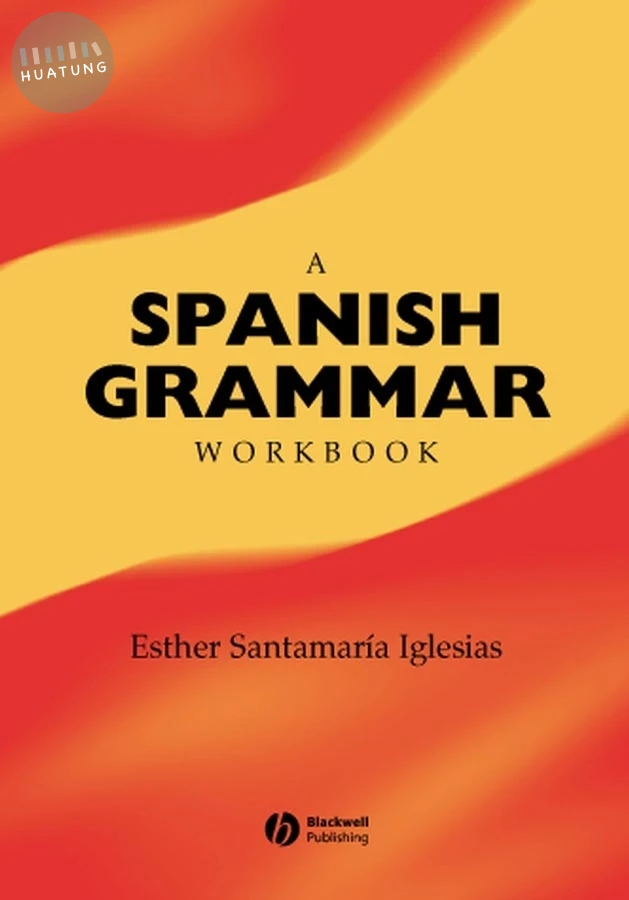
A Spanish Grammar Workbook contains 500 grammar exercises that vary in difficulty from simple tests and puzzles to multiple choice tests and realistic dialogues as well as communication exercises which function as prompts to the oral practice of the grammar in representative contexts.
Includes 500 grammar exercises varying from simple tests and puzzles to multiple choice tests and realistic dialogues which contextualize Spanish grammar in everyday speech.
Indicates difficulty level of each exercise and includes an extensive answer key.
Complements and is cross-referenced with Blackwell's A Comprehensive Spanish Grammar by Jacques de Bruyne (with additional material by Christopher J. Pountain).
Helps language learners understand grammatical functions naturally by putting theory into practice.
目錄
The numbers in square brackets [ ] indicate the corresponding chapters in A Comprehensive Spanish
Grammar by Jacques de Bruyne and Christopher J. Pountain (Blackwell 1995).
Preface viii
Acknowledgements x
Pronunciation 1
1 The alphabet [1–2] 1
2 Diphthongs [9–10] 2
3 Stress [10–17] 3
4 Punctuation and capital letters [18–24] 5
5 Revision 7
The Article 11
6 The definite article [26–70] 11
7 The indefinite article [71–85] 15
The Noun 20
8 Gender: masculine and feminine [86–123] 20
9 Number: plural formation [124–50] 23
The Adjective 28
10 Agreement and placement of adjectives [151–80] 28
11 Degrees of comparison [181–98] 33
Numerals 38
12 Cardinals and ordinals [204–32] 38
13 Fractions, multiples and collectives [233–7] 43
Pronouns 45
14 Personal pronouns [238–97] 45
15 Demonstrative pronouns and adjectives [298–319] 52
16 Possessive pronouns and adjectives [320–41] 55
17 Relative pronouns [342–64] 59
18 Interrogative and exclamatory pronouns and adjectives [365–77] 61
19 Indefinite pronouns and adjectives [378–535] 63
Impersonal Expressions 68
20 Uses of impersonal expressions [536–45] 68
The Adverb 73
21 Adverbs of manner [546–69] 73
22 Adverbs of degree and quantity [570–96] 75
23 Adverbs of time [597–610] 77
24 Adverbs of place [611–20] 78
25 Adverbs of confirmation, negation and doubt [621–31] 80
26 Adverbial expressions [632–3] 81
Comparative Constructions 83
27 Uses of comparative constructions [638–57] 83
Prepositions 88
28 Uses of prepositions [658–794] 88
Constructions with Verbs and Nouns 100
29 General rule and use [795–822] 100
Conjunctions 106
30 Use of some conjunctions [823–56] 106
The Verb: Conjugation 113
Regular Verbs 113
31 Present indicative [857–60] 113
32 Imperfect and preterite indicative [861–4] 119
33 Future and conditional [865–8] 125
34 Present subjunctive [869–70] 130
35 Imperfect subjunctive [871–4] 133
36 Perfect and pluperfect of indicative [878–9] 136
37 Future perfect and conditional perfect [881–2] 139
38 Perfect and pluperfect subjunctive [883–5] 141
39 The imperative [887–97] 144
40 Irregular verbs [903–70] 148
Use of the Tenses 163
41 Present indicative [971–7] 163
42 Past tenses of the indicative [978–98] 170
43 Future and conditional tenses of the indicative [999–1013] 184
44 Sequence of tense with the subjunctive [1014–17] 189
The Passive 198
45 The passive idea [1018–23] 198
Use of the Moods 206
46 Use of the subjunctive [1024–76] 206
The Impersonal Forms of the Verb 224
47 The infinitive [1077–136] 224
48 The gerund [1137–74] 231
49 The past participle [1175–230] 238
Special Problems with Spanish Verbs 245
50 Ser and estar [1231–55] 245
51 Haber, deber and poder [1256–75] 256
Subject–Verb Concord 265
52 General rule and use [1276–89] 265
Syntax of Negative Elements 268
53 General rule and use [1291–8] 268
Word Order 274
54 General rule and use [1299–1318] 274
Affective Suffixes 279
55 Forms and meaning [1319–32] 279
Key 284