簡介
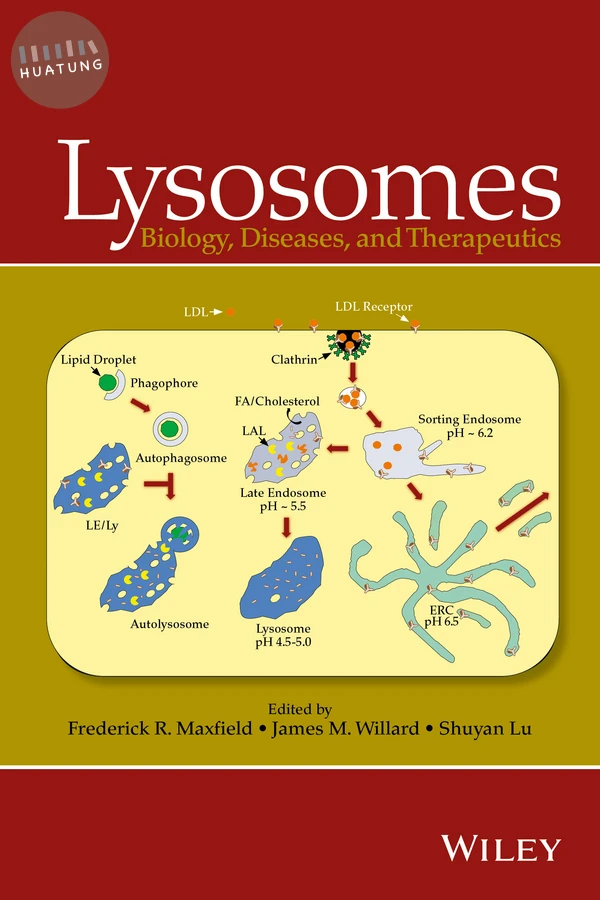
Discussing recent findings, up-to-date research, and novel strategies, the book integrates perspectives from pharmacology, toxicology, and biochemistry to illustrate the potential of lysosomes in drug discovery and development.
• Explores basic principles and properties of lysosomes that allow them to act as regulators of cell metabolism, therapeutic targets, and sites for activation of drug conjugates
• Discusses the role of lysosomes in metabolism, drug targeting, apoptosis, cancer, aging, inflammation, autophagy, metabolism, toxicity, and membrane repair
• Introduces new pathways in therapeutic development and new mechanisms in drug development
目錄
PREFACE xiii
LIST OF CONTRIBUTORS xvii
1 Lysosomes: An Introduction 1
Frederick R. Maxfield
1.1 Historical Background, 2
References, 4
2 Lysosome Biogenesis and Autophagy 7
Fulvio Reggiori and Judith Klumperman
2.1 Introduction, 7
2.2 Pathways to the Lysosomes, 10
2.2.1 Biosynthetic Transport Routes to the Lysosome, 10
2.2.2 Endocytic Pathways to the Lysosome, 10
2.2.3 Autophagy Pathways to the Lysosome, 12
2.2.4 The ATG Proteins: The Key Regulators of Autophagy, 14
2.3 Fusion and Fission between the Endolysosomal and Autophagy Pathways, 16
2.3.1 Recycling Endosomes and Autophagosome Biogenesis, 16
2.3.2 Autophagosome Fusion with Late Endosomes and Lysosomes, 17
2.3.3 Autophagic Lysosomal Reformation, 18
2.4 Diseases, 19
2.4.1 Lysosome-Related Disorders (LSDs), 19
2.4.2 Lysosomes in Neurodegeneration and Its Links to Autophagy, 20
2.4.3 Autophagy-Related Diseases, 20
2.5 Concluding Remarks, 22
Acknowledgments, 23
References, 23
3 Multivesicular Bodies: Roles in Intracellular and Intercellular Signaling 33
Emily R. Eden, Thomas Burgoyne, and Clare E. Futter
3.1 Introduction, 33
3.2 Downregulation of Signaling by Sorting onto ILVs, 35
3.3 Upregulation of Signaling by Sorting onto ILVs, 38
3.4 Intercellular Signaling Dependent on Sorting onto ILVs, 39
3.5 Conclusion, 44
References, 45
4 Lysosomes and Mitophagy 51
Dominik Haddad and Patrik Verstreken
4.1 Summary, 51
4.2 Mitochondrial Significance, 51
4.3 History of Mitophagy, 52
4.4 Mechanisms of Mitophagy, 53
4.4.1 Mitophagy in Yeast, 54
4.4.2 Mitophagy in Mammals, 55
4.5 Conclusion, 57
Acknowledgments, 57
References, 58
5 Lysosome Exocytosis and Membrane Repair 63
Rajesh K. Singh and Abigail S. Haka
5.1 Introduction, 63
5.2 Functions of Lysosome Exocytosis, 63
5.2.1 Specialized Lysosome-Related Organelles, 64
5.2.2 Lysosome Exocytosis for Membrane Repair, 65
5.2.3 Lysosome Exocytosis as a Source of Membrane, 66
5.2.4 Lysosome Exocytosis for Extracellular Degradation, 66
5.2.5 Lysosome Exocytosis and Delivery of Proteins to the Cell Surface, 68
5.3 Mechanisms of Lysosome Exocytosis, 68
5.3.1 Maturation of Lysosomes and Lysosome-Related Organelles, 69
5.3.2 Transport of Lysosomes to the Plasma Membrane, 70
5.3.3 Tethering of Lysosomes to the Plasma Membrane, 72
5.3.4 Lysosome Fusion with the Plasma Membrane, 75
5.3.5 Calcium-Dependent Exocytosis, 76
5.4 Conclusion, 76
Acknowledgments, 77
References, 77
6 Role of Lysosomes in Lipid Metabolism 87
Frederick R. Maxfield
6.1 Introduction, 87
6.2 Endocytic Uptake of Lipoproteins, 88
6.3 Lipid Metabolism in Late Endosomes and Lysosomes, 91
6.4 Autophagy and Lysosomal Lipid Turnover, 94
6.5 Lysosomal Lipid Hydrolysis and Metabolic Regulation, 95
6.6 Summary, 96
References, 96
7 TFEB, Master Regulator of Cellular Clearance 101
Graciana Diez-Roux and Andrea Ballabio
7.1 Lysosome, 101
7.2 The Transcriptional Regulation of Lysosomal Function, 102
7.3 TFEB Subcellular Regulation is Regulated by Its Phosphorylation, 104
7.4 A Lysosome-to-Nucleus Signaling Mechanism, 105
7.5 TFEB and Cellular Clearance in Human Disease, 106
7.5.1 Lysosomal Storage Disorders, 107
7.5.2 Neurodegenerative Disorders, 109
7.5.3 Metabolic Syndrome, 110
7.5.4 Cancer, Inborn Errors of Metabolism, Immunity, and Longevity, 110
References, 111
8 Lysosomal Membrane Permeabilization in Cell Death 115
Urška Repnik and Boris Turk
8.1 Introduction, 115
8.2 Cell Death Modalities, 116
8.3 Lysosomal Membrane Permeabilization (LMP) and Cell Death, 117
8.3.1 Mechanisms of LMP, 118
8.3.2 Upstream of LMP: Direct Insult Versus Molecular Signaling, 121
8.3.3 Signaling Downstream of LMP, 124
8.4 Conclusion, 127
Acknowledgments, 127
References, 128
9 The Lysosome in Aging-Related Neurodegenerative Diseases 137
Ralph A. Nixon
9.1 Introduction, 137
9.2 Lysosome Function in Aging Organisms, 139
9.3 Lysosomes and Diseases of Late Age Onset, 142
9.3.1 Cardiovascular Disease, 142
9.4 Lysosomes in Aging-Related Neurodegenerative Diseases, 144
9.4.1 Alzheimer’s Disease (AD), 145
9.4.2 Parkinson’s Disease and Related Disorders, 150
9.4.3 Diffuse Lewy Body Disease (DLB), 155
9.4.4 Frontotemporal Lobar Degeneration (FTLD), 155
9.5 Conclusion, 158
Acknowledgments, 158
References, 159
10 Lysosome and Cancer 181
Marja Jäättelä and Tuula Kallunki
10.1 Introduction, 181
10.2 Lysosomal Function and Its Importance for Cancer Development and Progression, 181
10.3 Cancer-Induced Changes in Lysosomal Function, 182
10.3.1 Increased Activity of Lysosomal Enzymes, 182
10.3.2 Altered Lysosome Membrane Permeability, 184
10.3.3 Increased Lysosome Size, 184
10.3.4 Altered Lysosome Trafficking – Increased Lysosomal Exocytosis, 185
10.4 Cancer-Induced Changes in Lysosome Composition, 185
10.4.1 Changes in Lysosomal Hydrolases, 185
10.4.2 Changes in the Lysosomal Membrane Proteins, 192
10.5 Molecular Changes Involving Lysosomal Integrity, 193
10.5.1 Cancer-Associated Changes in Lysosomal Sphingolipid Metabolism, 193
10.5.2 Targeting Lysosomal Membrane Integrity, 195
10.6 Conclusion, 196
References, 197
11 The Genetics of Sphingolipid Hydrolases and Sphingolipid Storage Diseases 209
Edward H. Schuchman and Calogera M. Simonaro
11.1 Introduction and Overview, 209
11.2 Acid Ceramidase Deficiency: Farber Disease, 210
11.3 Acid Sphingomyelinase Deficiency: Types A and B Niemann–Pick Disease, 213
11.4 Beta-Glucocerebrosidase Deficiency: Gaucher Disease, 215
11.5 Galactocerebrosidase Deficiency: Krabbe Disease/Globoid Cell Leukodystrophy, 218
11.6 Arylsulfatase a Deficiency: Metachromatic Leukodystrophy, 219
11.7 Alpha-Galactosidase a Deficiency: Fabry Disease, 221
11.8 Beta-Galactosidase Deficiency: GM1 Gangliosidosis, 224
11.9 Hexosaminidase A and B Deficiency: GM2 Gangliosidoses, 226
11.10 Sphingolipid Activator Proteins, 229
References, 231
12 Lysosome-Related Organelles: Modifications of the Lysosome Paradigm 239
Adriana R. Mantegazza and Michael S. Marks
12.1 Differences Between LROs and Secretory Granules, 240
12.2 Physiological Functions of LROs, 240
12.3 LRO Biogenesis, 244
12.3.1 Chediak–Higashi Syndrome and Gray Platelet Syndrome, 244
12.3.2 Hermansky–Pudlak Syndrome, 246
12.3.3 Melanosome Biogenesis, 247
12.3.4 HPS and Melanosome Maturation, 248
12.3.5 HPS and the Biogenesis of Other LROs, 250
12.3.6 HPS and Neurosecretory Granule Biogenesis, 250
12.3.7 Weibel–Palade Body Biogenesis, 251
12.4 LRO Motility, Docking, and Secretion, 252
12.5 LROs and Immunity to Pathogens, 253
12.5.1 Cytolytic Granules, 253
12.5.2 Familial Hemophagocytic Lymphohistiocytosis and Cytolytic Granule Secretion, 254
12.5.3 Azurophilic Granules, 255
12.5.4 NADPH Oxidase-Containing LROs, 255
12.5.5 IRF7-Signaling LROs and Type I Interferon Induction, 256
12.5.6 MIICs: LROs or Conventional Late Endosome/Lysosomes?, 256
12.5.7 Phagosomes and Autophagosomes as New Candidate LROs, 258
12.6 Perspectives, 260
Acknowledgments, 260
References, 260
13 Autophagy Inhibition as a Strategy for Cancer Therapy 279
Xiaohong Ma, Shengfu Piao, Quentin Mcafee, and Ravi K. Amaravadi
13.1 Stages and Steps of Autophagy, 282
13.2 Induction of Autophagy, 283
13.3 Studies in Mouse Models Unravel the Dual Roles of Autophagy in Tumor Biology, 285
13.4 Clinical Studies on Autophagy’s Dual Role in Tumorigenesis, 286
13.5 Mouse Models Provide the Rationale for Autophagy Modulation in the Context of Cancer Therapy, 288
13.6 Multiple Druggable Targets in the Autophagy Pathway, 291
13.7 Overview of Preclinical Autophagy Inhibitors and Evidence Supporting Combination with Existing and New Anticancer Agents, 292
13.8 Proximal Autophagy Inhibitors, 293
13.9 Quinolines: From Antimalarials to Prototypical Distal Autophagy Inhibitors, 293
13.10 Summary for the Clinical Trials for CQ/HCQ, 295
13.11 Developing More Potent Anticancer Autophagy Inhibitors, 298
13.12 Summary, Conclusion, and Future Directions, 300
13.13 In Summary, 302
References, 302
14 Autophagy Enhancers, are we there Yet? 315
Shuyan Lu and Ralph A. Nixon
14.1 Introduction, 315
14.2 Autophagy Impairment and Diseases, 316
14.3 Autophagy Enhancer Screening, 317
14.3.1 Methods for Monitoring Autophagy, 317
14.3.2 Autophagy Enhancers Identified from Early Literature, 326
14.3.3 mTOR Inhibitors, 331
14.4 Other Agents that Boost Autophagy and Lysosomal Functions, 335
14.4.1 HDAC Inhibition, 336
14.4.2 pH Restoration, 337
14.4.3 TRP Activator, 337
14.4.4 TFEB Overexpression/Activation, 338
14.4.5 Lysosomal Efficiency, 338
14.4.6 MicroRNA, 339
14.5 Concluding Remarks, 340
References, 341
15 Pharmacological Chaperones as Potential Therapeutics for Lysosomal Storage Disorders: Preclinical Research to Clinical Studies 357
Robert E. Boyd, Elfrida R. Benjamin, Su Xu, Richie Khanna, and Kenneth J. Valenzano
15.1 Introduction, 357
15.2 Fabry Disease, 359
15.3 Gaucher Disease, 363
15.4 GM2 Gangliosidoses (Tay–Sachs/Sandhoff Diseases), 367
15.5 Pompe Disease, 368
15.6 PC-ERT Combination Therapy, 370
References, 372
16 Endosomal Escape Pathways for Delivery of Biologics 383
Philip L. Leopold
16.1 Introduction, 383
16.2 Endosome Characteristics, 384
16.3 Delivery of Nature’s Biologics: Lessons on Endosomal Escape from Pathogens, 389
16.3.1 Viruses, 390
16.3.2 Bacteria, Protozoa, and Fungi, 392
16.3.3 Toxins, 394
16.4 Endosomal Escape Using Engineered Systems, 395
16.4.1 Peptides and Polymers, 396
16.4.2 Lipids, 398
16.4.3 Other Chemical and Physical Strategies, 399
16.5 Conclusion, 399
References, 400
17 Lysosomes and Antibody–Drug Conjugates 409
Michelle Mack, Jennifer Kahler, Boris Shor, Michael Ritchie, Maureen Dougher, Matthew Sung, and Puja Sapra
17.1 Introduction, 409
17.2 Receptor Internalization, 410
17.3 Antibody–Drug Conjugates, 413
17.4 Mechanisms of Resistance to ADCs, 416
17.5 Summary, 417
References, 417
18 The Mechanisms and Therapeutic Consequences of Amine-Containing Drug Sequestration in Lysosomes 423
Nadia Hamid and Jeffrey P. Krise
18.1 Introduction, 423
18.2 Lysosomal Trapping Overview, 424
18.3 Techniques to Assess Lysosomal Trapping, 427
18.4 Influence of Lysosomotropism on Drug Activity, 429
18.5 Influence of Lysosomal Trapping on Pharmacokinetics, 435
18.6 Pharmacokinetic Drug–Drug Interactions Involving Lysosomes, 438
References, 440
19 Lysosome Dysfunction: an Emerging Mechanism of Xenobiotic-Induced Toxicity 445
Shuyan Lu, Bart Jessen, Yvonne Will, and Greg Stevens
19.1 Introduction, 445
19.2 Compounds that Impact Lysosomal Function, 446
19.2.1 Lysosomotropic Compounds, 446
19.2.2 Nonlysosomotropic Compounds, 451
19.3 Cellular Consequences, 452
19.3.1 Effect of Drugs on pH and Lysosomal Volume, 452
19.3.2 Effects on Lysosomal Enzymes, 453
19.3.3 Lysosomal Substrate Accumulation, 454
19.3.4 Lysosomal Membrane Permeabilization (LMP) and Cell Death, 454
19.3.5 Membrane Trafficking Changes, 455
19.3.6 Other Cellular Impacts, 458
19.4 Impaired Lysosomal Function as a Mechanism for Organ Toxicity, 461
19.4.1 Liver Toxicity, 462
19.4.2 Kidney Toxicity, 464
19.4.3 Retinal, 466
19.4.4 Peripheral Neuropathy, 466
19.4.5 Muscle Toxicity, 467
19.4.6 Tumorigenesis, 468
19.4.7 General Considerations for Organ Toxicity, 469
19.5 Concluding Remarks, 471
References, 472
20 Lysosomes and Phospholipidosis in Drug Development and Regulation 487
James M. Willard and Albert De Felice
20.1 Introduction, 487
20.2 FDA Involvement, 488
20.3 Autophagy and DIPL, 489
20.4 Early Experience with Lethal DIPL, 489
20.5 Clinical and Nonclinical Expressions of DIPL, 490
20.5.1 Clinical, 490
20.5.2 Nonclinical, 491
20.6 Physical Chemistry, 491
20.7 Quantitative Structure–Activity Relationship (QSAR), 492
20.8 Toxicogenomics, 493
20.9 Fluorescence, Dye, and Immunohistochemical Methods for Screening, 494
20.10 FDA Database and QSAR Modeling, 494
20.11 Linking Phospholipidosis and Overt Toxicity, 494
20.12 Phospholipidosis and QT Interval Prolongation, 496
20.13 DIPL Mechanisms, 500
20.14 Treatment, 501
20.15 Discussion, 501
20.16 Future Directions and Recommendations, 505
References, 506
INDEX 513