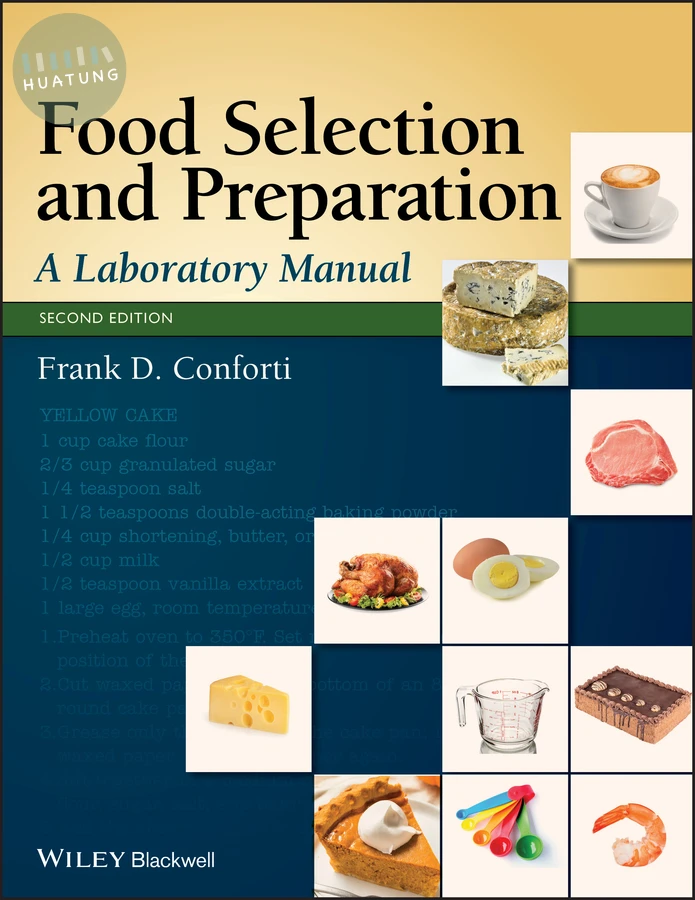

Food Selection and Preparation
$2069元可訂購
簡介
Knowledge, skill, and art are the three words to remember when working with foods. They are also the focus of the second edition of Food Selection and Preparation: A Laboratory Manual, which guides students through the fundamentals and basic principles of food preparation, from the recipe to the table, from the raw ingredients to the final product. This manual equips students with a working knowledge of the nature of ingredients and how they function in particular foods. A wide range of exercises--addressing topics from food preservation to frozen desserts, measuring techniques to fats and emulsions, fruit selection to egg cookery, breads and pastry to meat and poultry--guide students through standard recipes, with clear and complete directions for handling ingredients and cooking foods. Throughout, vocabularies introduce technical words essential to understanding food products and preparation. Questions to test students' knowledge follow each exercise. The text also includes discussion of laboratory procedures, sanitation in the kitchen, emergency substitutions, identification of meat cuts, the safe storage of food, and the care and cleaning of small appliances.
New to this edition are over 50 additional recipes, which reflect the many tastes that influence today's palate. All recipes have been reviewed and updated to ensure healthful and nutritious food preparation, as well as product quality and performance. Students and instructors alike will find the new and improved recipes and updated nutritional and food facts of Food Selection and Preparation, Second Edition a truly satisfying full course.
目錄
Preface ix
Acknowledgments x
Laboratory 1: Measuring Techniques 1
Nonmetric Measure of Volume 2
To Learn Correct Techniques for Measuring Ingredients 4
Water and Thermometry 7
Application of Measuring Techniques: Cookies 8
Laboratory 2: Food Preservation: Canning and Freezing 12
Observe and Learn How to Use Utensils and Equipment Commonly Used in Canning 13
Foods to Be Packed and Processed 15
Freezing of Fruits and Vegetables 19
Laboratory 3: Starch and Cereal Cookery: Role of Gelatinization and Gelation 22
Starch Principles 23
Cereal Cookery 29
Laboratory 4: Quick and Yeast Breads: Role of Manipulation and Gluten Formation in Doughs 37
To Evaluate Factors Which Affect the Quality of Muffins 38
To Evaluate Factors Which Affect the Quality of Biscuits 40
To Identify the Gluten-Forming Properties of Various Wheat Flours 43
To Study Factors Which Affect the Quality of Yeast Bread 44
Laboratory 5: Shortened- and Foam-Style Cakes 48
Shortened-Style Cake 50
To Demonstrate the Effect of Changing the pH in Chocolate Cake Batters 53
Foam-Style Cake 55
Laboratory 6: Pastry, Cream Puffs, and Popovers 59
To Learn and Observe How Manipulation and Steam Will Affect Cream Puffs and Popovers 60
To Determine Which Fat Contributes Both Tenderness and Flakiness in a Pie Crust Through Proper Manipulation 62
Laboratory 7: Fruit Selection and Cookery 70
To Study the Prevention of Browning in Fresh Fruit Through the Use of Antioxidants 71
To Identify the Factors That Influence the Quality of Cooked Apples 73
To Observe Fruits That Have Enough Pectin to Form a Gel when Sugar and Water are Added 74
To Observe the Variety of Ways Fruits Can Be Prepared 75
Laboratory 8: Vegetables 80
To Study the Effect of Heat and pH on Pigments and Texture in Vegetables 82
To Prepare Vegetables in a Variety of Ways and to Recognize Quality Parameters in Selection and Preparation 83
Vegetable Preparation 86
Laboratory 9: Salads 96
Appetizer Salad 97
Dinner Accompaniment Salads 98
Main Dish Salads 102
Dessert Salads 103
Laboratory 10: Fats and Emulsions 105
To Show the Effect of Frying Temperature on Fat Absorption During Deep Fat Frying 107
To Evaluate Fats According to Color, Flavor, Aroma and to Be Able to Detect Rancidity in a Fat 108
To Become Familiar with Various Emulsions and the Effect That the Emulsifier Has on Stabilizing the Emulsion 110
Laboratory 11: Gelatin 113
To Compare Products Made with Unflavored Gelatin and the Available Commercial Mix 114
To Identify and to Become Familiar with the Different Uses of Gelatin 116
Laboratory 12: Egg Cookery 119
To Observe the Effect of Aging on the Raw Egg 121
To Become Familiar with Various Methods to Cook Eggs 122
To Understand How Heat Affects Gelation of Egg Proteins 126
To Observe the Use of Egg White Foams in Food Preparation 128
Miscellaneous Egg Cookery 130
Laboratory 13: Milk and Cheese 132
To Become Familiar with Various Milk Products 134
To Show the Effects of Temperature upon the Clotting of Milk by Rennin 134
To Study the Effects of Heat and Acid on Milk Proteins 135
To Observe How Milk Behaves During Preparation 137
To Differentiate Among the Many Available Varieties of Cheese 138
To Compare How Various Processed Cheese Products Melt as Compared to a Natural Cheese Product 138
To Understand How to Cook with Cheese 139
Laboratory 14: Meat and Poultry 142
To Show the Effects of the Degree of Doneness as Measured by the Internal Temperature and the Effects of Roasting Temperature on Roasting Time, Cooking Losses, and Color and Juiciness of Ground Meat Patties 144
To Show the Effect of Heat and Treatment on the Cooking of Less Tender Cuts of Beef 145
To Learn to Apply Different Cooking Techniques for Different Meat Cuts or Varieties 146
To Observe and Learn How to Cut Up or Disjoint a Whole Chicken 151
To Learn Various Methods for Chicken Preparation 151
Laboratory 15: Fish and Seafood Cookery 155
How to Prepare Fish in a Variety of Ways 157
To Learn How to Prepare Shellfish 159
Laboratory 16: Legumes and Tofu 164
To Learn How to Identify and Prepare Legumes 166
To Learn About and Become Acquainted with Tofu in Food Preparation 168
Laboratory 17: Sugar Crystallization 171
To Successfully Prepare Crystalline Candy by Learning the Principles of Proper Manipulation 173
To Observe and Successfully Prepare Amorphous Candy 175
Miscellaneous Candy 176
Laboratory 18: Ice Crystallization (Frozen Desserts) 178
Preparation of Freezer and Freezer (Mixtures) 179
To Use Still-Freezing in the Making of Frozen Desserts 183
Laboratory 19: Beverages: Coffee, Tea, and Cocoa 184
To Show Some Factors Which Affect the Quality of Coffee Beverages 186
To Show Some Factors Which Affect the Quality of Tea 187
To Evaluate Cocoa and Chocolate 189
Laboratory 20: Sensory Evaluation of Food 192
To Study the Effect of Temperature on Flavor Intensity 193
To Learn How Color Affects Flavor 194
To Determine How Texture Affects Food Identification 194
Glossary of Common Terms Used in Food Preparation 196
Appendix A: Food Safety 209
Appendix B: Sanitation in the Kitchen 212
Appendix C: Care and Cleaning of Small Appliances 214
Appendix D: Measuring Equivalents 216
Appendix E: Emergency Substitutions 220
Appendix F: Safe Food Storage 223
Appendix G: Retail Meat Cuts and Recommended Cooking Methods 227
Appendix H: How to Identify Cuts of Meat by Bones 231