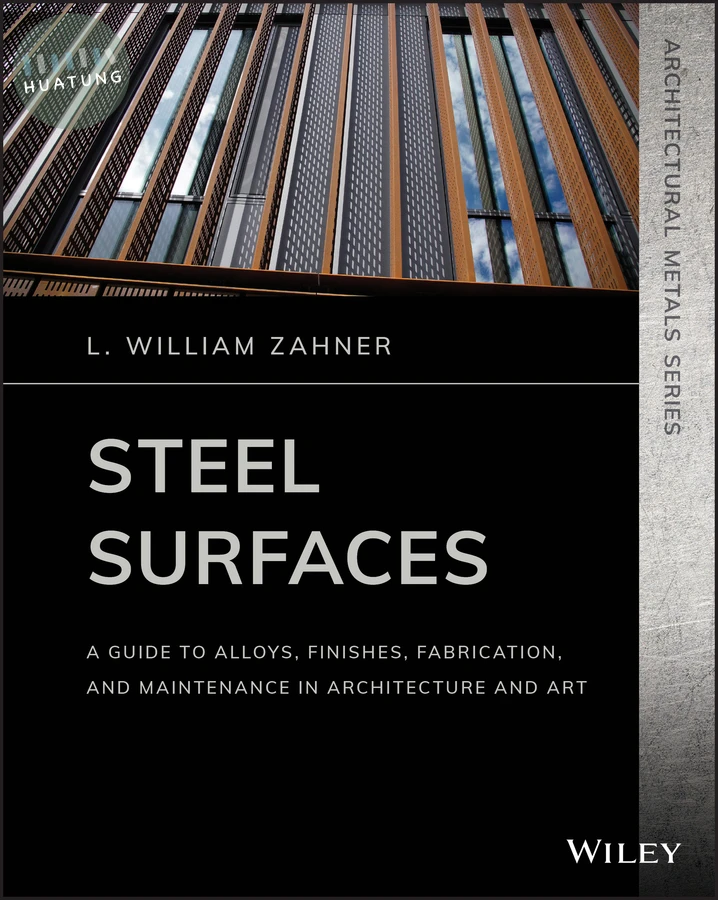

Steel Surfaces
$2358元 定價: $2620 9折 可訂購
簡介
A full-color guide for architects and design professionals to the selection and application of steel
Steel Surfaces, fourth in Zahner’s Architectural Metals Series, provides a comprehensive and authoritative treatment of steel applications in architecture and art. It offers architecture and design professionals the information they need to ensure proper maintenance and fabrication techniques through detailed information and full-color images. It covers everything from the history of the metal and choosing the right alloy, to detailed information on a variety of surface and chemical finishes and corrosion resistance. The book also features case studies that offer strategies for designing and executing successful projects using steel.
Steel Surfaces is filled with illustrated case studies that present comprehensive coverage of how steel is used in creating surfaces for building exteriors, interiors, and art finishes. All the books in Zahner’s Architectural Metals Series offer in-depth coverage of today’s most commonly used metals in architecture and art. This visual guide:
Features full-color images of a variety of steel finishes, colors, textures, and forms
Includes case studies with performance data that feature strategies on how to design and execute successful projects using steel
Offers methods to address corrosion, before and after it occurs
Explains the significance of the different alloys and the forms available to the designer
Discusses what to expect when using steel in various exposures
Written for architecture professionals, metal fabricators and developers, architecture students, designers, and artists working with metals, Steel Surfaces offers a logical framework for the selection and application of steel in all aspects of architecture.
目錄
PREFACE
CHAPTER 1 Introduction
Iron and Steel
History
Early Architectural Uses
What Defines Steel
The Important Steel Alloys for the Designer
Low Carbon Steel
Medium Carbon Steel
High Carbon Steel
High Strength Low Alloy Steels – The Weathering Steels
Enameling Steel
Cast Iron
Steel Manufacture and Production
Safety and Hygiene / Recycle
Coatings on Steel
A Material for Artists
Choosing the Right Steel
CHAPTER 2 Alloys
Introduction
The Alloy Numbering Code
Alloying Elements
Carbon
Other Elements
Tempers
The Wrought Alloys of Iron
Wrought Iron
The Wrought Alloys of Steel
G10060
G10080
G10100
A36 Steel
G10180
G10120
The Weathering Steel Alloys – High Strength Low Alloy Steels
K11430
K12043
Other Steel Alloys
The Alloy Steels
G41300
Tool Steels
Cast Alloys
Grey Cast Iron
White Cast Iron
Malleable Cast Iron
Ductile Cast Iron
Cast Steels
CHAPTER 3 Finishes
Introduction
The Mill Surface of Sheet and Plate Material
The Carbon Steel Surface
Hot Rolled Surface
Hot Rolled Carbon Steel Plate
Hot Rolled Carbon Steel Sheet
Cold Rolled Carbon Steel Sheet
Commercial Steel
Drawing Steel and Forming Steel
Cold Rolled Structural Steel
Mill Oil
The Nature of the Steel Surface Finish
Finish Possibilities Available for Steels
Protective Oxide – The Weathering Steels
Preweathering – An Art and Science
Preweathering – Hot Rolled vs Cold Rolled Surfaces
The Controlled Surface
Interior Uses of Weathering Steel
Galvanized Steel Surfaces
Protective Oxide – Bluing and Darkening
Bluing of Steel
Blackening of Galvanized Steel
Color Tinting of Steel by Heat
Chromate treatments
Painted Steel Surfaces
Surfacing Effects
Damascene and Pattern Welded Steel
Laying Down Weld
Carved Steel
CHAPTER 4 Expectations
Introduction
The Development of Rust
The Choices Available to the Designer
Interior Exposures
Carbon Steels
Interior Weathering Steels
Exterior Exposures
Carbon Steels
Wrought and Cast Irons
Cast Irons
Carbon Steel – Structural Steel
Zinc Rich Primers
Galvanized Steel
Weathering Steel
Preweathered Steel
Marine Environments
Urban Pollution
Good Design
CHAPTER 5 Designing with the Available Forms
Introduction
Early Forms
Wrought Iron
The Wrought Forms of Steel
The Steel Mill
Hot Rolled and Cold Rolled Sheet and Plate
Mill Packaging Requirements
Sheet
Coils
Perforated and Expanded Metal
Perforated Steel
Expanded Metal
Plate Thicknesses and Widths
Weathering Steel Plate
Bar and Rod
Round Rod
Tubing and Pipe
Structural Shapes
HSS – Hollow Structural Sections
Wire, Woven Wire, and Screens
Extrusions
Steel Windows
Powder, Bead and Shot
Foil
Cast Steel
CHAPTER 6 Working with Steels
Introduction
Cutting Steels
Shearing and Blanking
Saw Cutting
Laser
Plasma
Torch Cut
Waterjet
Punching
Forming
Roll Forming
Press Brake Forming
Other Cold Forming Processes
Springback
V-Cutting
Hot Forming
Forging
Machining
Stamping
Soldering and Brazing
Welding
Fusion Welding Processes Used on Steels
Oxy – Acetylene
GTAW – Gas Tungsten Arc Welding
GMAW – Gas Metal Arc Welding
SMAW – Shielded Metal Arc Welding
FCW – Flux Core Wire Welding
SAW – Submerged Arc Welding
PAW – Plasma Arc Welding
EBW – Electron Beam Welding
Laser Beam Welding
Capacitor Discharge Fusion Stud Welding
Arc Stud Welding
Friction Stir Welding
The Steps in Welding
Joint Preparation
Filler Metal
Heat Input during welding
Post Weld treatment and Cleanup
Distortion
Welding of Weathering Steels
Bolts
Stud Welding
Casting
White Cast iron
Grey Cast iron
Malleable Iron
Ductile Iron
Compacted Graphite Cast Iron
Difficulties in Casting
CHAPTER 7 Corrosion Characteristics
Introduction
What is rust
Corrosion of Steel and Iron
Atmospheric Corrosion – The Electrolyte on the Surface
Corrosion of Cast Iron or Cast Steel
Coatings and Corrosion
Failure modes of Paint
Inorganic Protection of Steels
Galvanizing and Metal Protective Coatings for Steel
Plating
Weathering Steels – How are they different than other steels
Weathering Steel Performance in Various Environments
Environmental Exposures and their Effects
Carbon Steels
Steel Used In different Environments
Types of Corrosion
Uniform Corrosion
Galvanic Corrosion and Galvanic Protection of Steels
Galvanic Corrosion and the Ratio of Areas
Key Conditions Needed for Galvanic Corrosion to Occur
Transfer Corrosion
Pitting Corrosion
Intergranular Corrosion
Crevice Corrosion
Line Corrosion
CHAPTER 8 Maintaining the Steel Surface
Introduction
Painted Steel Surfaces
Develop a Maintenance Strategy
Cleaning and Mainenance – Weathering Steel
Protecting Steels – Storage
Protecting Steel Surfaces – Custom
Protecting Steel Objects – Impressed Current Protection
Protecting Steel Surfaces – Sacrificial Anode
Maintaining Steels in Different Environments
Physical Cleanliness
Achieving Physical Cleanliness
Mill Oils
Fingerprints
Degreasing Using Hot Alkaline Baths
Dirt and Grime
Adhesives
Temperature Issues
Deposits from Sealant Decomposition
Grease Deposits from Building Exhaust Systems
Graffiti
High Pressure Water Blasting
Steam Cleaning
De-ionized Water
Abrasive Pads and Brushes
Chemical Cleanliness
Laser Ablation
Constant Wetting
Water streaks and Standing Water Staining
De-icing Salts
Mechanical Cleanliness
Vandalism
Scratches and Mars
Dents
Ghosting from Packaging Materials
Distortion
Welding Distortion
Distortions from Cold Forming Operations
Hail Damage and Small Dent Repair
Free Iron Particles – Staining
Coating Weathering Steels
Appendix A: Terms
Appendix B: Comparative Metals
Appendix C: Alloy Cross Reference
Appendix D: SSPC Specifications
Appendix E: Sample Steel Specifications
Appendix F: ASTM Specifications
Appendix G: Galvanized Coatings on Steel
Index