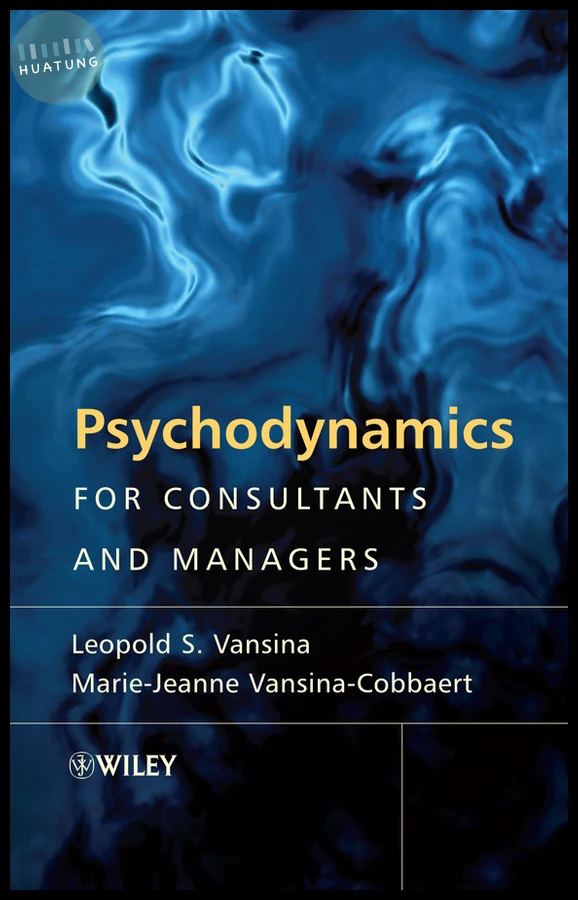
Psychodynamics for Consultants and Managers
$2239元可訂購
簡介
This book explores the ways in which psychoanalytic thinking can be more extensively and effectively used to the benefit of organizations and groups. It provides future and practicing consultants and managers with an understanding of unconscious and non-conscious behaviour in order for them to create the appropriate conditions for change in organizations. It explains psychodynamic concepts and working principles in an accessible language and clearly describes their use in consulting and management practices using case studies. Case studies and examples are included throughout, and a glossary is provided.
目錄
About the Authors xi
Contributors xiii
Acknowledgements xv
General Introduction 1
Part One A Psychoanalytic Perspective on Groups and Organisations 9
Introduction 11
Marie-Jeanne Vansina-Cobbaert
Chapter 1 Original, Primary Mental Processes 20
Marie-Jeanne Vansina-Cobbaert
Illustrations 22
Stepwise transformations 25
References 27
Chapter 2 Languages from Another World 28
Marie-Jeanne Vansina-Cobbaert
The language of images 29
The language of actions 32
The language of relations 38
Putting the information from ‘atlantis’ to use 49
References 55
Chapter 3 Supportive ‘Process Structures’ 57
Marie-Jeanne Vansina-Cobbaert
Holding and containment 58
Transitional phenomena 64
References 67
Chapter 4 Defensive Processes and Behaviour 68
Marie-Jeanne Vansina-Cobbaert and Leopold Vansina
Individual defence mechanisms 68
Defence mechanisms in groups 71
Social defences 74
Social repression 76
Defensive strategies 77
Working with and through defences 79
Conclusions 85
References 86
Chapter 5 The Capacity for Creative Living and Its Importance in Organisational Life 88
Marie-Jeanne Vansina-Cobbaert
Origins and functioning of the capacity for creative living 88
Destructiveness in the context of creative living 95
References 100
Part Two A Psychodynamic Approach 103
Introduction 105
Leopold Vansina
Chapter 6 Psychodynamics: A Field of Study and an Approach 108
Leopold Vansina
Some major differences with psychoanalysis 108
An attempt to define psychodynamics 113
Creating supportive process structures 126
Small things that matter: a look at some neglected potential benefits of a psychodynamic approach to organisational issues 145
Finalising comments 148
References 150
Chapter 7 ‘Me’ in the Problem Situation 156
Leopold Vansina
The problem with problem definition 157
Building continuation 167
‘Me’ in terminating a project 168
What about transference and counter-transference in our practice? 172
References 176
Chapter 8 Groups as the Tip of an Iceberg: Locating Issues in Their Context 178
Leopold Vansina
Introduction 178
Management teams as the tip of an iceberg 184
The iceberg in project teams 194
Import and export mechanism of problems 197
Summary 206
References 207
Chapter 9 Being in and Working with Experiences in the ‘Here-and-Now’ 210
Leopold Vansina
Various mental modes of being present 214
The relevance of working with or without specific frames in the ‘here-and-now’ 220
From interpretations to sense making 232
Conclusions 238
References 239
Chapter 10 The Art of Reviewing: A Cornerstone in Organisational Learning 242
Leopold Vansina
Reviewing 242
What could be reviewed? 246
When to review and with what frequency? 251
Special or institutionalised reviews 254
How to review? 255
Conditions for reviewing 262
The role and stance of the person(s) leading the review 264
Limits to learning from reviewing 265
References 266
Part Three The Psychodynamic Approach in Consulting and Action-Research Projects 269
Introduction 271
Leopold Vansina
Chapter 11 Understanding and Working with Organisational Dynamics: Coping with Organisational Growth 273
Leopold Vansina and Gilles Amado
Part 1: Creating Awareness and a Base for Action within the Organisation 280
The pilot workshop 280
The second workshop 285
The third workshop 291
The relevance of the design 298
Part 2: Working Through the Draft Blueprint 305
The six two-day workshops 306
Understanding and working with organisational dynamics: discussion 313
References 319
Chapter 12 Transformations: Hope, Illusions and Reality. Transformations within a Family-Owned International Corporation 321
Leopold Vansina and Marie-Jeanne Vansina-Cobbaert
Part 1: The Consulting Project 323
The actors within the system 325
‘Minimal structures’ and ‘time and space’ 328
Part 2: Making Sense of the Work 346
Transformation 346
What can be learned from the consulting experience and conceptual clarifications for advancing the practices of organisation consultants and managers? 352
References 356
Chapter 13 Participative Redesign: Action-Research into the Strategic Restructuring of a Plant 358
Leopold Vansina
Part 1: The Project 360
History and context 360
My role, approach and intentions 361
Phase one: exploring the company in its environment 365
Phase two: engaging the employees to redesign the operations to meet the new production strategy 368
Phase three: change in ownership and implementation 372
Part 2: Organisational Results and Research Findings 375
Results from the participative redesign 376
The process of successful organisational change 377
Learning from the action-research itself 378
Conclusions 385
References 387
Chapter 14 Working Across Organisational Boundaries: Understanding and Working with Intergroup Dynamics 390
Sandra G.L. Schruijer and Leopold Vansina
Introduction 390
Part 1: The Psychological Difficulties of Working Across Organisational Boundaries 391
The meaning of collaboration 391
The yacht club 393
Part 2: Helping Groups and Organisations in Developing Successful Collaboration 396
Shellfisheries: conflicts of interest between nature and economy 396
Collaboration in the building sector 397
Organisational change of a nursing home 397
Medical call centre 398
Part 3: Dynamics, Practices and Principles 399
Working with the whole system 399
Working with the psychodynamics of conflict and collaboration 402
Leading collaboration 405
Exploring the ‘why?’ 407
Concluding remarks 408
References 409
Glossary 413
Index 427