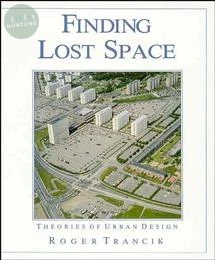

Finding Lost Space
$3599元 定價: $3999 9折 可訂購
簡介
The problem of "lost space," or the inadequate use of space, afflicts most urban centers today. The automobile, the effects of the Modern Movement in architectural design, urban-renewal and zoning policies, the dominance of private over public interests, as well as changes in land use in the inner city have resulted in the loss of values and meanings that were traditionally associated with urban open space. This text offers a comprehensive and systematic examination of the crisis of the contemporary city and the means by which this crisis can be addressed. Finding Lost Space traces leading urban spatial design theories that have emerged over the past eighty years: the principles of Sitte and Howard; the impact of and reactions to the Functionalist movement; and designs developed by Team 10, Robert Venturi, the Krier brothers, and Fumihiko Maki, to name a few. In addition to discussions of historic precedents, contemporary approaches to urban spatial design are explored. Detailed case studies of Boston, Massachusetts; Washington, D.C.; Goteborg, Sweden; and the Byker area of Newcastle, England demonstrate the need for an integrated design approach--one that considers figure-ground, linkage, and place theories of urban spatial design. These theories and their individual strengths and weaknesses are defined and applied in the case studies, demonstrating how well they operate in different contexts. This text will prove invaluable for students and professionals in the fields of architecture, landscape architecture, and city planning. Finding Lost Space is going to be a primary text for the urban designers of the next generation. It is the first book in the field to absorb the lessons of the postmodern reaction, including the work of the Krier brothers and many others, and to integrate these into a coherent theory and set of design guidelines. Without polemics, Roger Trancik addresses the biggest issue in architecture and urbanism today: how can we regain in our shattered cities a public realm that is made of firmly shaped, coherently linked, humanly meaningful urban spaces? Robert Campbell, AIA Architect and architecture critic Boston Globe
目錄
Preface Vi
Acknowledgments Ix
1 What Is Lost Space? 1
The Problem Of Urban Design Today 1
Lost Space Defined 3
The Causes 4
Redesigning Lost Space 18
2 Development Of Twentieth-Century Space 21
Functionalism 21
The Functionalist Grid 30
Critical Reactions 35
Physical Manifestations 37
3 Urban Space Precedents 60
Hard Space 61
Soft Space 86
4 Three Theories Of Urban Spatial Design 97
Figure-Ground Theory 98
Linkage Theory 106
Place Theory 112
5 Case Studies 125
Introduction 125
Case Study 1: Boston, Massachusetts 128
Case Study 2: Washington, D.C. 149
Case Study 3: Göteborg, Sweden 176
Case Study 4: Byker, Newcastle, England 208
6 Toward An Integrated Approach To Urban Design 219
Principles 220
The Designer’s Role 225
The Design Process 228
Toward The Year 2000 233
Notes 235
Bibliography 239
Index 242