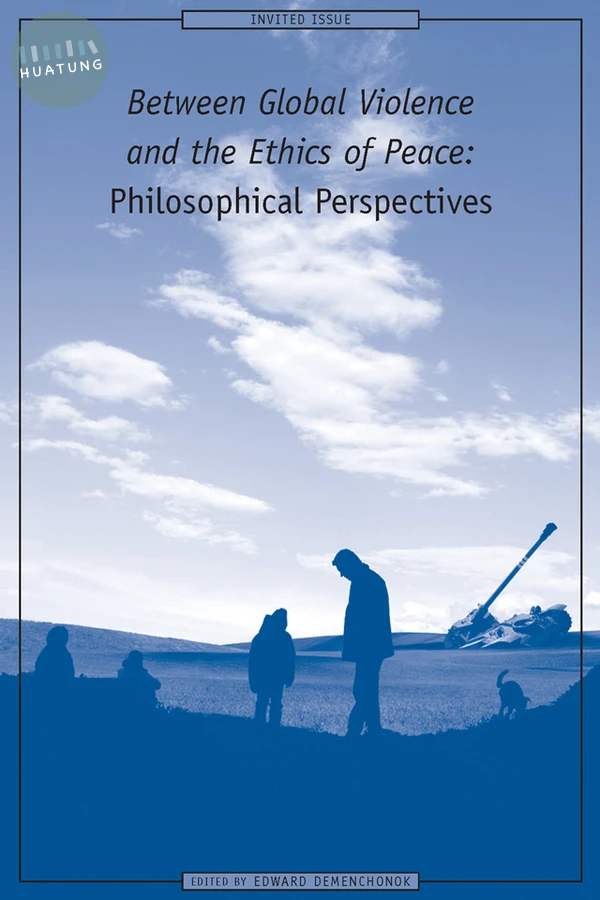

Between Global Violence and the Ethics of Peace
$4191元可訂購
簡介
The book offers a philosophical analysis of violence as a global problem and its challenges to ethics. In the nuclear age, the use of military force as a political instrument threatens the future of humanity. The contributors examine the problems of structural and direct violence, war and peace, human rights, toleration, and the ethics of international relations and co-responsibility in a globalized world. Drawing on a vast range of philosophical traditions – Taoist, Hellenic, and Western – they show the relevance of an ethics of nonviolence in search for peaceful alternatives. They examine Kant’s idea of perpetual peace and its development by the theorists of “discourse ethics” and of “cosmopolitan democracy.” The true solution to the problem of securing peace and protecting human rights can be achieved not by hegemonic unilateralism and force, but only by peaceful means, based on international law and institutions, such as a properly reformed UN.
目錄
Preface and Acknowledgments (Edward Demenchonok). INTRODUCTION
Philosophy After Hiroshima: From Power Politics to the Ethics of Nonviolence and Co-Responsibility (Edward Demenchonok).
PART I: HISTORICAL CONSCIOUSNESS AND CO-RESPONSIBILITY
1. Globalization and Violence: The Challenge to Ethics (Edward Demenchonok and Richard Peterson).
2. The Democratic Peace Myth: From Hiroshima to Bahdad (Andrew Fiala).
3. The Holocaust Sublime: Singularity, Representation, and the Violence of Everyday Life (John Sanbonmatsu).
4. Can Historical Responsibility Strengthen Contemporary Political Culture (Jenny Tillmanns).
5. The Project of Reconciliation and the Road to Redemption: Hegel’s Social Philosophy and Nietzsche’s Critique (Steven V. Hicks).
PART II. STOPPING THE VIOLENCE: MODES OF RESPONSE
6. No More Hiroshimas and Sharp Weapons (Keping Wang).
7. Relevant Hellenic Factors Favoring Effective Dialogue and Peaceful Coexistence (Leonidas Bargeliotes).
8. The Grounding of Forgiveness: Martha Nussbaum on Compassion and Mercy (Paul Gallagher).
PART III. STRIVING FOR HUMAN RIGHTS
9. Human Rights: Historical Learning in the Shadow of Violence (Richard T. Peterson).
10. The Universal Concept of Human Rights as a Regulative Principle: Freedom Versus Paternalism (Edward Demenchonok).