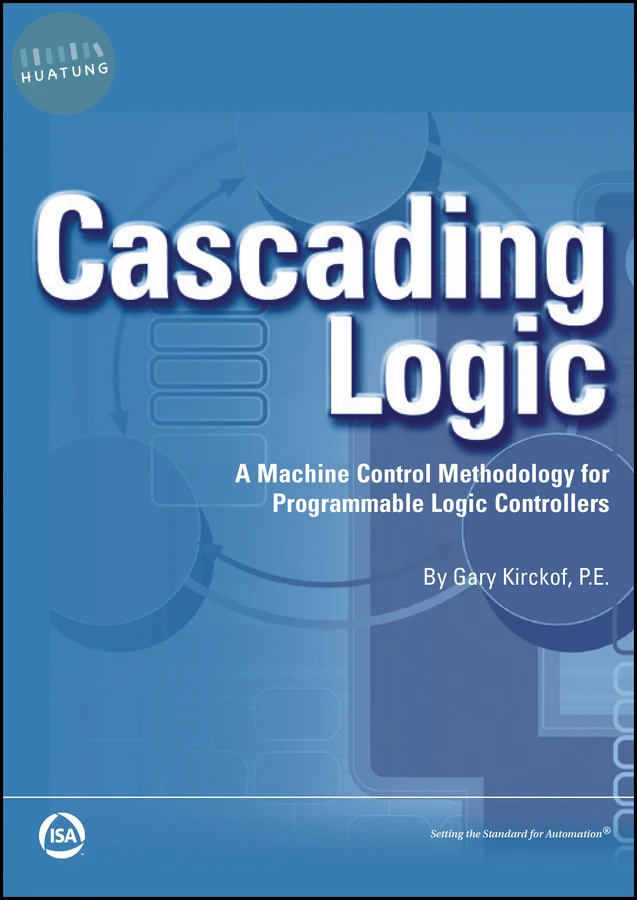
Cascading Logic
$2880元 定價: $3200 9折 可訂購
簡介
Cascading Logic: A Machine Control Methodology for Programmable Logic Controllers explains how to develop a functional machine control program for industrial equipment that operates sequentially. The programming approach begins by breaking the machine into its fundamental components. These small, manageable parts help the programmer focus on major concerns before addressing details. The method then explains how to program each component and how to assemble the components into a complete machine control system.
This book aims to give the reader the confidence to make decisions and proceed with certainty that the program works as intended, without odd logic combinations causing unintended actions. The sequential order of events also assists operators and maintenance staff in troubleshooting and maintaining the equipment after deployment. Ladder logic illustrations demonstrate each section of the text. Although the ladder logic examples use the instruction set for the Allen-Bradley SLC 500 PLC, the concepts and techniques are applicable to any brand of PLC.
目錄
ABOUT THE AUTHOR ix
INTRODUCTION xi
Chapter 1 LADDER LOGIC BASICS 1
1.0 Introduction, 1
1.1 Rungs and Branches, 2
1.2 Program Execution and Scan Time, 3
1.3 One Shots, 4
1.4 Always On Bit, 5
1.5 First Scan Bit, 6
1.6 Alternators, 6
1.7 Binary Counters, 7
1.8 One Scan Oscillator, 9
1.9 Latches, 9
1.10 Duty Timers, 12
1.11 DeMorgan's Theorem, 12
1.12 Other Circuits, 14
Chapter 2 SEQUENCES AND MOTION OBJECTS 15
2.0 Introduction, 15
2.1 Functional Grouping, 15
2.2 Documentation, 17
2.3 Sequences, 17
2.4 The Motion Object, 20
2.5 Summary, 27
Chapter 3 OUTPUT LOGIC 29
3.0 Introduction, 29
3.1 Application Considerations, 29
3.2 Spring-Return Valves, 32
3.3 Auxiliary Rungs, 32
3.4 Spring-Return Valve Output Latch, 35
3.5 Recovery, 37
3.6 Double-Ended, Detented Valves, 39
3.7 Double-Ended Valve Output Logic (Spring-Return Configuration), 40
3.8 Double-Ended Valve Output Logic (Double-Ended Configuration), 41
3.9 Three-Position Valves, 42
3.10 Three-Position Cylinders, 45
3.11 Pulse Outputs, 46
3.12 Conclusion, 47
Chapter 4 SIMULATING SENSORS 49
4.0 Introduction, 49
4.1 Cylinders with Only One Sensor, 49
4.2 Cylinders with No Sensors, 50
4.3 Time-Driven Motion Objects, 50
4.4 Output Logic Versus Motion Objects, 52
Chapter 5 CHECKING SENSORS 53
5.0 Introduction, 53
5.1 Problems with Lone Sensors, 54
5.2 Back Checking, 55
5.3 Forward Checking, 57
5.4 Position Bits, 59
5.5 How Often Sensors Are Checked, 60
5.6 Home Position, 61
Chapter 6 CONTROLLING SEQUENCES 65
6.0 Introduction, 65
6.1 Types of Sequences, 65
6.2 Common Control Structure, 66
6.3 Conclusion, 75
Chapter 7 STEP AND SINGLE CYCLE 77
7.0 Introduction, 77
7.1 Why Have Stepping?, 77
7.2 Why Have Single Cycle?, 78
7.3 Mode Selection, 78
7.4 Single-Cycle Control, 80
7.5 Step Mode Control, 82
7.6 Modified Sequence Control, 83
7.7 Mix and Match Modes, 85
7.8 Machine Running, 86
7.9 In Cycle, 87
7.10 Fault Recovery, Debug, and Startup Tools, 87
Chapter 8 SYSTEM CONTROL 91
8.0 Introduction, 91
8.1 Summary of Sequence Control, 91
8.2 Control Hierarchy, 94
8.3 System Control, 96
8.4 Starting Auxiliary Equipment with the Machine, 103
8.5 Program Structure, 103
8.6 Summary, 104
Chapter 9 PARENT/CHILD SEQUENCES 107
9.0 Introduction, 107
9.1 The Dial Machine, 107
9.2 The Dial Sequence, 112
9.3 Typical Station Sequence, 124
9.4 Cycle Stop Points, 128
9.5 Manual Load/Unload Stations, 131
9.6 Dial Mechanisms, 131
9.7 Indexing Stations, 133
9.8 Code Generation and Checking, 134
Chapter 10 DECISION LOGIC 137
10.0 Introduction, 137
10.1 The Pick/Place Example, 137
10.2 Part Inspection, 137
10.3 Continuing Sequences, 142
10.4 Branching Sequences, 143
10.5 Converging Sequences, 143
10.6 Parallel Branches, 144
10.7 Conclusion, 145
Chapter 11 DEPENDENT SEQUENCES 147
11.0 Introduction, 147
11.1 The Example, 147
11.2 The Problem, 149
11.3 The Solution, 152
11.4 Other Problems, 152
11.5 Conclusion, 154
Chapter 12 MACHINE STATES 155
12.0 Introduction, 155
12.1 Machine States, 156
12.2 Machine State Concepts, 156
12.3 Power Off State, 158
12.4 First Scan State, 158
12.5 Fault State, 159
12.6 Manual Mode State, 162
12.7 Ready and Not Ready States, 162
12.8 Running State, 163
12.9 Other Possible States, 164
12.10 Conclusions, 164
Chapter 13 MESSAGE LOGIC 167
13.0 Introduction, 167
13.1 Motion Object, 168
13.2 Message Displays, 169
13.3 Message Display Logic, 169
13.4 Types of Messages, 171
13.5 Message Text, 172
13.6 Message Logic Payback, 173
Appendix A 175
GLOSSARY 185
INDEX 203