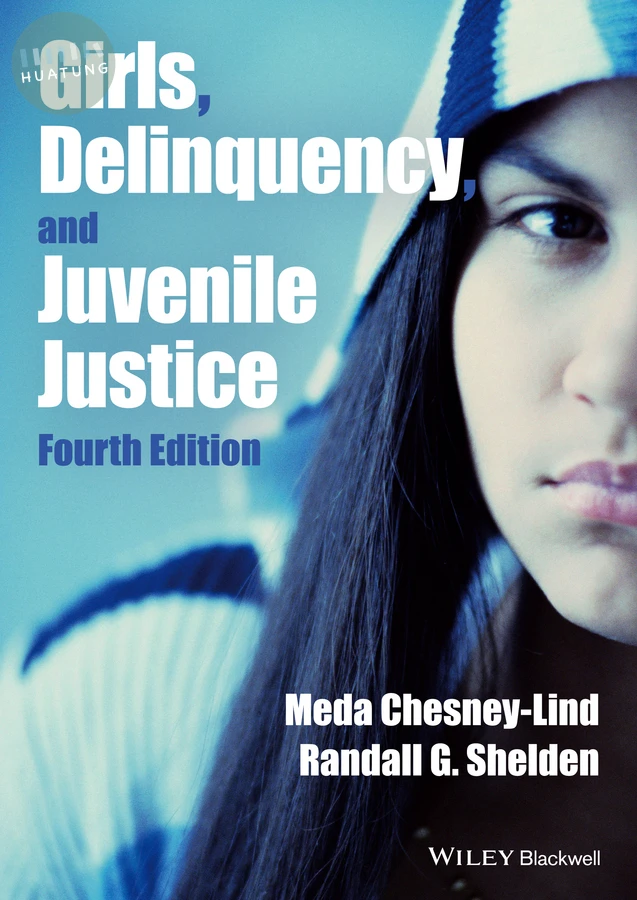

Girls, Delinquency, and Juvenile Justice
$2134元可訂購
簡介
The new edition of Girls, Delinquency, and Juvenile Justice combines cutting-edge research and expanded coverage of girls’ delinquency, including coverage of girls in gangs and the sexual trafficking of girls, to provide students with an accessible, up-to-date, and globally oriented textbook.
Including global perspectives and coverage of cutting-edge research, this is the only textbook to deal exclusively with girls and crime
Offers expanded coverage of girls in gangs and emerging literature on the sexual trafficking of girls
Pulls together and analyzes all existing literature on the subject of female delinquency
Brings to light new research on a wide range of issues, including the conditions of confinement for girls incarcerated in juvenile jails and prisons, Latina girls, and gender responsive programming
Explores the moral panic around "violent," "bad," and "mean" girls
目錄
Preface to the Fourth Edition x 1 Introduction: Why a Book on Girls and Juvenile Justice? 1
2 The Extent of Female Delinquency 9
Recent Trends: National Arrest Data 9
Self-Report Surveys 19
Delinquent Careers 22
Racial Differences 24
Summary 29
Notes 30
References 30
3 The Nature of Female Delinquency 34
Girls and Shoplift ing 34
Status Offenses 37
Runaways 42
Prostitution among Girls 44
International Prostitution 47
Girls and Violence 48
Relabeling Status Off enses 54
Aggression and Gender 55
Girls and Robbery 58
Summary 60
Note 61
References 62
4 Girls and Gangs 72
Trends in Girl Gang Membership 74
Criminal Activities of Girls in Gangs 75
Types of Female Gangs 78
Moving Beyond the Stereotypes: The Social Context of Girl Gangs 80
Class and race 80
Drug use 83
Reasons for joining the gang 85
Relationship with males and male gangs 90
Family-related issues 93
School and work 99
Summary 101
Notes 102
References 102
5 Theories of Crime and Female Delinquency 107
Early Theories of Female Delinquency 108
Sociological Theories of (Male) Delinquency: Do They Apply to Girls? 115
Social disorganization/social ecology theory 115
Strain Th eory 118
Cultural Deviance Theories 122
Cohen’s “culture of the gang” 122
Miller’s “lower-class culture” 123
Differential Association 124
Control Theory 124
Labeling Theory 126
Critical/Marxist Perspectives 128
A Concluding Note 130
Towards a Th eory of Female Delinquency 131
The Women’s Movement and Female Crime 135
Feminist Criminology 138
Summary 139
Notes 141
References 141
6 Girls’ Lives and Girls’ Delinquency 146
Growing Up Female 146
Welcome to “Girlworld”: “Oh, Look at Me I’m So Pretty” 149
Girls, Parents, and Peers 153
Girls, Peers, and Pathways into Delinquency 157
Girls and the Sexual Double Standard 158
Girls’ Victimization and Girls’ Crime 160
Girls’ victimization and female delinquency 162
Contemporary Th inking about Adolescence, Gender, and Crime 165
Sisters are doing it for themselves 167
Street liberation perspectives 167
Contemporary Perspectives of Girls’ Delinquency and Violence 168
Patriarchy and gendered inequalities 169
Beyond victimization: violent girls as “one of the guys” 170
Girls’ code of the streets: considering race, class, and gender 172
Context matters in girls’ delinquency 173
Summary 176
Note 177
References 178
7 Girls and the Juvenile Justice System: A Historical Overview 183
The Doctrine of Parens Patriae: Roots of a Double Standard of Juvenile Justice 184
Ex Parte Crouse: Challenging Parens Patriae 187
People v. Turner: Over-Ruling Crouse 188
The Child-Saving Movement and the Juvenile Court 189
“The Best Place to Conquer Girls” 195
The Juvenile Court and the Double Standard of Juvenile Justice 196
Deinstitutionalization and Judicial Paternalism: Challenges to the Double Standard of Juvenile Justice 200
Unpopular Reform? 201
Recent Trends: Finally a Focus on Girls, the Republican Backlash, and Congressional Gridlock 204
Summary 208
Notes 209
References 210
8 The Contemporary Juvenile Justice System and Girls, Part I: Police and Juvenile Court Processing 215
An Overview of the System and Process 215
Th e Rights of Juveniles: A Review of Key Cases 216
Implications of Supreme Court Rulings for Girls 219
Getting into the System 221
Girls on the Streets 222
Girls at the Station House 225
Delinquents in Court 228
Gender and Delinquency Referrals 229
Comparing Girls and Boys in Court 232
Girls, Race, and the New Double Standard of Juvenile Justice 235
Summary 237
Notes 238
References 238
9 The Contemporary Juvenile Justice System and Girls, Part II: Girls in Institutions 243
Youths in Institutions: A National Overview 244
Number of girls in institutions 244
Private facilities: a problematic option for juvenile justice 247
Demographic Characteristics of Youths in Institutions 250
Status off enses and bootstrapping, a continuing problem 250
Girls in detention 251
Girls’ experiences in detention 253
Gender and training schools – girls’ victimization continues 259
Girls, race, and institutionalization 263
Summary 266
Notes 267
References 268
10 In Their Own Words: Voices of Youths at Risk 273
With assistance from Vera Lopez and Julia Foley Introduction 273
Relationship Power, Control, and Dating Violence Among Latina Girls 275
Boys’ control strategies 276
Girls’ counterstrategies 278
The “Risky” Lives of Girl Delinquents: Bottcher’s California Study 281
Summary 284
Note 285
References 285
11 Programs for Girls in Trouble 286
Interconnected Troubles 286
Trauma 287
Destructive and distraught families 287
Dangerous neighborhoods and unsafe schools 288
Substance abuse 289
Health issues 290
Academic achievement 290
Specific Types of Counseling and Education 292
The Detention Diversion Advocacy Project (DDAP) 292
Gender differences 294
Gaps in Services for Girls 296
Explaining the lack of services for girls 297
The fit of assessed needs, expressed needs, and program descriptions 299
Someone to talk to 300
Improving relationships with peers 301
Sex, sexuality, pregnancy, parenting, and relationships with intimate partners 301
Empowerment 303
Multiple needs and wraparound services 304
Assessed Needs, Expressed Needs, and Contemporary Program Evaluations 304
The Ideal Program 306
Instead of Incarceration: What Could Be Done to Meet the Needs of Girls? 308
Are Gender-Specific Programs Necessary? 310
Programming as if Girls Mattered: Getting Past Girls Watching Boys Play Sports 311
Lack of validated gender-specific programs: programming and the “forgotten few” 311
Honolulu Girls Court: Overview of a Promising Best Practice 312
Policy Implications and Future Directions 314
Summary 315
Notes 317
References 318
12 Conclusions 324
Index 331