
簡介
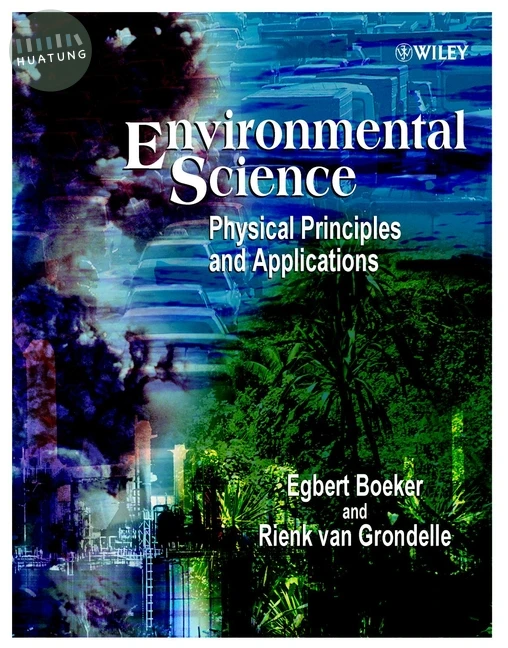
Aimed at a first course in environmental physics, environmentalscience, environmental analysis, or environmental monitoring. Thistext can be used by first year students and above, and takes ascientific approach as opposed to a social or political one.Mathematics is kept to a minimum, although some background (school)knowledge of science is assumed. Courses would be taught inphysics, environmental science and physical sciencedepartments.
Comprehensively covering the field, this book brings together thelatest developments, theories, research and concerns, from both thescientific and social sides. Placing the environment firmly at thecentre of the scientific agenda, it provides all the backgroundneeded by readers to fully understand this important and often'hype-driven' subject. Whilst mathematics is introduced wherenecessary, it is carefully explained and kept simple, withderivations generally being avoided. Wherever possible, topics ofcurrent concern and relevance are included, and many examples,features and appetisers or mini-case studies are included,frequently drawn from publications such as New Scientist, Nature,Science, Physics Today and Scientific American. The book startswith a general overview of the subject, and then moves on to coverclimate, energy, pollutants, noise, measurements and socialaspects.
目錄
Preface
Acknowledgements
1. Introduction: A Physical Approach to Environmental Problems
What are Environmental Problems -
Pollution
The Economic and Social Context
Sunlight and the Solar Spectrum
The Greenhouse Effect
Transport of Pollutants
The Carbon Cycle
2. Weather and Climate
Energy Transport
The Atmsophere, Vertical Structure and Motion
Horizontal Motion of Air
The Oceans
3. Climate Change
Natural Changes of Climate
Human induced changes
Consequences of Climate Change
Reactions to Climate Change
4. Conventional Energy
Physics of Heat
Heat and Power: Thermodynamics
Converting Heat into Power: Problems and 'Solutions'
5. Carbonfree Energies
Renewable energies
Nuclear Power
6. Making up the Balance
Greenhouse Gases, Pollution and Resources
Defining the task
7. Transport of Pollutants
Basic Concepts
Dispersion in the Air
Dispersion in Surface Waters
Dispersion by Groundwater
8. Noise
Physics of Sound
Human hearing
Reducing Sound Levels
9. Environmental Spectroscopy
Basic Spectrospcopy
The Solar Spectrum at Ground Level
Experimental Techniques in Environmental Spectroscopy
Solar UV, Ozone and Life
10. Geophysical Methods
Radioactive Clocks
Isotope Ratios as Environmental Sensors
Magnetic Surveys
Seismic Probing
11. Science and Society
Finite Resources of Energy
Pollution and Health Effects
Environmental Policy
Thinijhng about the Environment and Human Life
The Responsibility of the Scientist
Appendices
References
Index