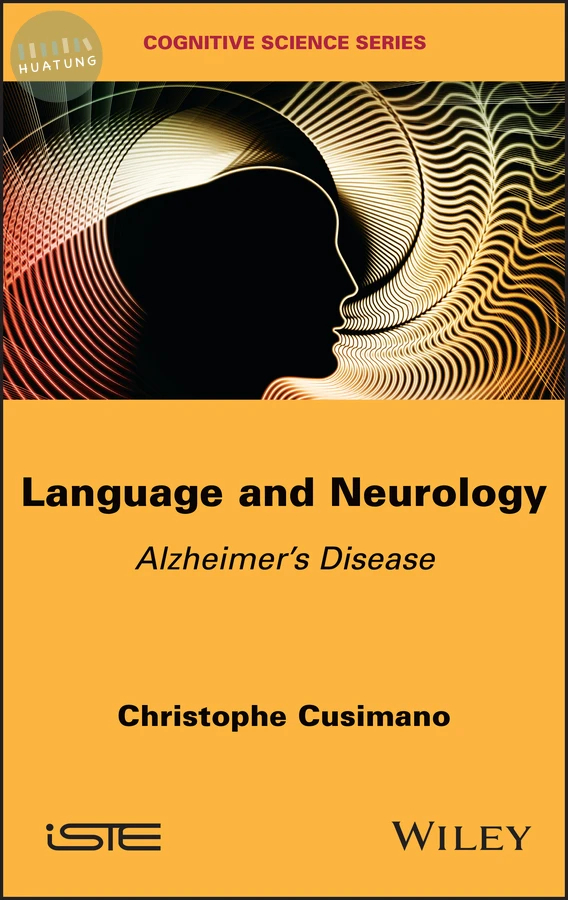

Language and Neurology
$5182元 定價: $5758 9折 可訂購
簡介
This book questions the relationship and compatibility between current beliefs in neurology and contemporary textual linguistic theories, interpretative semantics and discourse analysis. It begins with a critical examination of the screenings for Alzheimer�s type dementia through cognitive testing, particularly screenings where language is used. It then analyzes the various linguistic properties (morphological, syntactic and semantic) of the speech of Alzheimer�s patients, which can be troubling for both caregivers and their environment in general. More than a synthesis of critical linguistic reflections, Language and Neurology provokes a fruitful reflection through adjustments suggested by the acquired knowledge of textual semantics.
目錄
Acknowledgments vii
Introduction ix
Chapter 1. Linguistics, Language Pathologies and Alzheimer’s Disease: A Brief History 1
1.1. Gagnepain’s theory of mediation: an approach to pathological speech on its own terms 2
1.2. “Looking for help from linguistics”: other (rare) resources 10
Chapter 2. Alzheimer’s Disease: General Symptoms and Language Impairments 17
2.1. General symptoms 18
2.2. Language-related problems 25
Chapter 3. Cognitive Testing: The Key to Diagnosing Memory Pathologies 31
3.1. Definitions of psychometric tests 31
3.2. Test types 34
3.3. Intelligence tests: a starting point 35
3.4. The mysterious test 38
3.5. Postulates on verbal language in cognitive testing 39
3.6. Verbal and non-verbal cognitive tests 43
3.6.1. Non-verbal tests 44
3.6.2. Basic verbal tests: naming, designation and matching 48
3.6.3. Tests using idiomatic expressions 54
3.6.4. Barbizet’s test: “The Lion’s Tale” 58
3.7. Tests and context(s) 66
3.8. Absence of a cultural dimension in cognitive testing 70
3.8.1. First-generation North African patients in France 70
3.8.2. Erasure of Czech/Slovak cultural disparities 71
3.8.3. Connecting cognition and culture: origins and perspectives 72
3.9. Summary: rewriting tests 73
Chapter 4. Analyzing the Speech of Alzheimer’s Patients: Methods and Perspectives 79
4.1. An eclectic range of approaches 79
4.2. Patient–physician dialog and autobiographies: microsemantic analysis 89
4.3. Analyzing patient discourse: perspectives 106
4.3.1. Recursion, circularity and sequences: finding meaning through analysis grids 106
4.3.2. A multi-channel approach 113
4.3.3. Confabulations: “from minor distortion to bizarre tales”17 117
Conclusion 129
Appendices 135
Appendix 1. Interview Transcriptions: The Lion’s Tale Test 137
Appendix 2. English Translations for Chapter 4 159
References 165
Index 173