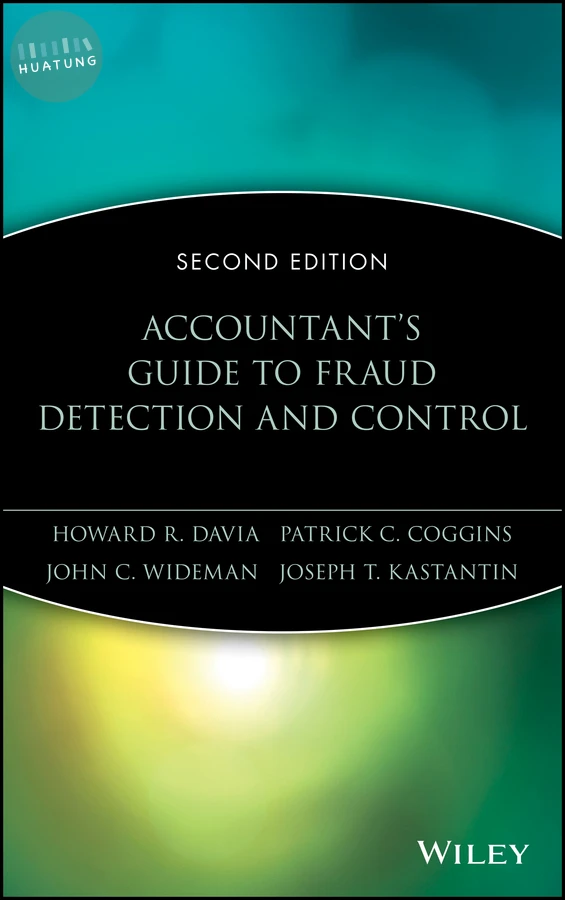
Accountant's Guide to Fraud Detection and Control
$4427元 定價: $4919 9折 可訂購
簡介
From internal control structures that are not fraud-specific toinsufficient communication in the fraud discovery-to-investigationand conviction process, fraudulent activity is a widespread fact oflife in the business world. Historically, the corporate tendencyhas been to react to fraud after the fact, rather than to beproactive in its prevention. And in most cases, blame is directedat accountants and auditors. Unfortunately, these officers arerarely provided with the resources, proper training, and commitmentfrom top management that are essential to effective fraud detectionand control. The Accountant s Guide to Fraud Detection and Controloffers comprehensive direction for this largely unchartedarea.
Two types of fraud are addressed in this book: fraudulent financialreporting, also known as "Treadway" fraud, usually originating inthe top management sector; and "asset-theft" fraud, the more commonand more costly type, likely to be practiced by virtually anyone,including outsiders. Treadway fraud is being adequately detected byindependent auditors (CPAs) in their annual audits. Asset-theftfraud is not being adequately detected by anyone, with very fewexceptions. From following clues to achieving a prosecution, hereis sound advice that accountants and auditors will findinvaluable.
Businesses lose over $100 billion a year to fraud. Only 20 percentis discovered. Who s to blame?
Accountants and internal auditors are often the scapegoats formanagement s insufficient fraud detection operations andguidelines. At last, here is comprehensive, intermediate trainingfor evaluating, devising, and installing fraud-specific internalcontrols, and for conducting proactive fraud-specific examinations.Including actual case studies, the authors show accountants andauditors how to:
* Anticipate problems and follow clues
* Successfully disclose fraud
* Compile the evidence necessary to prosecute acts of fraud
* Develop investigative techniques
* Create effective internal controls . . . and much more, to fillthe needs of this crucial area.
www.wiley.com/account ing
目錄
FRAUD-SPECIFIC EXAMINATIONS AND INTERNAL CONTROL.
Audit Responsibility for Fraud Detection After Cohen andTreadway.
New Perspectives on Fraud.
Principles and Standards for Fraud-Specific Examinations.
Classifying Fraud for Improved Detection.
Internal Control and Fraud-Specific Internal Control.
Establishing and Operating an Effective Fraud-Specific InternalControl System: Seven Steps to Internal Control.
Computer Fraud 101.
Fraud Case Studies.
Fraud Case Studies--Solutions.
Custodial Fraud.
INVESTIGATING FRAUD.
Investigating Suspected Fraud.
Proactive and Reactive Investigations.
PROSECUTING FRAUD.
Rules of Evidence, Fraud Discovery, and Prosecution.
The Legal Cases in Fraud.
Ethical Conduct and Fraud Prevention.
Bibliography.
Index.