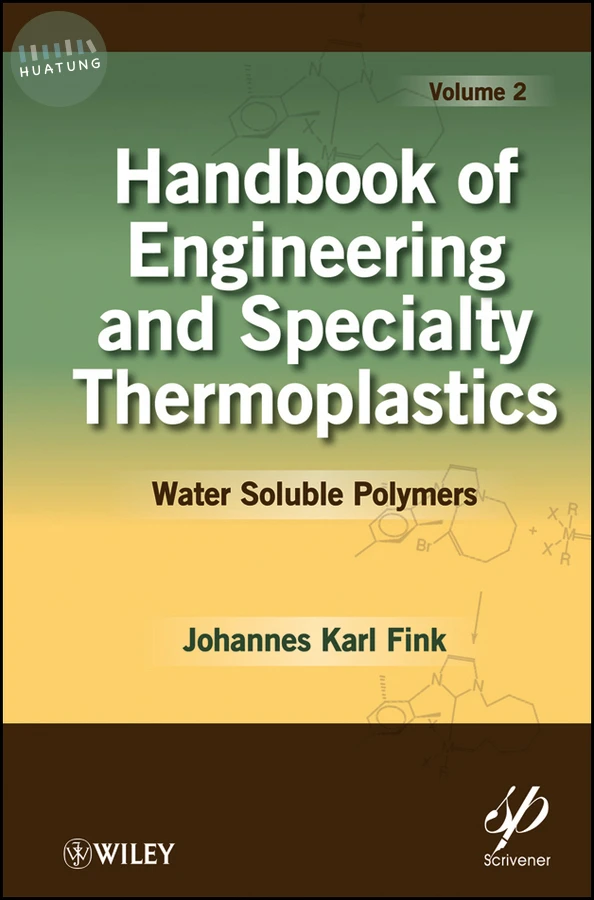
Handbook of Engineering and Specialty Thermoplastics, Volume 2
$7372元 定價: $8191 9折 可訂購
簡介
This book focuses on common types of polymers belonging to the class of water soluble polymers. It covers a wide range of applications: food, cosmetic, medical, lithography and ink jet printing, agricultural, wastewater cleaning, and oilfield.
The text is arranged according to the chemical constitution of polymers and reviews the developments that have taken place in the last decade. Each chapter follows the same template. A brief introduction to the polymer type is given and previous monographs and reviews dealing with the topic are listed for quick reference. The text continues with monomers, polymerization, fabrication techniques, properties, applications, as well as safety issues.
Providing a rather encyclopedic approach to water soluble polymers, the Handbook of Engineering and Specialty Thermoplastics:
Presents a listing of suppliers and commercial grades
Reviews current patent literature, essential for the engineer developing new products
Contains an extensive tradenames index with information that is fairly unique
Concludes with an index of acronyms and a general index
The Handbook of Engineering and Specialty Thermoplastics: Water Soluble Polymers provides a comprehensive reference for chemical engineers and offers advanced students a textbook for use in courses on chemically biased plastics technology and polymer science.
目錄
Preface. 1. Poly(ethylene oxide).
1.1 Monomers.
1.2 Polymerization Fabrication.
1.3 Properties.
1.4 Special Additives.
1.5 Applications.
1.6 Supplier and Commercial Grades.
1.7 Environmental Impact and Recycling.
2. Poly(vinyl alcohol).
2.1 Monomers.
2.2 Polymerization Fabrication.
2.3 Properties.
2.4 Applications.
2.5 Suppliers and Commercial Grades.
2.6 Safety.
2.7 Environmental Impact and Recycling.
3. Polysaccharides.
3.1 Polymers.
3.2 Starch.
3.3 Chitosan.
3.4 Carboxymethyl cellulose.
3.5 Guar.
3.6 Carrageenan.
3.7 Suppliers and Commercial Grades.
4. Poly((meth)acrylic acid).
4.1 Monomers.
4.2 Polymerization and Fabrication.
4.3 Properties.
4.4 Applications.
4.5 Suppliers and Commercial Grades.
5. Poly(acrylamide).
5.1 Monomers.
5.2 Polymerization and Fabrication.
5.3 Properties.
5.4 Special Additives.
5.5 Applications.
5.6 Suppliers and Commercial Grades.
5.7 Safety.
5.8 Environmental Impact and Recycling.
6. Poly(vinylamine).
6.1 Monomers.
6.2 Polymerization and Fabrication.
6.3 Applications.
6.4 Suppliers and Commercial Grades.
6.5 Safety.
7. Poly(vinylpyridine).
7.1 Monomers.
7.2 Polymerization and Fabrication.
7.3 Properties.
7.4 Applications.
7.5 Suppliers and Commercial Grades.
7.6 Safety.
7.7 Environmental Impact and Recycling.
8. Poly(vinylimidazole).
8.1 Monomers.
8.2 Polymerization and Fabrication.
8.3 Properties.
8.4 Applications.
8.5 Suppliers and Commercial Grades.
8.6 Safety.
9. Poly(vinylpyrrolidone).
9.1 Monomers.
9.2 Polymerization and Fabrication.
9.3 Properties.
9.4 Special Additives.
9.5 Applications.
9.6 Suppliers and Commercial Grades.
9.7 Safety.
9.8 Environmental Impact and Recycling.
10. Other Cationic Polymers.
10.1 Manufacture.
10.2 Applications.
11. Other Anionic Polymers.
11.1 2-Acrylamido2-methyl-1-propane sulfonic acid.
11.2 Poly(sulfonicacid)s.
11.3 Sulfonated Asphalt.
11.4 Lignosulfonate.
Index.