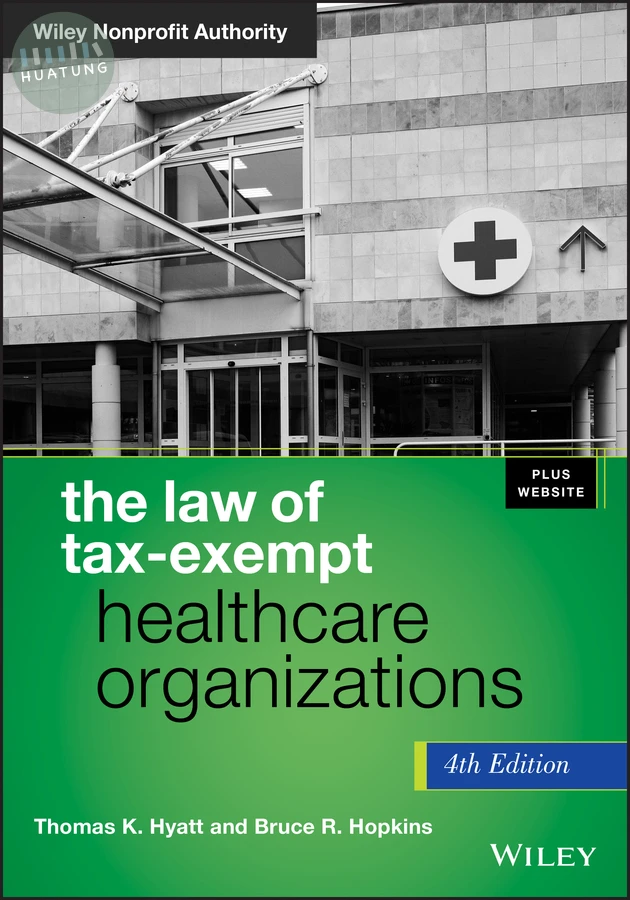
The Law of Tax-Exempt Healthcare Organizations, + Website
$8641元 定價: $9601 9折 可訂購
簡介
A completely revised and expanded one-volume legal resource for tax-exempt healthcare organizations A complete and up-to-date legal resource for tax-exempt healthcare organizations and their advisors, this Fourth Edition, equips you with a comprehensive, one-volume source of detailed information on federal law covering tax-exempt healthcare organizations. The Fourth Edition of this practical, down-to-earth book tackles complex legal issues by providing you with plain-English explanations and the appropriate legal citations for further research.
Revised with new discussions on healthcare reform, the Affordable Care Act, IRS initiatives, executive compensation, commercial activity by tax-exempt organizations, political campaign activity, charitable reforms, governance, restrictions on supporting organizations, intermediate sanctions, and much more
Provides detailed documentation and citations, including references to regulations, rulings, cases, and tax literature
Includes an exhaustive index allowing for quick and easy reference
Offers annual supplements to keep readers apprised of the latest developments affecting tax-exempt healthcare organizations
Written by leading experts in the fields of healthcare and nonprofit law, this comprehensive and vital resource has been completely revised and updated to present a clear view of complicated legal and tax issues.
目錄
Preface xv
About the Authors xvii
Book Citations xxi
Part One Introduction to The Law of Tax-Exempt Healthcare Organizations
1 Tax-Exempt Healthcare Organizations—An Overview 3
1.1 Constitutional Law Perspective 5
1.2 Defining Tax-Exempt Organizations 6
1.3 Rationales for Tax Exemption 9
1.4 Categories of Tax-Exempt Healthcare Organizations 13
1.5 Charitable Healthcare Organizations 14
1.6 The Law of Charitable Trusts 16
1.7 Relief of Poverty 16
1.8 Promotion of Health 19
1.9 Social Welfare Organizations 20
2 Advantages and Disadvantages of Tax Exemption 23
2.1 Source of Tax Exemption 23
2.2 Advantages of Tax Exemption 27
2.3 Disadvantages of Tax Exemption 30
2.4 Alternatives to Tax-Exempt Status 32
2.5 No Contract, Third-Party Beneficiaries, Right of Action, or Charitable Trust 34
2.6 Small Employer Insurance Tax Credit 37
3 Criticisms of Tax Exemption 39
3.1 Criticisms in General 40
3.2 Criticisms of Tax Exemption for Healthcare Organizations 43
3.3 Commerciality Doctrine 56
Part Two Fundamental Exempt Organization Principles Applied to Healthcare Organizations
4 Private Inurement, Private Benefit, and Excess Benefit Transactions 71
4.1 Essence of Private Inurement 72
4.2 Requisite Insider 77
4.3 Physicians as Insiders 84
4.4 Private Inurement—Scope and Types 86
4.5 Private Inurement Per Se 104
4.6 Essence of Private Benefit 107
4.7 Private Inurement and Private Benefit Distinguished 113
4.8 A Case Study 113
4.9 Excess Benefit Transactions 116
5 Public Charities and Private Foundations 137
5.1 Public Institutions 138
5.2 Publicly Supported Organizations—Donative Entities 143
5.3 Publicly Supported Organizations—Service Provider Organizations 150
5.4 Comparative Analysis of the Two Categories of Publicly Supported Charities as Applied to Healthcare Organizations 155
5.5 Supporting Organizations 156
5.6 Recognition of Change in Public Charity Status 172
5.7 Relationships Created for Avoidance Purposes 172
5.8 Income Attribution Rules 173
5.9 Reliance by Grantors and Contributors 173
5.10 Private Foundation Rules 175
6 Community Benefit 179
6.1 Community Benefit and Operation for Charitable Purposes 179
6.2 The Traditional Community Benefit Standard 180
6.3 The New Community Benefit Standard 183
7 Lobbying and Political Activities 193
7.1 Legislative Activities Limitation 193
7.2 Business Expense Deduction Rules and Lobbying 205
7.3 Federal Disclosure of Lobbying 206
7.4 Political Activities Limitation 209
7.5 Business Expense Deduction Rules and Political Activities 218
7.6 Internet Activities 219
7.7 Public Policy Advocacy Activities 222
7.8 Political Activities of Social Welfare Organizations 223
7.9 Constitutional Law Considerations 225
Part Three Tax Status of Healthcare Provider and Supplier Organizations
8 Hospitals 229
8.1 Federal Tax Law Definition of Hospital 229
8.2 Private Charitable Hospitals 234
8.3 Public Hospitals 238
8.4 Religious Hospitals 238
8.5 Proprietary Hospitals 240
9 Managed Care Organizations 243
9.1 Introduction 243
9.2 Health Maintenance Organizations 245
9.3 Commercial-Type Insurance Providers 279
9.4 Preferred Provider Organizations 287
9.5 Recent Developments 289
10 Home Health Agencies 293
10.1 Freestanding Home Health Agencies 293
10.2 Hospital-Based Home Health Agencies 299
10.3 Private Duty Nursing Companies 300
11 Homes for the Aged 303
11.1 Introduction 303
11.2 Overview of Tax Exemption for Homes for the Aged 303
11.3 Specific Types of Healthcare Facilities for the Aged 307
11.4 Other Considerations 310
12 Tax-Exempt Physician Organizations 313
12.1 Tax-Exempt Clinics 313
12.2 Teaching Hospital Faculty Organizations 319
13 Other Provider and Supplier Organizations 325
13.1 Blue Cross and Blue Shield Associations 325
13.2 High-Risk Individuals Healthcare Coverage Organizations 335
13.3 Qualified Health Insurance Issuers 336
13.4 Health Insurance Exchanges 337
13.5 Accountable Care Organizations 339
Part Four Tax Status of Health-Related Organizations
14 Development Foundations 355
14.1 Basic Concepts 355
14.2 Other Considerations 361
14.3 Case Study 362
14.4 A Potential Alternative 363
15 Title-Holding Companies 365
15.1 Single-Parent Title-Holding Companies 366
15.2 Multi-Parent Title-Holding Companies 369
15.3 Unrelated Business Considerations 371
16 For-Profit Subsidiaries 373
16.1 Establishing a Subsidiary 374
16.2 Financial Considerations 378
16.3 Attribution of Subsidiary’s Activities to Exempt Parent 383
16.4 Asset Accumulations 387
16.5 Effect of For-Profit Subsidiaries on Public Charity Status 388
16.6 Subsidiaries in Partnerships 390
17 Exempt and Nonexempt Cooperatives 393
17.1 Cooperative Hospital Service Organizations 393
17.2 Subchapter T Cooperatives 403
18 Business Leagues 405
18.1 Business Leagues in General 405
18.2 Healthcare Trade Associations 412
18.3 Certification Organizations and Peer Review Boards 413
18.4 Legislative Activities of Business Leagues 417
19 Other Health-Related Organizations 431
19.1 Physician Referral Services 431
19.2 Nurse Registries 432
19.3 Charitable Risk Pools 435
19.4 Hospital Management Services Organizations 436
19.5 Regional Health Information Organizations 442
Part Five Organizational Issues
20 Healthcare Provider Reorganizations 447
20.1 Some Basics about Reorganizations 447
20.2 Parent Holding Corporations 449
21 Mergers and Conversions 457
21.1 Mergers and Consolidations between Exempt Healthcare Organizations 457
21.2 Mergers and Consolidations between Exempt and Nonexempt Healthcare Organizations 460
21.3 Conversion from Exempt to Nonexempt Status 461
21.4 Conversion from Nonexempt to Exempt Status 472
21.5 Joint Operating Agreements 476
22 Partnerships and Joint Ventures 485
22.1 Tax Law Fundamentals 485
22.2 Tax-Exempt Healthcare Entities in Partnerships 490
22.3 Partnerships and Tax Exemption 493
22.4 Limited Liability Companies as Exempt Organizations 496
22.5 Information Reporting 499
22.6 Joint Ventures 500
22.7 Partnerships, Joint Ventures, and Private Inurement 503
22.8 Partnerships, Joint Ventures, and Per Se Private Inurement 504
22.9 Whole-Hospital Joint Ventures 505
22.10 Provider-Sponsored Organization Joint Ventures 524
22.11 Ancillary Services Joint Ventures 524
22.12 Single-Member Limited Liability Companies 543
23 Integrated Delivery Systems 547
23.1 Introduction 547
23.2 Tax Status of IDS Organizations 548
23.3 Physician Practice Acquisitions 570
Part Six Operational Issues
24 Tax Treatment of Unrelated Business Activities 575
24.1 Introduction 577
24.2 Definition of Trade or Business 579
24.3 Definition of Regularly Carried On 588
24.4 Definition of Substantially Related 592
24.5 Application of Substantially Related Test to Healthcare Organizations 599
24.6 Definition of Patient 604
24.7 Gift Shops, Cafeterias, and Coffee Shops 606
24.8 Fitness Centers 608
24.9 Parking Facilities 609
24.10 Temporary Residential Facilities 610
24.11 Pharmacy, Medical Supplies, and Services Sales 611
24.12 Laboratory Testing Services 614
24.13 Medical Research 617
24.14 Medical Office Buildings 622
24.15 Transactions between Related Organizations 623
24.16 Services for Small Hospitals 626
24.17 Corporate Sponsorships 627
24.18 Other Exceptions to Unrelated Income Taxation 630
24.19 Internet Activities 641
24.20 Revenue from Controlled Organizations 644
24.21 Unrelated Debt-Financed Income 648
24.22 Specific Deduction 652
24.23 Computation of Unrelated Business Taxable Income 653
24.24 The Commerciality Doctrine 655
25 Physician Recruitment and Retention 657
25.1 Introduction 657
25.2 The IRS Position 660
25.3 The OIG Position 661
25.4 Guidelines for Analyzing Recruitment and Retention Techniques 662
25.5 Specific Recruitment and Retention Techniques 663
25.6 Hermann Hospital Closing Agreement 679
25.7 Physician Recruitment Revenue Ruling 692
26 Charity Care 711
26.1 Introduction 712
26.2 The Financial Ability Standard 712
26.3 The Community Benefit Standard 713
26.4 The Emergency Room Exception 716
26.5 Legal Challenges to Hospital Charity Care Practices 717
26.6 Definitional and Reporting Issues 719
26.7 IRS Compliance Check and Form 990 Redesign 725
26.8 Federal Legislative Initiatives 727
26.9 Charity Care and National Health Reform 731
26.10 Additional Statutory Requirements for Hospitals 732
26.11 The Constitutionality of the Affordable Care Act 749
27 Worker Classification and Employment Taxes 757
27.1 Federal Employment Taxes 758
27.2 Employees and Independent Contractors Distinguished 759
27.3 The Common-Law Factors 761
27.4 Safe Harbors 762
27.5 Classification of Healthcare Workers 764
27.6 Coordinated Issue Papers 768
27.7 Medical Residents and the Student Exception 774
28 Compensation and Employee Benefits 777
28.1 The Reasonable Compensation Standard 778
28.2 Hospital–Physician Compensation Arrangements 781
28.3 Executive Compensation 784
28.4 Board Compensation 791
28.5 Overview of Employee Benefits Law 792
28.6 Deferred Compensation in General 796
29 Medicare and Medicaid Fraud and Abuse and Its Effect on Exemption 803
29.1 The Conflict and Confluence of Tax Policy and Health Policy 803
29.2 Fraud and Abuse Violations as a Basis for Revocation of Exemption 808
29.3 Hospital Incentives to Physicians 811
30 Tax-Exempt Bond Financing 813
30.1 Overview of Qualified 501(c)(3) Bonds 814
30.2 Overview of the Qualified 501(c)(3) Bond Issuance Process 824
30.3 Disqualification of Tax-Exempt Bonds 826
30.4 Internal Revenue Service Developments 831
31 Fundraising Regulation 835
31.1 State Law Regulation 836
31.2 Federal Law Regulation 848
32 Rural Healthcare Organizations 873
32.1 Introduction 873
32.2 Application of the Substantial Private Benefit Prohibition 874
32.3 Application of Unrelated Business Income Rules 874
32.4 Physician Recruitment and Retention in Rural Areas 877
33 Governance 879
33.1 Introduction 880
33.2 Overview of Common Law and Statutory Duties of Officers and Directors 880
33.3 Good Governance Practices 891
33.4 Conflicts of Interest 897
33.5 Board Oversight of Executive Compensation 900
33.6 Government Oversight of Executive Compensation 901
33.7 Federal Legislative Initiatives 906
33.8 State Regulatory Enforcement of Corporate Responsibility Obligations 907
Part Seven Obtaining and Maintaining Exempt Status for Healthcare Organizations
34 Exemption and Public Charity Recognition Processes 913
34.1 Exemption Recognition Process 916
34.2 Application Disclosure Requirements 928
34.3 Special Requirements for Charitable Healthcare Organizations 930
34.4 Special Requirements for Health Insurance Issuers 937
34.5 Public Charity Status 937
34.6 Group Exemption 939
34.7 Integral Part Doctrine 944
34.8 Procedure Where Determination Is Adverse 949
35 Maintenance of Tax-Exempt Status and Avoidance of Penalties 953
35.1 Material Changes 954
35.2 Changes in Form 956
35.3 Annual Reporting Requirements 958
35.4 Redesigned Annual Information Return 965
35.5 Disclosure Requirements 979
35.6 IRS Disclosure to State Officials 986
35.7 Form 990 and Community Benefit 988
35.8 Reporting of Noncash Gifts in General 988
36 IRS Audits of Healthcare Organizations 1003
36.1 IRS Audits in General 1003
36.2 Audit Procedures 1007
36.3 Hospital Audit Guidelines 1011
36.4 IRS Compliance Check Projects 1022
36.5 Revocation of Exemption and Closing Agreements 1037
About the Companion Website 1043
Index 1045