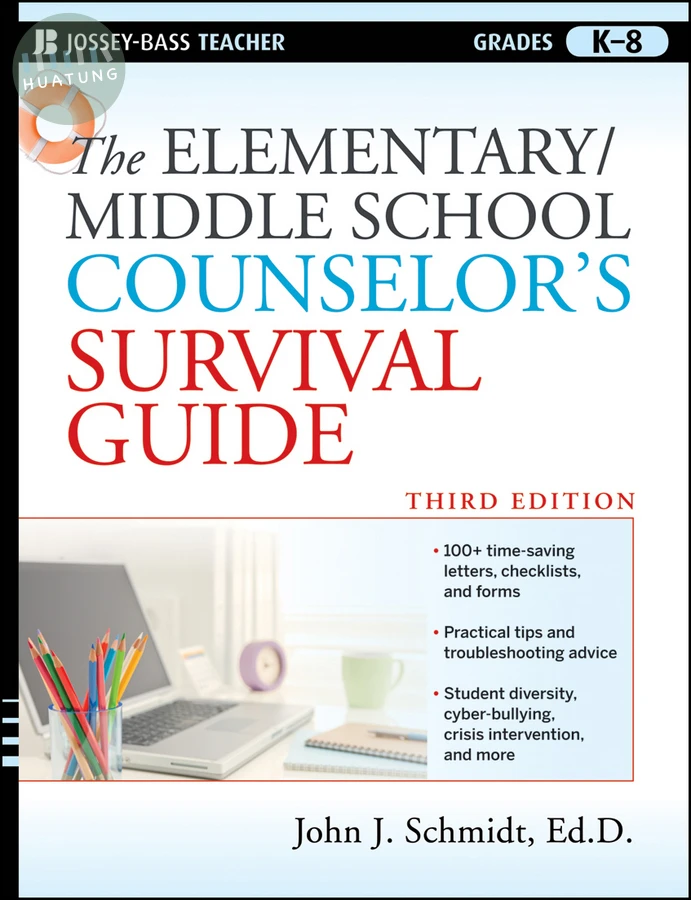

The Elementary / Middle School Counselor's Survival Guide
$990元 定價: $1100 9折 可訂購
簡介
An expanded edition filled with ideas, strategies, and tools for school counselors
This Survival Guide helps counselors plan and implement an effective counseling program tailored to the needs of all students. Step by step, the book walks readers through every aspect of the school counselor job, including: designing a comprehensive counseling program, communicating with students and fellow staff, facilitating groups, promoting positive school discipline, integrating a guidance curriculum, intervening in times of crisis, and taking personal and professional care of oneself.
Discusses how to reach out to diverse student and parent populations
Shows how to integrate the American School Counselor Association's National Model for designing, delivering, and evaluating a school's counseling program
Reveals how new technology can improve services to students and parents
Other titles by Wiggin: I.O.U.S.A., Demise of the Dollar, and Financial Reckoning Day
This comprehensive resource also includes a wealth of reproducible worksheets, letters, checklists, and forms designed to save time and effort for busy school counselors.
目錄
About This Book ix
About the Author xi
Acknowledgments xiii
Introduction 1
1 What, Who, and How of Your School Counseling Program 5
Describing the Program 7
Choosing a Language 7
Leading the Charge 10
Focusing on a Comprehensive Program 11
Adapting the ASCA National Model and Other Approaches 14
Advocating for All Students 15
Seeking Input 16
Winning Support 16
Sharing Ownership 20
Defining What You Do: A Glossary of Responsive Services 22
Identifying Responsive Services 22
Communicating Your Role 24
Chapter 1 Scenarios
1.1 Why Are Counselors in Schools? 5
1.2 Role Identity 6
Chapter 1 Worksheets
1.1 Program Assessment Scale 13
1.2 Facility Checklist for a School Counseling Center 19
Chapter 1 Exhibits
1.1 The School Counseling Program and the School Counselor 9
1.2 Comparison of Traditional and Comprehensive Programs 12
1.3 Advisory Committee Volunteers/Advisory Committee Form 21
2 Developing Your Role and Creating An Identity 27
Determining Who Does What 28
Creating a Counselor Identity 31
Advertising the Program 31
Promoting Yourself 33
Balancing Time 35
Setting Priorities 35
Establishing a Schedule 36
Using Resources 38
Chapter 2 Scenario
2.1 Is There a Problem? 27
Chapter 2 Worksheets
2.1 Time-Balance Worksheet 37
2.2 Schedule Worksheet 39
Chapter 2 Exhibits
2.1 Ten Keys to Implementing a Comprehensive Program 28
2.2 Friendship Week Assignments 29
2.3 School Counseling Brochure 32
2.4 Sample Time-Balance Sheet 35
2.5 Sample Schedule 38
2.6 Sample Master Schedule for a Middle School Counseling Program 40
3 Setting Sail and Staying Afloat 41
Planning 42
Assessing the Program 42
Organizing the Program 47
Evaluating Services 54
Coordinating 59
Receiving Referrals 63
Scheduling Services 63
Keeping Records 65
Following Up 66
Organizing a Peer Helper Program 66
Using Volunteers 67
Orienting Students, Parents, and Teachers 67
Helping with School Transitions 67
Coordinating a Teacher Advisement Program 68
Using Technology 68
Chapter 3 Scenario
3.1 You’ve Got It Good! 41
Chapter 3 Worksheets
3.1 Primary Student Needs Assessment 44
3.2 Middle School Parent Needs Assessment 45
3.3 Teacher Needs Assessment 46
3.4 School Climate Survey 48
3.5 Annual Planning Sheet 50
3.6 Middle School Counselor Monthly Report 55
3.7 Group Counseling Evaluation 57
3.8 Teacher Form for Individual Counseling Evaluation 58
3.9 Student Evaluation of a Middle School Counseling Program 60
3.10 Parent Evaluation Form 61
3.11 Teacher Evaluation Form 62
3.12 Teacher Referral Form 64
Chapter 3 Exhibit
3.1 Sample Case Card 65
Chapter 3 Figures
3.1 Elementary School Counseling Center 51
3.2 Middle School Counseling Center 52
3.3 Inaccessible Counseling Center 53
3.4 Accessible Counseling Center 54
4 Identifying Responsive Services 71
Counseling 72
Individual Counseling 72
Brief Counseling 76
Group Counseling 78
Parent and Teacher Counseling 81
Your Philosophy and Effectiveness as a Counselor 83
Consulting 86
Consulting About Situations 86
Providing Information 88
Delivering Instruction 89
Delivering Classroom Guidance 94
Appraising 96
Testing 97
Observing 99
Interviewing 101
Reviewing Records 101
Chapter 4 Scenarios
4.1 School Anxiety 71
4.2 Girls’ Bathroom 86
Chapter 4 Worksheets
4.1 Teacher Survey for Group Counseling 80
4.2 Information Request 90
4.3 Teacher In-Service Survey 92
4.4 Sample Classroom Guidance Evaluation Form 95
4.5 Learning Objectives Summary 98
4.6 Student Observation Notes 100
Chapter 4 Exhibits
4.1 Interviewing Children 75
4.2 Seven Steps to Brief Counseling 77
4.3 Group Pass to the Counselor’s Office 79
4.4 Counselor’s Checklist for Group Counseling 82
4.5 Ten Ground Rules for Participating in Group Counseling 82
4.6 Questions About Your Counseling Services 85
4.7 Ten Ideas for Leading Successful Presentations 93
Chapter 4 Figure
4.1 Counselor-Teacher Consulting Relationship 87
5 Integrating A School Counseling Program With The Curriculum 103
Affective Education: Integration and Infusion 105
Guidance: Everyone’s Responsibility 106
Planning Guidance Integration 107
Locating Resources 107
Presenting Guidance Lessons and Activities 108
Character Education 109
Homework 109
Educational Planning and Placement 110
Test Results and Improved Instruction 112
Teachers and Testing 113
Students and Testing 114
Parents and Testing 115
Career Development 117
A Lifetime of Learning Through Positive Behavior 118
Chapter 5 Scenarios
5.1 Classroom Behavior 103
5.2 Test Results 112
Chapter 5 Worksheet
5.1 Parent Survey of the School’s Testing Program 116
Chapter 5 Exhibit
5.1 The Edinburgh Middle School Continuing Progress Award 112
6 Reaching Out To Diverse Populations 121
General Guidelines 122
Exceptional Children 127
IDEA and Section 504 128
Approaches with Exceptional Students 129
Consulting with Parents of Exceptional Children 133
English Language Learners (ELL) 134
Culturally Diverse Populations 136
Celebration of Cultures 138
Guidance and Counseling Services 138
Chapter 6 Scenarios
6.1 Struggling Student 121
6.2 Differences 136
Chapter 6 Worksheets
6.1 Student Services Record 123
6.2 School and Community Specialists 125
6.3 Assessing Your Cultural Encapsulation 126
6.4 Token Economy Agreement 132
6.5 A Multicultural Checklist 137
7 Preparing For Crisis Intervention 141
Definition and Description of a Crisis 143
Characteristics of Crises 143
Types of Crises 143
A Crisis Team and Plan 144
Factors to Consider 144
The Crisis Team 146
The Crisis Plan 147
General Guidelines 147
Specific Procedures 149
Staff Development 150
Preventive Activities and Programs 152
Classroom Guidance 152
Developmental Counseling 152
Peer Helper Programs 153
Parent Education Programs 153
Safety Education 153
Crisis Counseling 154
Assessment 155
Plan of Action 155
Follow-Up and Evaluation 156
After Trauma or Tragedy 157
Chapter 7 Scenario
7.1 Bus Accident 141
Chapter 7 Worksheet
7.1 Crisis In-Service Survey 151
Chapter 7 Exhibits
7.1 Checklist of Crisis Guidelines 148
7.2 Communication with Superintendent’s Office 149
8 Selecting Responsive Services To Address Students’ Concerns 159
Bullying 160
Cyberbullying 163
Divorce 163
After-School Child Care 167
Loneliness 168
Relocation 169
Stress 170
Underachievement 171
Technology 174
Chapter 8 Scenario
8.1 Head Slapper 159
Chapter 8 Exhibits
8.1 Monitoring Student Assertiveness and Coping Skills 162
8.2 Sample Postcard for Student Transfers 170
8.3 Sample Student Contract 173
9 Responding To Critical Concerns 177
Child Depression and Suicide 178
Self-Injury 183
Child Abuse 184
Chronic and Terminal Illness 186
Substance Abuse 187
Intervention 188
Prevention 191
Loss 192
Poverty 194
Violence 194
School Phobia 195
Chapter 9 Scenario
9.1 Socioeconomic Disparities 177
Chapter 9 Exhibits
9.1 Child and Adolescent Motives and Behaviors Associated with Suicide Attempts 179
9.2 Additional Adolescent Motives and Behaviors Associated with Suicide Attempts 180
9.3 Questions to Ask Suicidal Students 181
9.4 Self-Protection Agreement 183
9.5 Indicators of a Family Drug- or Alcohol-Related Problem 188
9.6 Indicators of Possible Drug or Alcohol Use 190
9.7 Middle School Drug and Alcohol Assessment 191
10 Belonging and Being With The School 199
Establishing Relationships 200
Relating Personally 202
Being Visible 202
Being Invisible 205
Relating Professionally 206
Seeking Input 206
Sharing Information 208
Following Up 209
Facilitating Support Groups 209
Leading Staff Development 210
Promoting Positive Discipline 211
Being With Versus Doing To 214
Chapter 10 Scenario
10.1 Ongoing Challenges 199
Chapter 10 Worksheet
10.1 Workshop Evaluation Form 212
Chapter 10 Exhibit
10.1 Behavior Management Plan 213
11 Involving Significant Others 217
Knowledge of Family and Community 218
Interview Students 218
Review Cumulative Records 219
Orient Parents 221
Visit Homes 221
Assess Parent Needs 221
Communication and Information 222
Special Events 222
Worksite Visits 222
Test Reports 223
Parent Conferences 223
Letters and Communiqu´es 225
PTA and PTO Presentations 227
Volunteers 229
Parent Education Programs 230
Discussion Groups 230
Commercial Programs 232
Program Planning 233
Chapter 11 Scenario
11.1 Parental Involvement 217
Chapter 11 Worksheets
11.1 Cumulative Record Survey 220
11.2 Volunteer Application Form 231
11.3 Parent Education Evaluation 235
Chapter 11 Exhibits
11.1 My Family and Me 219
11.2 Progress Letter to Parent 226
11.3 Memo to Parents 227
12 Playing According To The Rules 237
Legal Considerations and Resources 238
School Principal 238
Counseling Supervisor 239
School Board 240
Professional Associations 241
Ethical Considerations 241
Responsibilities to Students 242
Responsibilities to Parents 242
Responsibilities to Colleagues and Professional Associates 243
Responsibilities to the School and Community 244
Responsibilities to Yourself 245
Responsibilities to the Profession 245
Responsibilities to Maintain Ethical Standards 246
General Guidelines for Ethical Practice 247
Advertising Your Services 248
Knowing When You’ve Gone Far Enough 252
Understanding Volunteerism in Counseling 252
Following Through 253
Understanding Your Values 254
Informing Parents 254
Seeking Assistance from Others 254
Caring for Yourself 255
Chapter 12 Scenario
12.1 Therapeutic Counseling 237
Chapter 12 Worksheet
12.1 Ethical Decision-Making Checklist 256
Chapter 12 Exhibits
12.1 Four Key Questions 247
12.2 ASCA School Counselor Competencies 249
13 Helping Yourself To Help Others 257
Self-Assessment 258
Personal Caring 260
Physical Well-Being 262
Emotional Well-Being 263
Social Well-Being 266
Professional Caring 267
Intellectual Development 267
Counselor Competence 268
Conclusion 271
Chapter 13 Scenario
13.1 Self-Health and Performance 257
Chapter 13 Worksheet
13.1 Personal and Professional Goals 261
Resources 273
Bibliography 273
Web Sites 278
Index 281