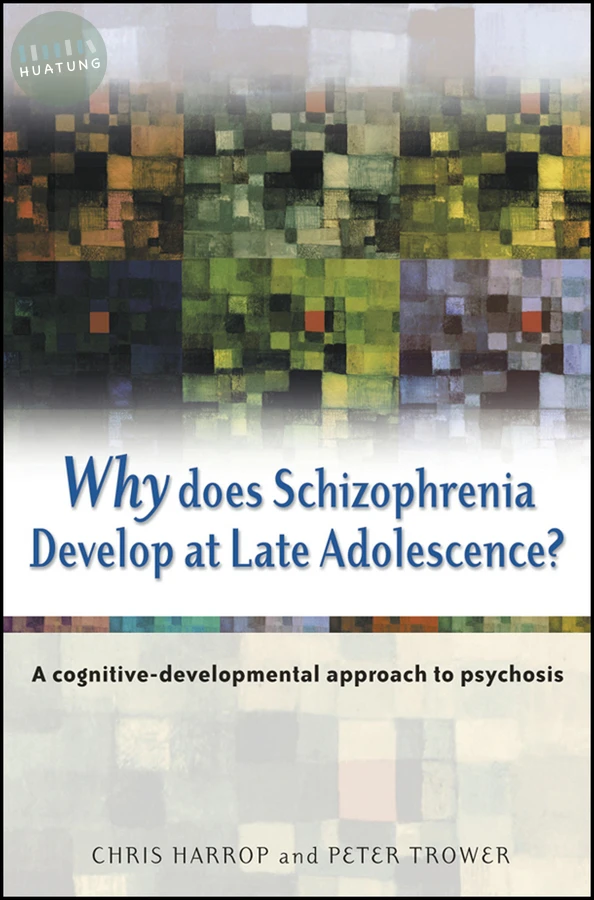
Why Does Schizophrenia Develop at Late Adolescence?
$7263元可訂購
簡介
Governments around the world have given priority to "early intervention", i.e. the early diagnosis and treatment of young adults with psychotic symptoms. One of the main problems with this approach, is that only a small proportion of these young adults can be expected to go on to develop schizophrenia, yet all the treatment regimes are derived from work with adults who have had full psychotic episodes.
Why Does Schizophrenia Develop at Late Adolescence? proposes a controversial new model of how schizophrenia develops in late adolescence and presents clinical material aimed at influencing the way psychosis is treated, building on a state-of-the-art reassessment of the field.
A major reconceptualisation of how schizophrenia develops
A controversial approach
Early intervention programmes are now extremely widespread, so there is much interest in the area and how best to treat this serious psychotic disorder
目錄
About the Authors ix
Acknowledgements x
Introduction xi
Section One: What Is This Schizophrenia?
Chapter 1 Schizophrenia: What is it? 3
Chapter 2 Biological Disease or Psychological Problem? Who is Right? 13
Chapter 3 Why Young Men? What the Hell is Going On in Late Adolescence? 33
Chapter 4 Why Might Some People be Blocked? 51
Section Summary 60
Section Two: Psychosis and the Self
Chapter 5 The Crisis of the Adolescent Self 63
Chapter 6 The Mystery of the Self: Why have it? What is it? 65
Chapter 7 The Potential and the Limit 73
Chapter 8 How is the Self Constructed?. 77
Chapter 9 The Insecure Self (Le Neant) 79
Chapter 10 Alienated/Engulfed Self (Objectité) 83
Section Summary 90
Section Three: Personal Accounts
Chapter 11 How We Asked People to Give Their Personal Accounts 93
Chapter 12 Results I: Anger and Catastrophes 104
Chapter 13 Further Results: Linking Conflict Interactions to Symptoms. 111
Chapter 14 Peer and Romantic Conflicts 133
Section Summary 144
Section Four: What Can Be Done? Therapeutic Ideas
Chapter 15 ‘‘Character-based’’ Training. 151
Chapter 16 Overcoming Interpersonal Blocks to Self-construction 168
Chapter 17 Overcoming Symptoms 186
Section Summary 201
Concluding Remarks 202
Appendix The Self and Other Scale 203
References 205
Author Index 217
Subject Index 221