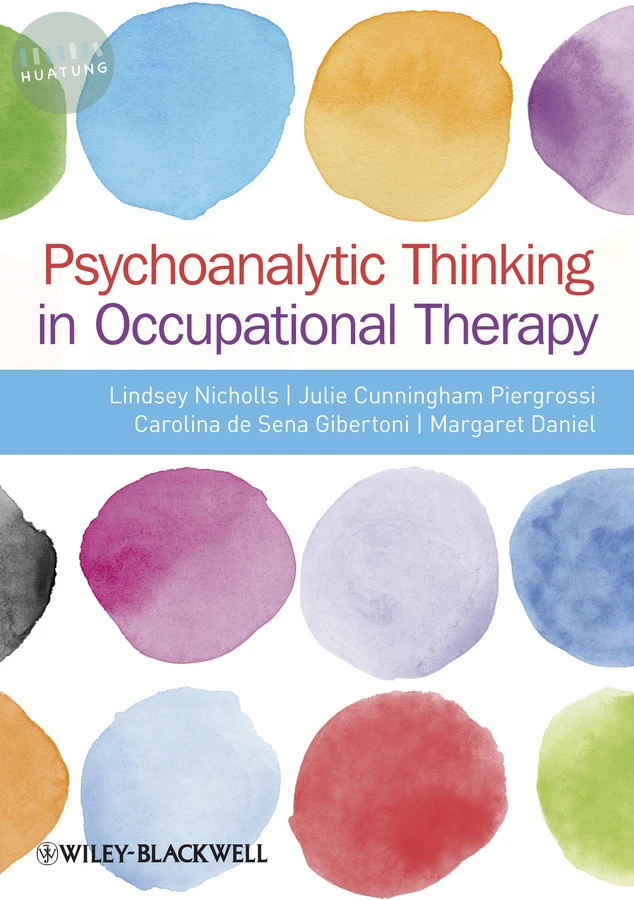

Psychoanalytic Thinking in Occupational Therapy
$1900元 定價: $2111 9折 可訂購
簡介
Divided into three overarching themes, theory, application and research, this cutting edge book explores the influence of psychoanalytic theories on occupational therapy practice and thinking. It incorporates a new conceptual model (the MOVI) to guide practice, which uses psychoanalysis as a theoretical foundation for understanding therapeutic relationships and the ‘doing’ that takes place in clinical practice.
Using practice models and incorporating many clinically applied examples in different occupational therapy settings, this introductory text to psychoanalytic theory will appeal to students and practising clinical and academic occupational therapists worldwide and from different fields of practice from paediatrics and physical disability to older adult care and mental health.
The first book in fifty years to concentrate entirely on a psychoanalytic approach to occupational therapy
Distills cutting edge theory into clinically relevant guidance
Features clinical examples throughout, showing the links between psychoanalytic theory and occupational therapy practice
Written by an experienced international team of authors
目錄
Foreword by Sheena Blair vii
Foreword by Paul Hoggett ix
Acknowledgements xi
1 Introduction 1
Section 1 Psychoanalytic Theory Interwoven with Occupational Therapy 13
2 The ‘Therapeutic Use of Self’ in Occupational Therapy 15
3 An Occupational Therapy Perspective on Freud, Klein and Bion 32
4 The Function of ‘Doing’ in the Intermediate Space: Donald Winnicott and Occupational Therapy 57
5 Beyond Bowlby: Exploring the Dynamics of Attachment 68
6 Re-awakening Psychoanalytic Thinking in Occupational Therapy: From Gail Fidler to Here 87
Section 2 Psychoanalytic Occupational Therapy: A Relational Practice Model and Illuminating Theory in Clinical Practice 103
7 MOVI: A Relational Model in Occupational Therapy 105
8 Let the Children Speak 128
9 Working with Difference 145
Section 3 Further Psychoanalytic Thinking: Research and Training 163
10 Psychoanalytic Thinking in Research 165
11 Understanding the Use of Emotional Content in Therapy Using Occupational Therapists’ Narratives 186
12 Training Experiences to Develop Psychoanalytic Thinking 202
13 The Relational Space of Supervision 222
Index 239