
簡介
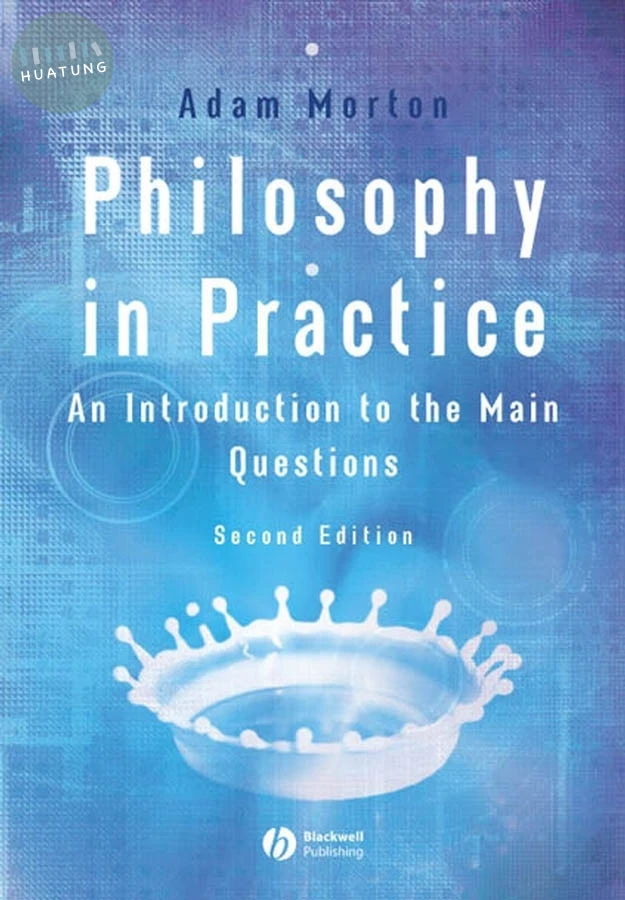
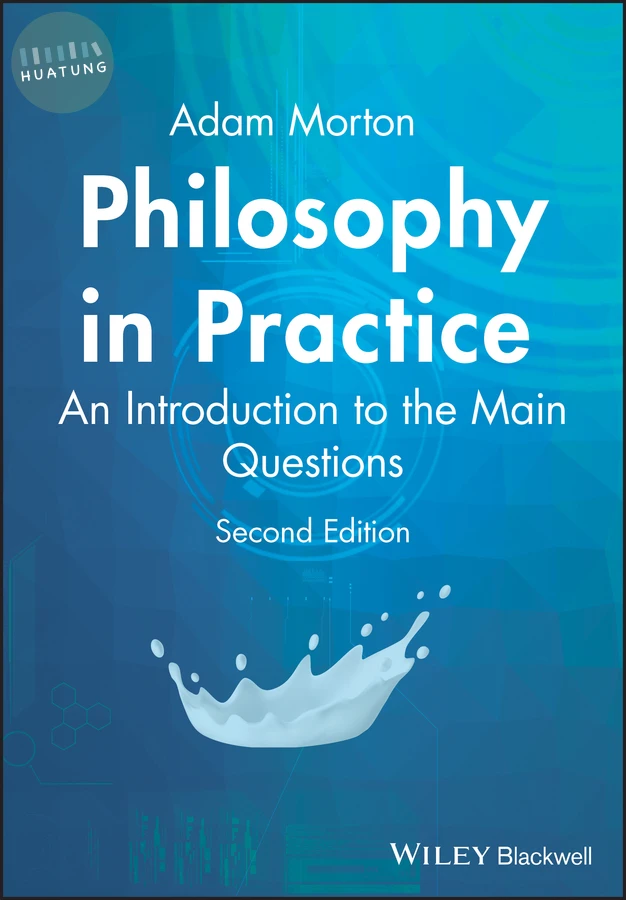
Philosophy in Practice is a completely new kind of introductory philosophy textbook, focusing on philosophy as an activity, rather than as a doctrine. Thoroughly revised edition of a popular introductory philosophy textbook.
Contains new discussions of philosophy of religion, freedom, The Matrix, and the epistemology of the internet.
Offers a wealth of pedagogical features to guide students through the text, including discussion plans at the beginning of each section, questions, chapter summaries, annotated guides to further reading, and a glossary.
Classic passages from the history of philosophy are used throughout, and each part ends with a one-page historical summary.
Includes an on-line teacher's guide with teaching suggestions, tests, and essay topics at: www.blackwellpublishing.com/pip
目錄
Thanks xi
Note to Teachers xi
The Contract xii
Part I The Lure of Certainty 1
1 Certainty and Doubt 3
1.1 Patterns of Thought 4
1.2 How Conventional Are Your Beliefs? 7
1.3 Conviction, Opinion, Doubt, and Belief 9
1.4 Trusting Textbooks 11
1.5 Certainty: the Closed-belief Trap 12
1.6 Cheat: a Story about Deception 14
1.7 Tree-worshipers and Flat-earthers 17
1.8 Revising History: 1984 20
1.9 Doubt 21
1.10 Doubting What Someone Says 23
1.11 How Skeptical Are You? 25
1.12 Moral Skepticism 27
1.13 When is a Skeptic a Cynic? 28
1.14 Socratic Skepticism 30
Conclusions 33
Further Reading 33
2 Sources of Conviction 35
2.1 Authority 36
2.2 Faith 39
2.3 Reason 40
2.4 Arguments 42
2.5 Eight Short Arguments 45
2.6 Puzzling Arguments 47
2.7 Arguments within Arguments 48
2.8 Proofs of God 49
2.9 Paradoxes 54
2.10 What to Trust on the Internet 55
2.11 Transforming the Question 57
Conclusions 58
Further Reading 58
3 Rationalism 59
3.1 Optimism about Reason 60
3.2 Individualism 61
3.3 Galileo’s Rationalism 63
3.4 Impossible Theories 64
3.5 Descartes’ Optimism: Certainty from Doubt 66
3.6 Doubting Anything versus Doubting Everything 70
3.7 Demon Possibilities, Paranoia, and Fantasy 71
3.8 The Matrix 74
3.9 How Doubt Can Increase Belief 76
3.10 Skepticism and Religious Faith 77
3.11 “I Think, Therefore I Am” 80
3.12 Doubting Even One’s Own Existence 81
3.13 Degrees of Certainty 84
Conclusions 86
Further Reading 86
4 Rationalism versus Relativism in Morals 89
4.1 The Appeal of Moral Rationalism 90
4.2 Four Golden Rules 90
4.3 Equality and Justice 92
4.4 Plato’s Moral Rationalism 96
4.5 Three Arguments from Plato’s Republic 98
4.6 Moral Relativism 102
4.7 For and Against Moral Relativism 104
4.8 The Ik 109
4.9 Law and Morality 110
4.10 Existentialism 113
4.11 What Is Morality About? 115
Conclusions 118
Further Reading 118
5 Induction and Deduction 121
5.1 Simple Induction 122
5.2 Applying Simple Induction 123
5.3 Seeing Patterns in Nature 126
5.4 Deduction 1: Syllogisms 128
5.5 Deduction 2: Validity 131
5.6 Deduction 3: Venn Diagrams and Counterexamples 133
5.7 Induction versus Deduction 136
5.8 The Induction-friendliness of the World 138
5.9 Diagramming Induction-friendliness 141
5.10 Hume’s Discovery: Nightmare or Liberation? 142
5.11 Causation and Induction 144
5.12 Choosing the Right Concepts 146
Conclusions 148
Further Reading 148
6 The Retreat from Certainty 149
6.1 Feeble Reason? 150
6.2 Hume on the Power(lessness) of Reason 150
6.3 Four Famous Passages from Hume 153
6.4 Four Kinds of Irrationality 155
6.5 Degrees of Certainty 158
6.6 Valuing Values 158
6.7 How Tolerant Are You? 160
6.8 Mill on Freedom of Expression 163
6.9 Toleration in Science 166
6.10 Making Uncertainty Pay 167
Conclusions 168
Further Reading 169
Postcard History of Philosophy I 170
Part II Life in An Uncertain World 171
7 Utilitarianism 173
7.1 Naive Utilitarianism 174
7.2 Choosing the Utilitarian Action 175
7.3 Pleasure, Pain, and Consequences 177
7.4 Hedonism 178
7.5 Four Styles of Advice 181
7.6 Bentham and Mill 182
7.7 Quotations from Bentham and Mill 184
7.8 Arguments for Utilitarianism 186
7.9 Objecting to the Arguments 188
7.10 Two Controversial Recommendations 190
7.11 The Appeal of Utilitarianism 191
7.12 Utilitarianism and Risk 192
Conclusions 197
Further Reading 197
8 Kantian Ethics 199
8.1 Means and Ends 200
8.2 Motive, Rule, and Means 202
8.3 Kant’s Argument 203
8.4 Evaluating Kant’s Argument 206
8.5 Consequentialism versus Deontology 207
8.6 Diagnosing Disagreements 208
8.7 When it Might Be Right to Lie and Break Promises 209
8.8 Strong Deontology 211
8.9 The Demands of Morality: the Case of Famine 213
8.10 Morality in an Uncertain World 214
Conclusions 215
Further Reading 216
9 Empiricism 217
9.1 Are You an Empiricist? 218
9.2 The Appeal of Empiricism 221
9.3 Some Empiricist Views 222
9.4 The Idea Idea 224
9.5 Translation Exercises 226
9.6 Locke’s “Way of Ideas” 227
9.7 Locke against Innate Ideas 228
9.8 Concepts, Beliefs, and Sensations 230
9.9 Ways of Defining Concepts 233
9.10 Barriers to Concept Acquisition 235
9.11 Empirical Evidence 237
9.12 Adequate Evidence? 240
Conclusions 243
Further Reading 243
10 Beyond Empiricism 245
10.1 Risk of What? 246
10.2 Accuracy versus Informativeness about Friendship 247
10.3 Other Minds 249
10.4 Testing the Argument from Analogy 251
10.5 Folk Psychology: the Argument from Explanation 253
10.6 Being Wrong about Yourself 255
10.7 The Inference to the Best Explanation 256
10.8 Explanation 258
10.9 Justifying Astrology 261
10.10 Inference to the Best Explanation versus Simple Induction 262
10.11 Perception and Belief 264
10.12 Falsification 267
10.13 The Hypothetico-deductive Method 271
10.14 A Test Case: Continental Drift 274
Conclusions 277
Further Reading 277
11 Objectivity 279
11.1 Escape from the Cave 280
11.2 Background Beliefs: First Test Case – Probability 282
11.3 Background Beliefs: Second Test Case – Moral Status 286
11.4 Reflective Equilibrium 290
11.5 How Ethics Is Like Science 295
11.6 Fallibilism 301
Conclusions 304
Further Reading 304
Postcard History of Philosophy II 305
Part III Reality 307
12 Materialism and Dualism 311
12.1 Materialism, Naturalism, Idealism 312
12.2 Materialisms 313
12.3 Are You a Materialist or an Idealist? 315
12.4 Dualism 316
12.5 Leibniz on the Unimaginability of Materialism 321
12.6 Crude and Subtle Materialisms 322
12.7 Lucretius on Mind and Body 325
12.8 Antidepressants, Psychosomatic Medicine, and the Mind–Body Problem 326
12.9 Materialism and Self-knowledge 328
12.10 Technology versus Introspection 330
12.11 Eliminative Materialism 332
12.12 Five Typical Quotations 334
Conclusions 335
Further Reading 335
13 Morality for Naturalists 337
13.1 God and Morality 338
13.2 The Moralist’s Nightmare 341
13.3 Hobbes on the State of Nature 343
13.4 A Restaurant Dilemma 346
13.5 The Prisoner’s Dilemma 348
13.6 Hobbes and the Prisoner’s Dilemma 350
13.7 Implicit Contracts 352
13.8 Imaginary Social Contracts 355
13.9 Morals in Nature? Rousseau, Hegel, Marx 356
13.10 Real States of Nature 359
13.11 Moral Motivation: Decency, Villainy, and Hypocrisy 361
13.12 Morals within Nature? 362
Conclusions 365
Further Reading 365
14 Deep Illusions 367
14.1 Primary and Secondary Qualities 368
14.2 Hard Questions about Color 370
14.3 Color as Illusory 372
14.4 Free Will 373
14.5 Freedom and Responsibility 377
14.6 Freedom as a Secondary Quality 379
14.7 Fatalism versus Determinism 382
14.8 Identity through Time 384
14.9 Personal Identity: Problem Cases 387
14.10 Personal Identity: Theories 389
14.11 The Meanings of Lives 391
Conclusions 396
Further Reading 396
15 Realism 399
15.1 Science versus the Everyday World 400
15.2 Counting Objects 401
15.3 Berkeley’s Idealism 404
15.4 A Puzzle about Pain: the Locations of Qualities 408
15.5 Apples, Surprises, Scopes, and Existence 409
15.6 Verificationism 412
15.7 Instrumentalism versus Realism 415
15.8 First Case Study: Crystal Spheres 419
15.9 Second Case Study: Phlogiston 421
15.10 Arguments for Realism and Instrumentalism 423
15.11 The Last Word 426
Conclusions 427
Further Reading 427
Postcard History of Philosophy III 429
Definitions 430
Index 437