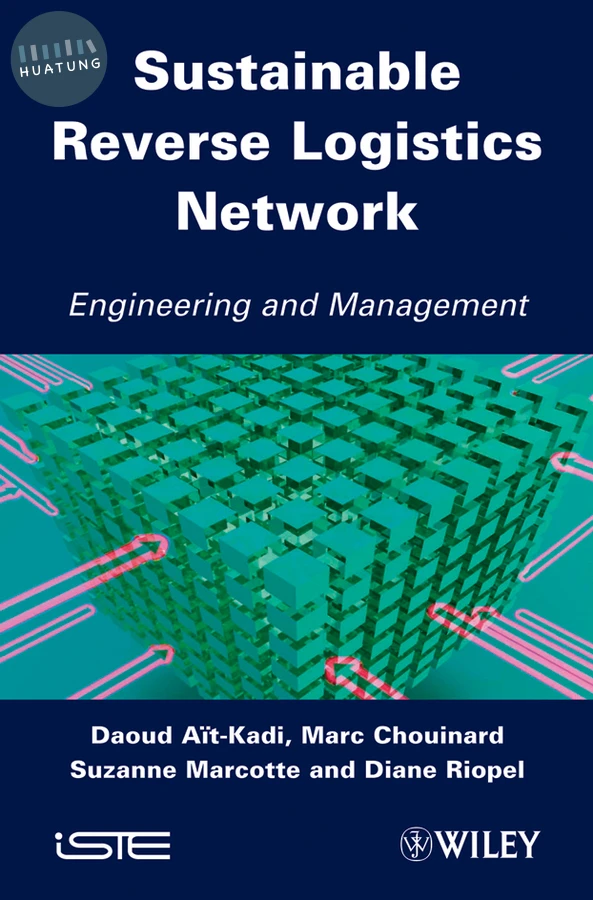
Sustainable Reverse Logistics Network
$5126元 定價: $5695 9折 可訂購
簡介
Traditional logistical chains have enabled us to respond efficiently to the needs of customers in terms of services and products. However, the returns, rejects and by-products of these activities have been eliminated or ignored. Reverse logistics aims at valuing these products using a value creation network integrating recovery, processing, recycling, distribution or clean removal processes. In the context of sustainable development, integrating economic, social and environmental factors, these activities raise questions concerning the design of products, processes and logistic networks. Taking these considerations into account involves significant changes that affect business models as well as consumer habits. New working methods and a long-term vision are the new bases for sustainable logistic networks.
The objective of this book is to supply an educational tool for engineering schools, as well as a management tool for the efficient implementation of the reverse logistics function. It brings together the knowledge acquired by the scientific community. Even if reverse logistics has been the subject of several books over the past few years, very few theories have been developed and the subject is far from being exhausted. This book proposes generic concepts and processes that can be adapted to all businesses producing goods and services and which aim to integrate reverse logistics. These processes will enable us to shed light on their complexity and to take into account all the important variables.
目錄
Introduction ix
I.1. Bibliography xv
Chapter 1. Logistics Challenges 1
1.1. Introduction 1
1.2. Forward supply chain 2
1.3. Higher, further, bigger 5
1.4. Nothing is lost, nothing is created, everything goes somewhere 14
1.5. Nothing goes well anymore 19
1.6. Conclusion 27
1.7. Bibliography 28
Chapter 2. Reverse Logistics Engineering 35
2.1. Introduction 35
2.2. Definition 36
2.3. Types of returns 38
2.4. Generic process 39
2.5. Shipping or redistribution system 74
2.6. Information system 77
2.7. Coordinating 80
2.8. Performance measurement 83
2.9. Conclusion 86
2.10. Bibliography 87
Chapter 3. Ecodesign 89
3.1. Introduction 89
3.2. Sustainable development 91
3.3. Ecodesign 96
3.4. Ecodesign approach within companies 106
3.5. Conclusion 124
3.6. Bibliography 125
Chapter 4. Value Loops 129
4.1. Network design and management integrating reverse logistics 133
4.2. Definition of the value 152
4.3. Monitoring and control of the value on the life cycle 172
4.4. Partnership 185
4.5. Conclusion 196
4.6. Bibliography 197
Conclusion 213
Index 215