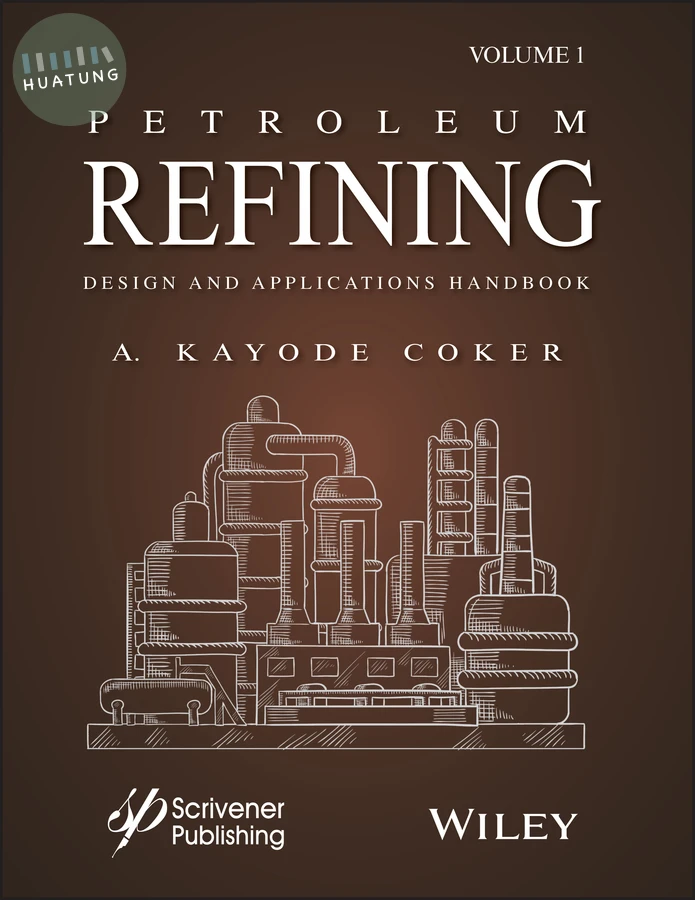
Petroleum Refining Design and Applications Handbook, Volume 1
$9464元 定價: $10515 9折 可訂購
簡介
There is a renaissance that is occurring in chemical and process engineering, and it is crucial for today's scientists, engineers, technicians, and operators to stay current. With so many changes over the last few decades in equipment and processes, petroleum refining is almost a living document, constantly needing updating. With no new refineries being built, companies are spending their capital re-tooling and adding on to existing plants. Refineries are like small cities, today, as they grow bigger and bigger and more and more complex. A huge percentage of a refinery can be changed, literally, from year to year, to account for the type of crude being refined or to integrate new equipment or processes.
This book is the most up-to-date and comprehensive coverage of the most significant and recent changes to petroleum refining, presenting the state-of-the-art to the engineer, scientist, or student. Useful as a textbook, this is also an excellent, handy go-to reference for the veteran engineer, a volume no chemical or process engineering library should be without. Written by one of the world's foremost authorities, this book sets the standard for the industry and is an integral part of the petroleum refining renaissance. It is truly a must-have for any practicing engineer or student in this area.
目錄
Preface xix
Acknowledgments xxi
About the Author xxiii
1 Introduction 1
References 6
2 Composition of Crude Oils and Petroleum Products 7
2.1 Hydrocarbons 8
2.1.1 Alkynes Series 12
2.2 Aromatic Hydrocarbons 14
2.3 Heteroatomic Organic Compounds 15
2.3.1 Non-Hydrocarbons 15
2.3.2 Sulfur Compounds 18
2.4 Thiols 18
2.5 Oxygen Compounds 20
2.6 Nitrogen Compounds 22
2.7 Resins and Asphaltenes 23
2.8 Salts 24
2.9 Carbon Dioxide 24
2.10 Metallic Compounds 24
2.11 Products Composition 25
2.11.1 Liquefied Petroleum Gas (LPG) (C3 and C4) 26
2.11.2 Gasoline (C5 to C11) 26
2.11.3 Condensate (C4, C5 and C6 >) 27
2.11.4 Gas Fuel Oils (C12 to C19) 27
2.11.5 Kerosene 27
2.11.6 Diesel Fuel 28
2.11.7 Fuel Oils # 4, 5, and 6 28
2.11.8 Residual Fuel Oil 28
2.11.9 Natural Gas 29
References 30
3 Characterization of Petroleum and Petroleum Fractions 31
3.1 Introduction 31
3.2 Crude Oil Assay Data 37
3.3 Crude Cutting Analysis 37
3.4 Crude Oil Blending 37
3.5 Laboratory Testing of Crude Oils 46
3.6 Octanes 58
3.7 Cetanes 58
3.7.1 Cetane Index 59
3.8 Diesel Index 59
3.9 Determination of the Lower Heating Value of Petroleum Fractions 59
3.10 Aniline Point Blending 60
3.11 Correlation Index (CI) 60
3.12 Chromatographically Simulated Distillations 61
References 62 4 Thermodynamic Properties of Petroleum and Petroleum Fractions 63
4.1 K-Factor Hydrocarbon Equilibrium Charts 64
4.2 Non-Ideal Systems 72
4.3 Vapor Pressure 74
4.4 Viscosity 80
4.5 Refractive Index 87
4.6 Liquid Density 89
4.7 Molecular Weight 90
4.8 Molecular Type Composition 90
4.9 Critical Temperature, Tc 96
4.10 Critical Pressure, Pc 97
4.11 Pseudo-Critical Constants and Acentric Factors 98
4.12 Enthalpy of Petroleum Fractions 99
4.13 Compressibility Z Factor of Natural Gases 100
4.14 Simulation Thermodynamic Software Programs 105
References 110
5 Process Descriptions of Refinery Processes 111
5.1 Introduction 111
5.2 Refinery and Distillation Processes 115
5.3 Process Description of the Crude Distillation Unit 120
5.4 Process Variables in the Design of Crude Distillation Column 132
5.5 Process Simulation 134
5.6 Process Description of Light Arabian Crude Using UniSim® Simulation Software [12] 138
5.7 Troubleshooting Actual Columns 144
5.8 Health, Safety and Environment Considerations 145
References 148
6 Thermal Cracking Processes 149
6.1 Process Description 152
6.2 Steam Jet Ejector 152
6.3 Pressure Survey in a Vacuum Column 154
6.4 Simulation of Vacuum Distillation Unit 156
6.5 Coking 157
6.6 Fluid Coking 164
6.7 Fractionator Overhead System 170
6.8 Coke Drum Operations 172
6.9 Hydraulic Jet Decoking 173
6.10 Uses of Petroleum Coke 174
6.11 Use of Gasification 174
6.12 Sponge Coke 175
6.13 Safety and Environmental Considerations 175
6.14 Simulation/Calculations 176
6.15 Visbreaking 177
6.16 Process Simulation 184
6.17 Health, Safety and Environment Considerations 185
References 186 7 Hydroprocessing 187
7.1 Catalytic Conversion Processes 187
7.2 Feed Specifications 194
7.3 Feed Boiling Range 196
7.4 Catalyst 196
7.5 Poor Gas Distribution 200
7.6 Poor Mixing of Reactants 200
7.7 The Mechanism of Hydrocracking 200
7.8 Thermodynamics and Kinetics of Hydrocracking 201
7.9 Process Design, Rating and Performance 204
7.10 Increased ΔP 210
7.11 Factors Affecting Reaction Rate 214
7.12 Measurement of Performance 215
7.13 Catalyst-Bed Temperature Profiles 216
7.14 Factors Affecting Hydrocracking Process Operation 217
7.15 Hydrocracking Correlations 217
7.16 Hydrocracker Fractionating Unit 228
7.17 Operating Variables 231
7.18 Hydrotreating Process 234
7.19 Thermodynamics of Hydrotreating 240
7.20 Reaction Kinetics 243
7.21 Naphtha Hydrotreating 245
7.22 Atmospheric Residue Desulfurization 250
7.23 Health, Safety and Environment Considerations 258
References 258
8 Catalytic Cracking 259
8.1 Introduction 259
8.2 Fluidized Bed Catalytic Cracking 262
8.2.1 Process Description 262
8.3 Modes of Fluidization 269
8.4 Cracking Reactions 270
8.5 Thermodynamics of FCC 273
8.6 Process Design Variables 278
8.7 Material and Energy Balances 281
8.8 Heat Recovery 283
8.9 FCC Yield Correlations 284
8.10 Estimating Potential Yields of FCC Feed 286
8.11 Pollution Control 290
8.12 New Technology 292
8.13 Refining/Petrochemical Integration 296
8.14 Metallurgy 296
8.15 Troubleshooting for Fluidized Catalyst Cracking Units 297
8.16 Health, Safety and Environment Considerations 298
8.17 Licensors’ Correlations 299
8.18 Simulation and Modeling Strategy 300
References 304
9 Catalytic Reforming and Isomerization 305
9.1 Introduction 305
9.2 Catalytic Reforming 306
9.3 Feed Characterization 306
9.4 Catalytic Reforming Processes 308
9.5 Operations of the Reformer Process 312
9.6 Catalytic Reformer Reactors 316
9.7 Material Balance in Reforming 317
9.8 Reactions 320
9.9 Hydrocracking Reactions 322
9.10 Reforming Catalyst 322
9.11 Coke Deposition 324
9.12 Thermodynamics 326
9.13 Kinetic Models 326
9.14 The Reactor Model 326
9.15 Modeling of Naphtha Catalytic Reforming Process 329
9.16 Isomerization 329
9.17 Sulfolane Extraction Process 331
9.18 Aromatic Complex 333
9.19 Hydrodealkylation Process 336
References 337 10 Alkylation and Polymerization Processes 339
10.1 Introduction 339
10.2 Chemistry of Alkylation 340
10.3 Catalysts 342
10.4 Process Variables 343
10.5 Alkylation Feedstocks 345
10.6 Alkylation Products 346
10.7 Sulfuric Acid Alkylation Process 346
10.8 HF Alkylation 347
10.9 Kinetics and Thermodynamics of Alkylation 351
10.10 Polymerization 354
10.11 HF and H2SO4 Mitigating Releases 354
10.12 Corrosion Problems 356
10.13 A New Technology of Alkylation Process Using Ionic Liquid 356
10.14 Chevron – Honeywell UOP Ionic liquid Alkylation 357
10.15 Chemical Release and Flash Fire: A Case Study of the Alkylation Unit at the Delaware City Refining Company (DCRC) Involving Equipment Maintenance Incident 358
References 362
11 Hydrogen Production and Purification 365
11.1 Hydrogen Requirements in a Refinery 365
11.2 Process Chemistry 366
11.3 High-Temperature Shift Conversion 368
11.4 Low-Temperature Shift Conversion 368
11.5 Gas Purification 368
11.6 Purification of Hydrogen Product 369
11.7 Hydrogen Distribution System 370
11.8 Off-Gas Hydrogen Recovery 371
11.9 Pressure Swing Adsorption (PSA) Unit 371
11.10 Refinery Hydrogen Management 375
11.11 Hydrogen Pinch Studies 377
References 379
12 Gas Processing and Acid Gas Removal 381
12.1 Introduction 381
12.2 Diesel Hydrodesulfurization (DHDS) 383
12.3 Hydrotreating Reactions 383
12.4 Gas Processing 388
12.5 Sulfur Management 391
12.6 Physical Solvent Gas Processes 401
12.7 Carbonate Process 402
12.8 Solution Batch Process 403
12.9 Process Description of Gas Processing using UniSim® Simulation 405
12.10 Gas Dryer (Dehydration) Design 410
12.11 Kremser-Brown-Sherwood Method-No Heat of Absorption 415
12.12 Absorption: Edmister Method 421
12.13 Gas Treating Troubleshooting 432
12.14 Cause – Loss of Glycol Out of Still Column 434
12.15 The ADIP Process 435
12.16 Sour Water Stripping Process 435
References 438
Glossary of Petroleum and Technical Terminology 441
Appendix A Equilibrium K values 533
Appendix B Analytical Techniques 547
Appendix C Physical and Chemical Characteristics of Major Hydrocarbons 557
Appendix D A List of Engineering Process Flow Diagrams and Process Data Sheets 573
Index 623