
簡介
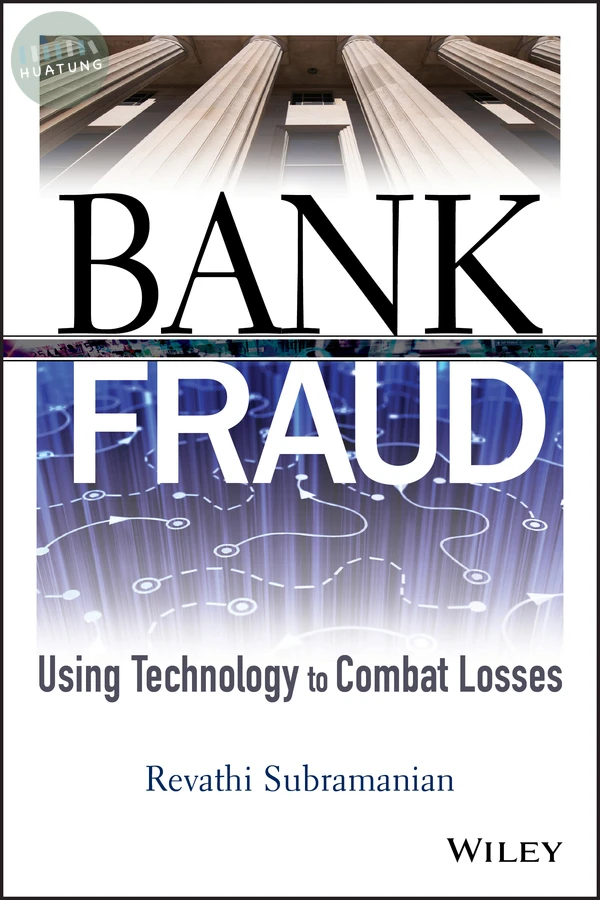
Learn how advances in technology can help curb bank fraud Fraud prevention specialists are grappling with ever-mounting quantities of data, but in today's volatile commercial environment, paying attention to that data is more important than ever. Bank Fraud provides a frank discussion of the attitudes, strategies, and—most importantly—the technology that specialists will need to combat fraud.
Fraudulent activity may have increased over the years, but so has the field of data science and the results that can be achieved by applying the right principles, a necessary tool today for financial institutions to protect themselves and their clientele. This resource helps professionals in the financial services industry make the most of data intelligence and uncovers the applicable methods to strengthening defenses against fraudulent behavior. This in-depth treatment of the topic begins with a brief history of fraud detection in banking and definitions of key terms, then discusses the benefits of technology, data sharing, and analysis, along with other in-depth information, including:
The challenges of fraud detection in a financial services environment
The use of statistics, including effective ways to measure losses per account and ROI by product/initiative
The Ten Commandments for tackling fraud and ways to build an effective model for fraud management
Bank Fraud offers a compelling narrative that ultimately urges security and fraud prevention professionals to make the most of the data they have so painstakingly gathered. Such professionals shouldn't let their most important intellectual asset—data—go to waste. This book shows you just how to leverage data and the most up-to-date tools, technologies, and methods to thwart fraud at every turn.
目錄
Preface xi
Acknowledgments xiii
About the Author xvii
Chapter 1 Bank Fraud: Then and Now 1
The Evolution of Fraud 2
The Evolution of Fraud Analysis 8
Summary 14
Chapter 2 Quantifying Fraud: Whose Loss Is It Anyway? 15
Fraud in the Credit Card Industry 22
The Advent of Behavioral Models 30
Fraud Management: An Evolving Challenge 31
Fraud Detection across Domains 33
Using Fraud Detection Effectively 35
Summary 37
Chapter 3 In God We Trust. The Rest Bring Data! 39
Data Analysis and Causal Relationships 40
Behavioral Modeling in Financial Institutions 42
Setting Up a Data Environment 47
Understanding Text Data 58
Summary 60
Chapter 4 Tackling Fraud: The Ten Commandments 63
1. Data: Garbage In; Garbage Out 67
2. No Documentation? No Change! 71
3. Key Employees Are Not a Substitute for Good Documentation 75
4. Rules: More Doesn’t Mean Better 77
5. Score: Never Rest on Your Laurels 79
6. Score + Rules = Winning Strategy 83
7. Fraud: It Is Everyone’s Problem 85
8. Continual Assessment Is the Key 86
9. Fraud Control Systems: If They Rest, They Rust 87
10. Continual Improvement: The Cycle Never Ends 88
Summary 88
Chapter 5 It Is Not Real Progress Until It Is Operational 89
The Importance of Presenting a Solid Picture 90
Building an Effective Model 92
Summary 105
Chapter 6 The Chain Is Only as Strong as Its Weakest Link 109
Distinct Stages of a Data-Driven Fraud Management System 110
The Essentials of Building a Good Fraud Model 112
A Good Fraud Management System Begins with the Right Attitude 117
Summary 119
Chapter 7 Fraud Analytics: We Are Just Scratching the Surface 121
A Note about the Data 125
Data 126
Regression 1 128
Logistic Regression 1 132
“Models Should Be as Simple as Possible, But Not Simpler” 149
Summary 151
Chapter 8 The Proof of the Pudding May Not Be in the Eating 153
Understanding Production Fraud Model Performance 154
The Science of Quality Control 155
False Positive Ratios 156
Measurement of Fraud Detection against Account False Positive Ratio 156
Unsupervised and Semisupervised Modeling Methodologies 158
Summary 159
Chapter 9 The End: It Is Really the Beginning! 161
Notes 165
Index 167