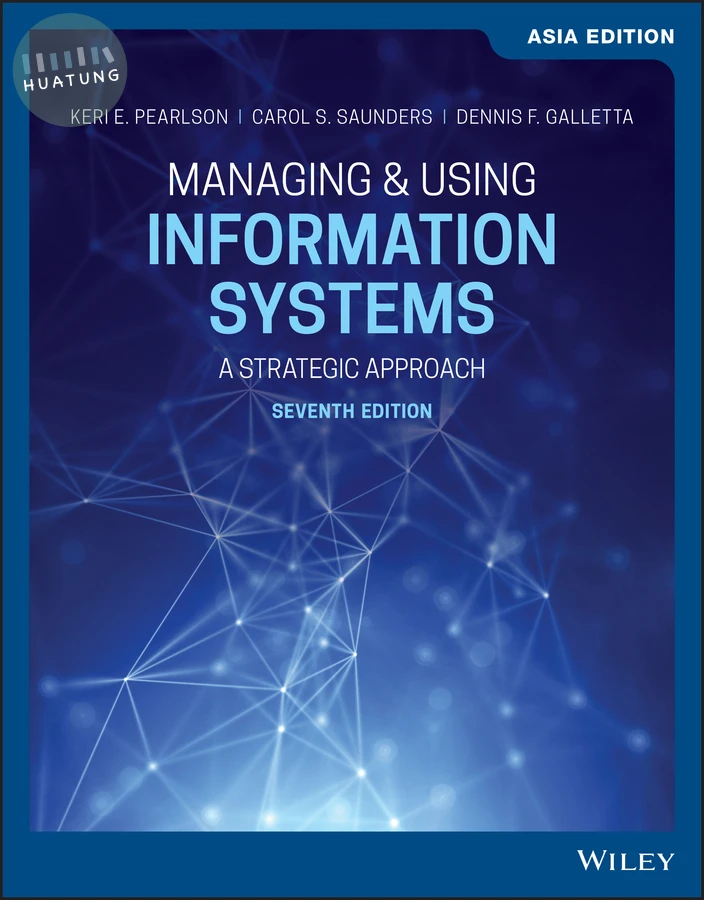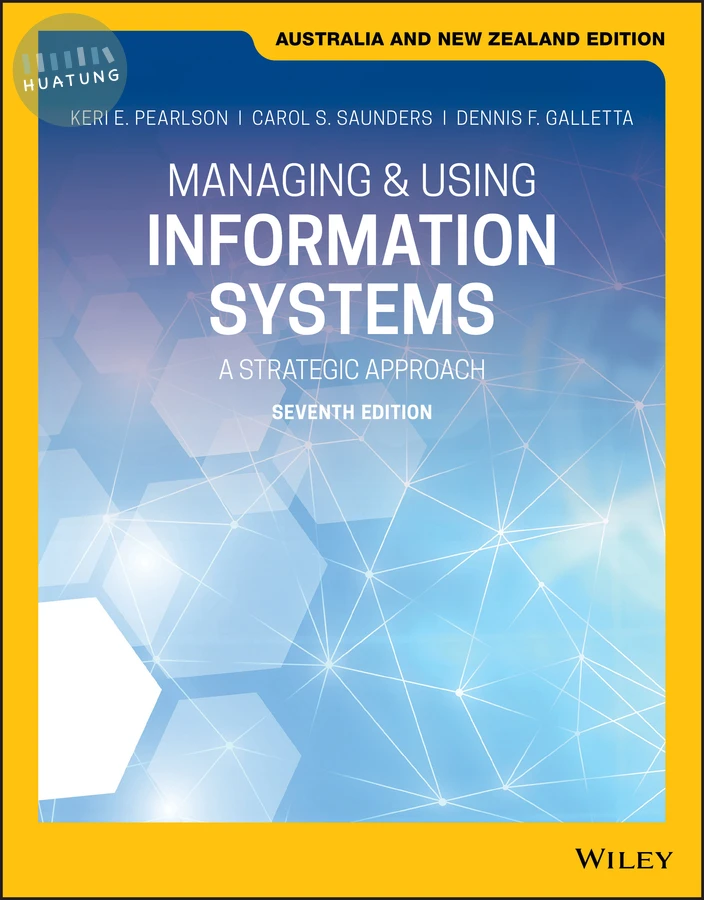
Managing and Using Information Systems: A Strategic Approach, Australia and New Zealand Edition
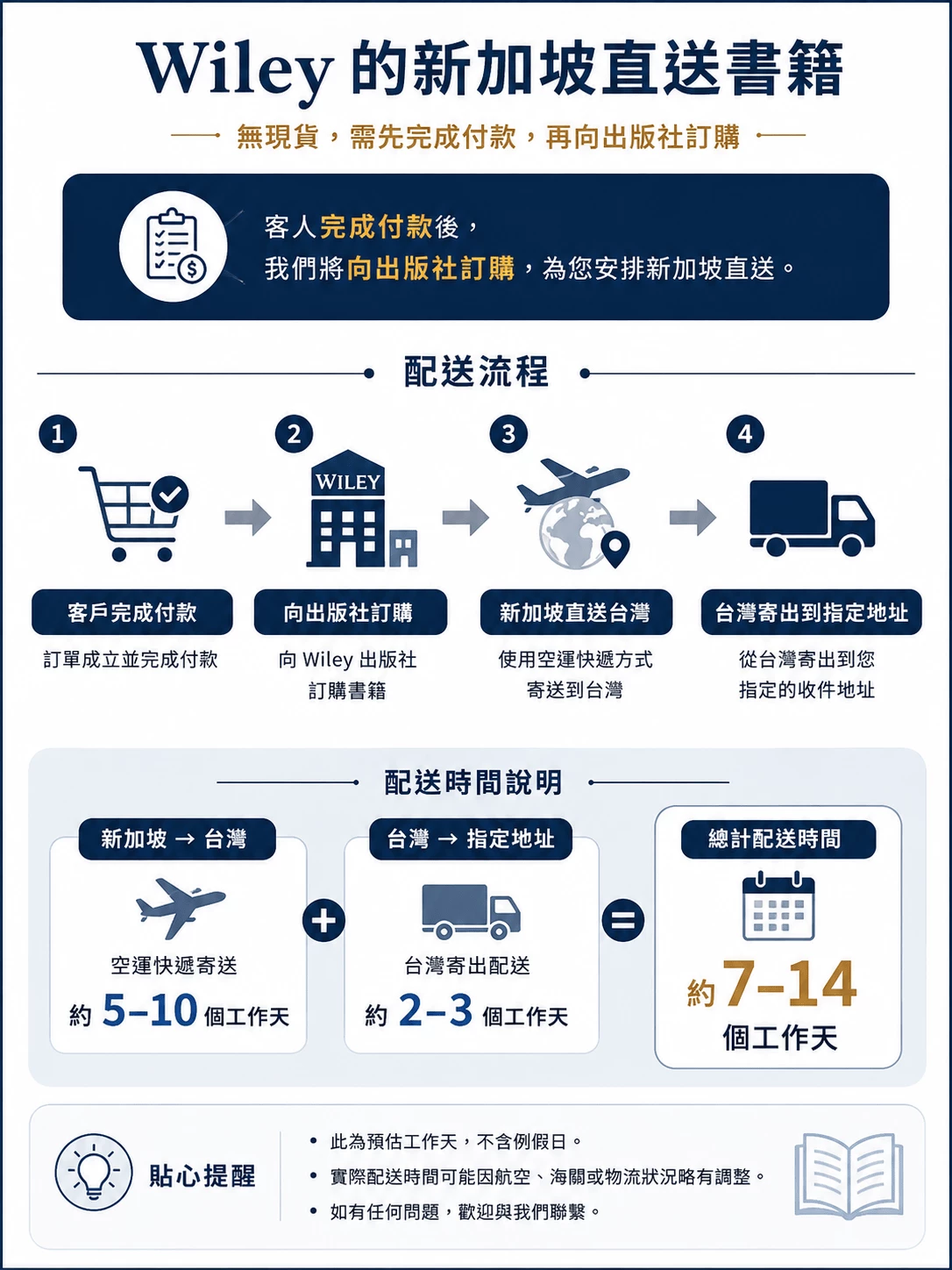
$10127元可訂購
簡介
Managing & Using Information Systems: A Strategic Approach provides a solid knowledge base of basic concepts to help readers become informed, competent participants in Information Systems (IS) decisions. Written for MBA students and general business managers alike, the text explains the fundamental principles and practices required to use and manage information, and illustrates how information systems can create, or obstruct, opportunities within various organisations.
This revised and updated seventh Australia and New Zealand edition discusses the business and design processes relevant to IS, and presents a basic framework to connect business strategy, IS strategy, and organisational strategy. Readers are guided through each essential aspect of information Systems, including information architecture and infrastructure, IT security, the business of Information Technology, IS sourcing, project management, business analytics, and relevant IS governance and ethical issues. Detailed chapters contain mini cases, full-length case studies, discussion topics, review questions, supplemental reading links, and a set of managerial concerns related to the topic.
目錄
Preface v
Acknowledgments ix
About the Authors xi
Introduction 1
The Case for Participating in Decisions about Information Systems 3
What If a Manager Doesn’t Participate? 6
Skills Needed to Participate Effectively in Information Technology Decisions 7
Basic Assumptions 8
Economics of Information versus Economics of Things 12
Summary 16
Key Terms 16
1 The Information Systems Strategy Triangle 17
Brief Overview of Business Strategy Frameworks 20
Why are Strategic Advantage Models Essential to Planning for Information Systems? 26
Brief Overview of Organizational Strategies 26
Brief Overview of Information Systems Strategy 27
Summary 29
Key Terms 30
Discussion Questions 30
Case Study 1-1 Amazon in 2019 31
Case Study 1-2 Lego 32
2 Strategic Use of Information Resources 35
Evolution of Information Resources 36
Information Resources as Strategic Tools 38
How Can Information Resources Be Used Strategically? 40
Sustaining Competitive Advantage 46
Strategic Alliances 51
Co-Creating IT and Business Strategy 53
Summary 54
Key Terms 55
Discussion Questions 55
Case Study 2-1 Amazon Go: How Far Can It Go? 56
Case Study 2-2 Groupon 57
3 Organizational Strategy and Information Systems 59
Information Systems and Organizational Design 62
Information Systems and Management Control Systems 68
Information Systems and Culture 71
Summary 75
Key Terms 76
Discussion Questions 76
Case Study 3-1 Uber’s Use of Technology-Mediated Control 77
Case Study 3-2 The FBI 78
4 Digital Systems and the Design of Work 80
Work Design Framework 82
How Information Technology Changes the Nature of Work 83
Where Work is Done and Who Does It: Mobile and Virtual Work Arrangements 91
Gaining Acceptance for IT-Induced Change to Work 99
Summary 101
Key Terms 102
Discussion Questions 102
Case Study 4-1 Automation at Southern Glazer’s Wine and Spirits LLC 104
Case Study 4-2 Trash and Waste Pickup Services, Inc. 105
5 Information Systems and Digital Transformation 106
Silo Perspective versus Business Process Perspective 107
Building Agile and Dynamic Business Processes 112
Digital Business Transformation 115
Workflow and Mapping Processes 115
Types of Enterprise Systems 117
Enterprise System Issues 124
Summary 127
Key Terms 127
Discussion Questions 128
Case Study 5-1 Carestream Health 129
Case Study 5-2 Santa Cruz Bicycles 130
6 Architecture and Infrastructure 132
From Vision to Implementation 133
The Leap from Strategy to Architecture to Infrastructure 134
From Strategy to Architecture to Infrastructure: An Example 141
Virtualization and Cloud Computing 146
Other Managerial Considerations 147
Summary 151
Key Terms 152
Discussion Questions 152
Case Study 6-1 Enterprise Architecture at Chubb Industries 154
Case Study 6-2 The Case of Extreme Scientists 155
7 Security 156
NIST Cybersecurity Framework 158
IT Security Governance Framework 159
Cyberattacks and How They Occurred 161
The Impossibility of 100% Security 165
What Should Management Do? 167
How Do We Measure How Secure We are? 174
Summary 175
Key Terms 176
Discussion Questions 176
Case Study 7-1 The Aircraft Communications Addressing and Reporting System (ACARS) 177
Case Study 7-2 Sony Pictures: The Criminals Won 177
8 The Business of Information Technology 179
Organizing to Respond to Business: A Maturity Model 181
Understanding the IT Organization 182
What a Manager Can Expect from the IT Organization 182
What the IT Organization Does Not Do 184
Chief Information Officer 184
Building a Business Case 186
IT Portfolio Management 189
Valuing IT Investments 190
Monitoring IT Investments 191
Funding IT Resources 196
How Much Does IT Cost? 198
Summary 200
Key Terms 201
Discussion Questions 202
Case Study 8-1 Air France/KLM Airlines 203
Case Study 8-2 Balanced Scorecards at BIOCO 204
9 Governance of the Information Systems Organization 206
IT Governance 207
Centralized versus Decentralized Organizational Structures 208
Decision Rights and Governance 210
Platform-Based Governance 212
Governance Frameworks for Control Decisions 215
Summary 218
Key Terms 219
Discussion Questions 219
Case Study 9-1 IT Governance at Toyota 220
Case Study 9-2 The “MyJohnDeere” Platform 221
10 Information Systems Sourcing 223
Sourcing Decision Cycle Framework 224
Outsourcing in the Broader Context 239
Summary 240
Key Terms 241
Discussion Questions 241
Case Study 10-1 O2 and RPA 242
Case Study 10-2 Crowdsourcing at AOL 243
11 Managing IT Projects 244
What Defines a Project? 246
What is Project Management? 247
Project Elements 249
IT Projects 252
IT Project Development Methodologies and Approaches 253
Managing IT Project Risk 261
Gauging Success 265
Summary 266
Key Terms 267
Discussion Questions 267
Case Study 11-1 Information Displays at Dutch Railways (Nederlandse Spoorwegen) 268
Case Study 11-2 Dealing with Traffic Jams in London 269
12 Business Intelligence, Knowledge Management, and Analytics 272
Competing with Business Analytics 273
Knowledge Management, Business Intelligence, and Business Analytics 274
Components of Business Analytics 279
Big Data 282
Caveats for Managing Knowledge and Business Intelligence 289
Summary 290
Key Terms 291
Discussion Questions 291
Case Study 12-1 Nest and the Internet of Things (IoT) 292
Case Study 12-2 Stop & Shop’s Scan It! App 292
13 Privacy and Ethical Considerations in Information Management 294
Responsible Computing 296
Corporate Social Responsibility 299
PAPA: Privacy, Accuracy, Property, and Accessibility 302
Green Computing 310
Summary 312
Key Terms 312
Discussion Questions 312
Case Study 13-1 Equifax’s 2017 Data Breach 314
Case Study 13-2 Ethical Decision Making 315
Glossary G-1
Index I-1