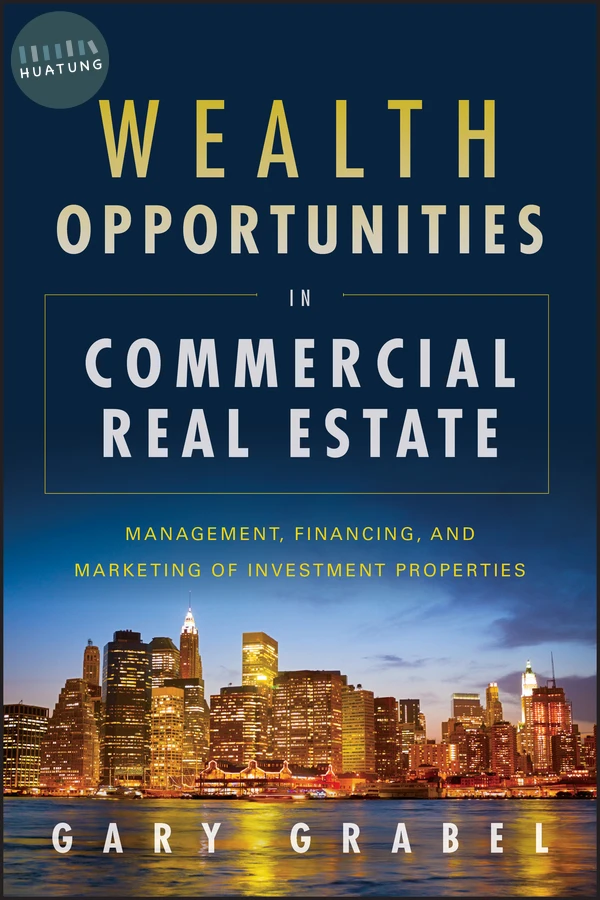

Wealth Opportunities in Commercial Real Estate
$1454元 定價: $1616 9折 可訂購
簡介
ESSENTIAL COVERGAGE OF THE COMMERICAL REAL ESTATE MARKET AND HOW TO MAKE IT WORK FOR YOU The one-stop guide to making money from buying, managing, and owning commercial real estate, Wealth Opportunities in commercial real Estate is the comprehensive resource you need in order to take full advantage of the market, whether you're just starting out or an old hand. Including industry case studies and expert advice from real estate expert Gary Grabel, the book teaches you the fundamentals-including how to evaluate a potential property and how to create value even before you buy-that other books leave out. Commercial real estate investing is an excellent, and highly profitable, investment choice for those with the right perspective and the patience to see their decision through. But to really succeed, it is essential to have a firm grasp of the basics of the real estate game before you get started. if you think you're ready, then this book is your first step.
目錄
List of Abbreviations xiii
Introduction xv
Chapter 1 An Overview of the Problem, a Solution, and a Game Plan 1
The Problem 1
The Solution 2
Four Key Elements in the Solution 3
Concerns about the Solution 8
Acquiring the Skill Set to End the Cycle 9
A Game Plan to Achieve the Solution 9
This Book is about Center B Properties 18
Chapter 2 The Basics 21
Gross Income: The Starting Point 21
Vacancy and Collection Loss: Gross Income Reducers 21
Operating Expenses and Net Operating Income 23
Fair Market Value and Capitalization Rate: What’s It Worth? 24
Gross Rent Multiplier 25
Value per Square Foot versus Reproduction Cost per Square Foot 26
Inverse Relationship between Cap Rate and FMV 29
Initial Determination of Value 29
Leveraged Return and Return on Equity 30
Cash Flow before Taxes (CFBT) 32
Reserves/Impound Accounts 32
Taxes and Insurance Impounds 32
Cap X, TIs, and Leasing Commissions 33
Devil in the Details: Over Simplified Analysis 38
Chapter 3 Detailed Financial Analysis 41
Gross Income 41
Vacancy and Collection Loss 43
Operating Expenses 43
Four Basic Types of Leases 46
Nonrecoverable Expenses 55
Time-Frame Assumptions 56
Static versus Active Analysis 57
Compounding 58
Rent Roll 59
Argus Ten-Year Discounted Cash Flow Model 60
Analysis Reflecting 100 Percent Occupancy 65
Reversion 66
Disposition Costs 66
The Time Value of Money: Present Value and Discounted Cash Flow 67
Net Present Value (NPV) 68
Internal Rate of Return (IRR) 68
Conclusions from Argus Analysis and the Hypothetical Facts 69
Analysis Reflecting a Large Vacancy after Purchase 70
Analysis Reflecting a Large Vacancy with a Tenant in Tow 72
Chapter 4 Lease Analysis 75
The Importance of Basic Lease Provisions 75
Twelve Key Economic Ingredients in a Lease 77
Frequently Negotiated Lease Provisions 96
Chapter 5 Real Estate Financing 119
Sixty to Eighty Percent of the Game 119
Types of Financing 120
What is the Right Answer to Debt Structuring? 122
Seven Key Factors to Consider in a Real Estate Loan 124
Loan Underwriting 131
Cash-on-Cash Return 137
The Mortgage Loan Application 138
The Pitfalls of Mortgage Lending 138
Negotiable Points of a Loan 153
Chapter 6 Real Estate Taxation 157
Income Taxation 157
Real Property Taxation 163
Taxation in the Event of a Refinance 164
Taxation in the Event of a Sale 165
Installment Sale 166
Section 1031 Exchange 168
Chapter 7 Acquisitions and Dispositions 179
Focus on Specific Property Types in Specific Geographic Locations 179
Establish Buying Criteria 181
Acquisition Philosophy 181
Governmental Impact 182
Initial Screening 183
The Purchase and Sale Agreement 187
Building a Team 199
Due Diligence 199
Dispositions 206
Chapter 8 Case Studies 219
Problem Number 1 219
Problem Number 2 230
Problem Number 3 242
Problem Number 4 244
Problem Number 5 248
Problem Number 6 255
Problem Number 7 258
Chapter 9 Development or Rehabilitation (Build to a 12 Percent Yield) 269
The 10 Phases of a Construction or Rehab Project 269
Assessing a Construction Project 270
Developer as Conductor 272
Does the Project Hit Your Minimum Yield? 274
Argus Developer 279
Feasibility or Market Study 283
The Composition of a Feasibility Study 284
Residual Land Value 285
Preleasing 286
Equity and Financing 287
Mechanics’ Liens 287
Liability under the Construction Loan 288
Design and Construction Drawings 289
Governmental Approvals 290
Covenants, Conditions, and Restrictions (CC&Rs) 291
Ground Lease Restrictions 292
Construction of Improvements in a Ground-Up Development 292
Inspections 295
Insurance 296
Decisions, Decisions, Decisions 296
Communication, Communication, Communication 298
Graphic Time Line 299
Project Operating Costs 302
Lender’s Disbursement Form 303
Change Orders 303
Rehabilitation Project 303
Construction of Improvements in a Rehab Project: Decisions, Decisions, Decisions 311
Rehab Project: Communication, Communication, Communication 311
Summary 311
Chapter 10 Marketing, Leasing, and Management 313
Definition of Marketing, Leasing, and Management 313
Marketing 314
Leasing 319
Strategy 319
Management 345
Management as a Business 353
Conclusion 354
Chapter 11 Partnership Structuring and Deal Restructuring 355
Partnership Structuring 355
Securities Issues 357
Fifteen Key Structuring Issues 361
Debt Restructuring 371
Borrower’s Proposed Terms 383
Lender’s Counterproposal 384
Chapter 12 Keeping the Money 389
Planning 389
Fractional Interests 396
Estate Planning Checklist 400
Acknowledgments 403
About the Website 405
About the Author 407
Index 409